PROCEEDINGS e-books

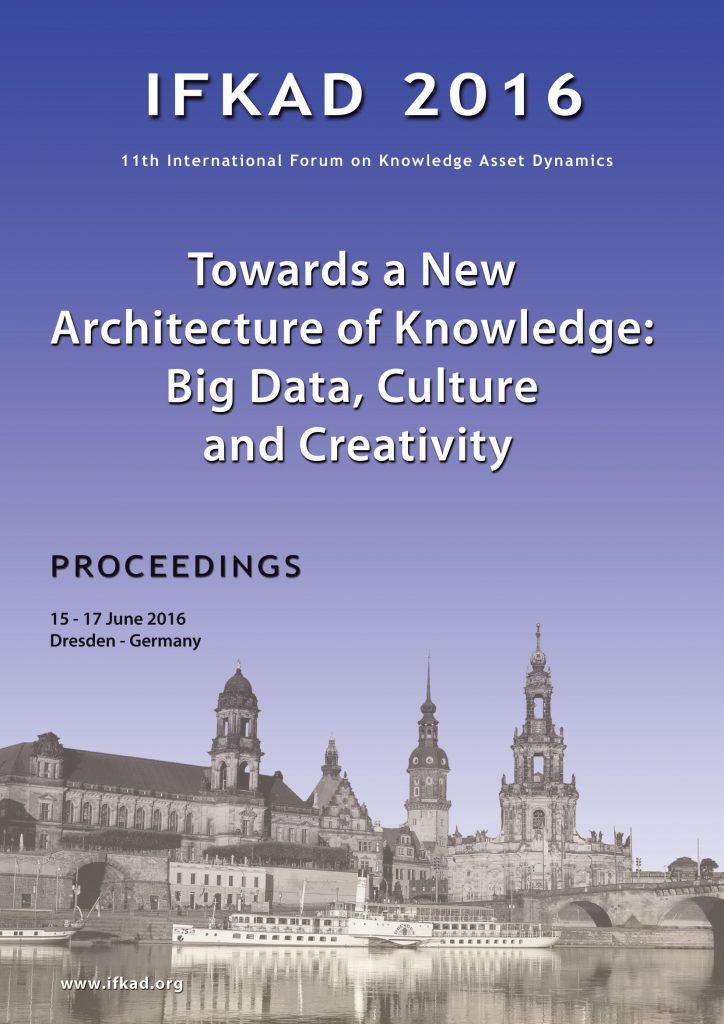
Proceedings IFKAD 2016

Towards a New Architecture of Knowledge: Big Data, Culture and Creativity
List of Included Articles:
Cognitive Overload and Related Risks of Social Media in Knowledge Management Programs
Ettore Bolisani, Enrico Scarso, Antonella Padova

Thanks to the advancements in Social Media, Knowledge Management is evolving to ways of implementation based on active participation of employees and free knowledge sharing. This shift is deemed to allow overcoming some limits of the traditional approach, and especially the ineffective management of tacit knowledge. The KM literature has often analysed the benefits and advantages of Social Media, but less attention has been devoted to their limitations and problems. The paper contributes to this topic by examining an unintended consequence of the use of Social Media: the “cognitive overload” effect. The paper analyses the experience of community managers (that is, the managers of the internal Communities of Practice) at a big consulting company that uses Social Media to support knowledge generation and transfer within its Global Communities. The study highlights the risk of cognitive overload and its implications. The research makes use of the case study method and focuses on the analysis of the particular Enterprise Social Media platform used by this company. A first contribution and original aspect of the paper is that it focuses on the problems and drawbacks of Social Media in KM that have not been properly addressed in the literature. Also, it provides an analysis of a real-life situation. It examines the notion of cognitive overload and related risks, which extends the antecedent notion of “information overload” and is particularly appropriate to explain potential drawbacks of Social Media in business. The analysis provides lessons for companies willing to use Social Media to support innovative approaches to KM, and can also give inspiration for future research in this field. Particularly, the study highlights the main problems that are associated to cognitive overload induced by Social Media, and suggests possible measures to mitigate them.

The role of WEB 2.0 in the evaluation of stakeholder engagement
Andrea Venturelli, Rossella Leopizzi, Fabio Caputo

This paper focuses the important role that the world wide web can play in the process of stakeholder engagement. In particular, through making use of online interaction, i.e. the tools of web 1.0 and above all web 2.0, particularly social media and social networks, the process of stakeholder engagement could improve. In such background, the aim of this work is to assess the quality of the process of stakeholder engagement in all non financial companies listed on the Italian Stock Exchange and, consequently, demonstrate that, in these companies, social media can help improve the quality of the process of stakeholder engagement In order to achieve this aim, the work has been developed as follows. We have analysed the level and assess the quality of the process of stakeholder engagement for all companies belonging to the sample which have published on line a sustainability report. In particular, we have conducted this process of assessment on three level: documentary; website; social media. Every level has been investigated through matching quantitative and qualitative variables. The originality of this work derives from the following considerations: – Firstly, literature and empirical studies have largely focused the impact of the internet on the financial and sustainability reports, while works about the impact of web-based technologies on the process of stakeholder engagement are less common. – Secondly, differently from the past, in this work the quality of the process of stakeholder engagement in all non financial companies listed on the Italian Stock Exchange is assessed analysing not only the content of the information in sustainability report but also the website and the specific tools offered by web 2.0.. The results of this work show that web 2.0, particularly social media and social networks (Sibilio Parri & Mainetti, 2014), offers interesting perspectives for tackling three fundamental challenges (Unerman & Bennett, 2004) and thereby achieving full stakeholder engagement: identifying and reaching a broad range of interlocutors, reaching general agreement on their expectations, starting from a heterogeneous and potentially conflicting set of viewpoints, establishing an interactive and dialogic relationship with them.

Supporting strategy making
Magdalena Wagner

The purpose of the paper is to present a method that could support spatial planning and advocate rational choices. The research is checking whether multi-criteria decision analysis (MCDA) could be incorporated into decision making process at regional level. The focus is on the Development Strategy for Lower Silesia Voivodeship, however, the methodology presented in the paper could be adapted and used while creating development strategies for modern and smart cities. The research is divided into three main parts. First of all, a brief analysis of development strategy (formulated at regional level) is discussed: the scope, main objectives, and structure of the document are investigated. Second of all, possible solution, namely DEMATEL method, is presented. In the last step of the research, an example of using the method for the purpose of regional strategy formulation is offered. General evaluation of the proposed approach is conducted in order to identify strengths and weaknesses that could be addressed in further research. Literature review and own observations of planning practices indicate lack of comprehensive and advanced tools which could support decision making at local or regional level. It seems fair to say that there is a need to develop new solutions providing support for coordinated, rational, and transparent decision making under conditions of risk and uncertainty. The reflections presented in the paper are, among others, focused on supporting the decision making process in spatial planning in order to make the strategy making procedure more transparent, objective, and rational. The paper offers a methodology that may help answering the question “what strategy goals should be adopted?”. It seems fair to say that discussion about such methods could significantly improve the quality of strategy making process, thereby positively affect the functioning of the entire region/city and its community. Additionally, if these methods get a form of convenient and approachable computer tools, they could be probably included in the everyday work of spatial planners and policy makers.

TRAILS – Traveling innovation labs and services for SMEs and educational institutions in rural regions
Peter Schmiedgen, Florian Saegebrecht, Jörg Rainer Noennig

The global trend of urbanisation affects countrysides across Europe more and more. Many regions suffer from fast shrinking towns as a result of economic emigration. So far, governments encounter this development with only a few measurements. One option is strengthening the innovative capabilities in local SMEs and supporting creative business ideas of young talents to keep both groups in the region. But professional innovation trainings for companies and formats promoting entrepreneurship only take place in big cities. Thus, there is an unsatisfied demand and great potential in rural regions. Against this background, the paper describes the concept of TRAILS – Traveling Innovation Labs and Services. TRAILS is a funded lighthouse project by EU INTERREG that focuses the area of eastern Saxony (Germany) and southern-west Poland starting in June 2016. The TRAILS project has two main phases. Since there are no proofed mobile solutions for innovation labs, in phase A three regular ship containers will be redesigned and modified to fulfil multiple functions. In strong relationship to the container design, custom tailored educational programs for students of vocational schools and innovation services for SME employees are developed. In phase B the containers go on tour for nine month. They are transported to 32 destinations in the rural border region of eastern Saxony (Germany) as well as south-western Poland and stay in every place for one week. In this time the TRAILS-Team runs workshops, trainings, and matching-making events with students of vocational schools and SME employees building up innovation capabilities and entrepreneurial skills. TRAILS brings established entrepreneurial formats like maker-spaces, start-up weekends, or hackathons on the road to rural regions. For the first time people in towns with high emigration of professionals and young talents get access to newest technologies and learn how to create innovations with economic impact within their nearest environment. Exclusively for this mission designed containers fully equipped with prototyping tools and workshop-supporting technologies bring the necessary setup and space on tour. Students of vocational schools learn how to be innovative and transform project ideas into business models encountering economic standstill in their immediate surrounding. Employees of SMEs train creativity and co-design methods increasing the innovation capabilities of their firms. In sum, TRAILS helps rural regions to cross-connect students with SMEs to retain young talents and equips both groups with innovation methods and entrepreneurial knowledge.

Urban Business Modelling
Joerg Rainer Noennig, Anja Jannack, Peter Schmiedgen, Florian Sägebrecht

Rapid urbanisation requires cities to develop adaptive strategies, new programmes, and long-term visions. Concepts for urban futures need to outline operations that are sustainable in economic, social, environmental terms. The paper therefore presents a systematic description of cities by way of ‘Urban Business Models’ (UBM). As a method for the systematic creation of innovative city business models, UBM also contribute to debates on ‘Creative Cities’. The paper views cities as large-scale enterprises that need to balance complex social, economic, and environmental processes. Just as companies are to create profitable and sustainable operations, city businesses too need to establish a balance of activities, partners, investments, and value creation to maintain its functioning in the long run. On this assumption, the idea of business model creation was adopted from the field of economics to urban context by interpreting its components not from an entrepreneurial point of view, but from urban management perspective. In the context of urban management and planning, business modelling is a new perspective. So far, cities were rarely modelled as enterprises. Hence there are no descriptive formats for the comprehensive description and design of urban operations from an economic viewpoint, although extensive knowledge on business modelling exists in economic literature. Current disturbances and disruptions to established urban operations (e.g. through effects of globalisation, demographic change, digitization) force cities to quickly develop and validate alternative operational programs. UBM helps urban managers, planners, administrations and authorities to envision future cities, and to create innovative urban operations systems. With UBM, alternative ways of value creation, synergetic networks and business operations among stakeholders can be schemed and validated in terms of completeness, integration, sustainability.

Innovative methods and new technology in urban research – an interdisciplinary reflection on the ‘action camera’ approach
Katharina Borgmann, Deirdre Sneep

A new generation of researchers now implements new tools into their established research designs, which is both an opportunity for new ways of data finding and a challenge. Many of the new tools and equipment have not been used before, making it difficult to set up a research design with them; moreover, they may pose new, often ethical, implications. Being educated and trained in the disciplines of architecture and urban design, as well as area studies, anthropology, and sociology, the authors’ research focus lies in analysing the complexity of East Asian urban agglomerations (in China and Japan). It is argued that in order to be better equipped to conduct research on the increasing complexity of rapidly growing global cities, it is not only necessary to find new ways of inter-, multi-, and cross-disciplinary research collaborations, but also to incorporate new technological devices that enable researchers to capture the various aspects and facets of today’s cities. The goal is to analyse the use of the action camera from the perspective of two fields – architecture and ethnography – and discuss in what ways that tool reinvents earlier forms of visual data gathering while keeping in mind the new issues that video data gathered by the action camera raises. At a time when researchers have to modernize their toolbox, evaluations for new and creative tools are a necessity to broaden the perspective of urban studies and academic approaches generally. This account of the action camera looked at from multiple disciplines will be a valuable addition in the struggle to reinvent visual data gathering in the digital age for all fields. Broadening the horizon of research methods used in urban studies provides the opportunity to acquire different sets of data as well as new insights, provided the data is properly read and viewed in its appropriate context. Only then is it able to open up new ways of understanding cities. The action camera as a tool to capture information from a complex system, such as the city, is discussed and evaluated critically in this paper in order to create the opportunity for urban researchers and even city builders to add a new facet to existing research approaches.

Virtual international learning experience in formal higher education – A case study from Jordan
Wissam Tawileh

International experience is important to prepare university students for successful career in the globalized knowledge economy. However, learners in developing countries have limited access to international educational experiences due to travel costs and constrains, political instability that prohibit academic visits from foreign students and instructors, societal restrictions on certain groups like female students, or old educational systems that resist didactical and organizational changes. The emergence of Social Media enabled the development of interactive learner-centered virtual learning environments that enable collaborative knowledge building in online social communities. This empirical study aims to explore how to provide Jordanian university students with international academic experience during their regular study programs without travelling abroad. Virtual Collaborative Learning has been introduced and examined in this specific context due to its reported high potential for developing countries. Following an educational design based approach, a Virtual Collaborative Learning arrangement has been re-designed to involve Jordanian students in a formal masters’ course with German students at the Technische Universität Dresden. Factors that affect participated Jordanian students’ perception of this experience have been examined using deep interviews and qualitative content analyses methods. The value of this study lays in the innovative approach to provide Jordanian university students with international learning experience by integrating them in a virtual community with peers from Germany using Social Media application. This study delivers empirical evidence on the potential of well-designed Virtual Collaborative Learning arrangements to provide students with enjoyable, high-impact, immersive international learning experience at their home university. This helps universities, especially in Arab and developing countries, to grant their students a new learning experience using affordable easy-to-use Social Media solutions.

Analysing e-Collaboration: Prioritisation of Monitoring Criteria for Learning Analytics in the Virtual Classroom
Michel Rietze

This paper is part of an extensive action research project on learning analytics and focuses on the analysis criteria in Virtual Collaborative Learning (VCL) settings. We analyse how the efficiency of virtual learning facilitation can be increased by (semi-) automated learning analytics. Monitoring items are the starting point that enable the learning facilitator to identify learning problems and deduce adequate actions of intervention. However, the sophisticated media-based learning environment does not allow monitoring of vast amounts of items and appreciate the learning processes simultaneously. This paper fulfils the sub-goal of selecting and prioritising monitoring items for e-collaboration. The procedure is split into two Research Questions (RQ). A specification of the monitoring items will be compiled by a comparison and a consolidation of the already existing monitoring sheets. Therefore, we interviewed the responsible docents on differences and similarities. Additionally, we coded each monitoring item inductively due to their monitoring objective. As a result, we reduced the monitoring sheets to 40 final monitoring items (RQ1). In order to prioritise them, the learning facilitators scored the relevance and the complexity of the collection and assessment of data using a questionnaire. The analysis focused on differences in understanding of relevance and complexity. Further, we identified the highest scored monitoring items as well as scores with leverage potential. Afterwards we prioritised the items based on the applied analysis (RQ2). While previous studies on learning analytics were mostly driven by the educational data mining field and as a consequence had a technological focus. This paper is based on an existing pedagogical concept of VCL and therefore prioritises monitoring items to be implemented as selected learning analytics. Hence, it is guaranteed that the analysis is related directly to the learning content. This research paper achieved two outcomes: Firstly, a course-independent standardised monitoring sheet. Thus, the reduction of the monitoring items should simplify and objectify the observation and clarify the performance review. Secondly, an insight into the relevance of each monitoring item had been delivered to the facilitators and provides significance on the quality of e-collaboration. Furthermore, the complexity score shows the necessary effort for data collection and assessment while the combination of relevance and complexity scores leads to the prioritisation of the needs of (semi-) automated learning analytics to support the learning facilitation.

Sifa-Portfolio – a continuing education concept for specialists on industrial safety combining formal and informal learning
Krzysztof Stanik, Nina Kahnwald

Specialists on industrial safety (Sifas) are appointed by companies due to German occupational safety act (ASiG) as safety advisors, to analyse the work environments and the work procedures. Their principal task is to inspect workplaces for adherence to regulations on health, safety and environment, and design actions to prevent from disease or injury of workers and environmental damages. Due to variety of settings in which work safety specialists are involved, they are obliged to continuous further education and permanent adoption to changing circumstances of occupational context. To do so, Sifa’s need access to tools which provide the following three key features: – possibility to share knowledge with experienced specialists on industrial safety (Sifa-Community), – ability to promptly recognize critical topics in the field of their activities (Trend-Monitoring), – opportunity to create track of records of further education on current topics, including the validation and certification of work-related informal learning (Sifa-Portfolio). Sifa-Portfolio and Trend-Monitoring are based on Sifa-Community, an exchange platform (www.sifa-community.de) with currently 5.000 members established in the context of a longitudinal study on Sifas. This paper will focuses on the concept of Sifa-Portfolio that was developed as a prototype of further education application based on the concept of E-Portfolios. It allows Sifa’s to share their knowledge, recognize critical topics and create track of records of their informal further education to showcase their competencies and eventually receive certification. In the paper authors present the approach of Sifa-Portfolio – an application for further education, based on Sifa long-term study (Sifa-Langzeitstudie), data mining (text mining), and user centred design. It starts with the description of results of an online study and specific requirements that have to be considered when designing applications for specialists on industrial safety. It then presents the trend monitor based on Sifa-Community posts, which provides up to date information about most important topics that are being discussed within the community. It finally introduces Sifa-Portfolio, a high fidelity prototype of an expansion module for Sifa-Community. Until now, there are no dedicated solutions for further education of professional group of Sifas, which comply to the specific requirements of this group and which enable to react promptly to changing demands of the safety issues in dynamicly growing companies. The presented approach delivers a concept of a software-module that could be implemented into Sifa-Community Forum. Due to evaluation with users, we could identify requirements and specifications of Sifa-Portfolio. Furthermore this concept can be transferred to variety of professional-groups, which are working in dynamic professions to support their work-related informal further education.

Where the new practices are leading KM? The case of crowdsourcing
Sylvia Dimitrova, Enrico Scarso

Knowledge Management (KM) is changing its nature. This evolution is driven by the necessity to overcome the limitations of conventional approaches, but also by the opportunities offered by the Web 2.0 technologies. Therefore, both scholars and practitioners need to understand how these new technologies impact the evolution of KM. Scholars need to identify (and fill) the gaps between the existing theories and the emerging KM approaches, while practitioners have to successfully implement them. Thus, the present study aims to investigate the impact of crowdsourcing on the evolution of KM. This paper investigates the specifics of the use of crowdsourcing as an emerging KM facilitator based on an analysis of the existing literature on both crowdsourcing and KM, as well as on the findings of an empirical study on three internal and external crowdsourcing initiatives in a firm representing a B2B industry. The study contributes to the existing knowledge on the evolution of KM by examining cases of crowdsourcing used as a knowledge acquisition and creation practice. The study findings suggest that crowdsourcing: a) is moving the attention of KM toward the organizations’ external environment as a significant knowledge source; b) is shifting the focus of KM, originally directed towards the knowledge transfer process to knowledge creation/acquisition activities; c) is favouring the emergence of the conversational KM approach, where knowledge is generated and shared by people through dialog, for instance by means of questions and answers. In practical terms, the results of this study can help managers identify successful practices for implementing both internal and external crowdsourcing as a firm KM catalyst. Moreover, managers, especially those working in other or similar B2B industries, may be encouraged to give crowdsourcing a try, as they would be able to learn from the experience of a leading multinational organization such as Bombardier Transportation.

Intellectual Property Protection and knowledge sharing via Technology Transfer: Analysis of China’s high-tech industry
Xi Wang, Liliana Mitkova, Xinhan Luo, Xiaohan Yu

This paper uses China’s provincial high-tech industry panel data to examine the main factors influencing China’s Intellectual Property Protection and International Technology Transfer. We find the degree of IPR protection, the investment in R&D and Foreign Direct Investment is positive with technology transfer which is consistent with the results of existing researches. However, the SOEs and the amounts of high-tech industry researchers have unobvious effects. Based on these empirical results, we put forward some suggestions on macro, middle and micro level.

Knowledge-based Activities of Innovation Managers: An Empirical Analysis
Bastian Deinert, Julia Breßler

The purpose of this paper is to examine the amount of knowledge-oriented tasks and requirements within the competencies-profile of an innovation-manager. Frequency analysis of 31 innovation-manager position job advertisements. As there are no current studies to the competencies profile of an innovation manager this research paper is a reasonable addition to existing literature. Even more there is currently no comparison between knowledge- and innovation-manager, thus we contribute to this research gap. The required skills and knowledge for innovation- and knowledge-managers appear highly similar, while their tasks are quite distinct.

Innovating Business Model in Cultural and Arts Organizations (CAOs): Role and Experiences in the Audience Development (AD)
Daniela Carlucci, Antonio Lerro, Roberto Linzalone, Francesco Santarsiero, Giovanni Schiuma

This paper aims to analyze the role of the audience development (AD) as fundamental dimension of innovation of the business models of the cultural and arts organizations (CAOs) and then to present some relevant international case studies able to act as examples of elaborating and implementing good practices in building effective relationships for engaging audience. The paper first develops a literature review – both at academic and practitioner-level – to provide an overview of the themes, in terms of definitions, objectives, characteristics and processes. Then, through a case-study analysis, insights and implications about the engagement of the audiences, the ways to create strong relationships with audiences and the strategies useful to increase the number of subscribers and to improve economic sustainability are presented and discussed. Originality and value of the paper reside in the attempt to investigate theoretically and practically the theme of the audience as key-dimension of the business model innovation in cultural and arts organizations. Through the case studies analysis, the paper provides practical insights about how cultural and arts organisations implement strategies and tactics to engage audiences.

Gamifying Higher Education. Beyond Badges and Points and Leaderboards
Helge Fischer, Matthias Heinz, Lars Schlenker, Fabiane Follert

Gamification or related concepts such as serious games and playful design are discussed intensively in the field of academic education. Since 2011, gamification has continuously been recorded as a medium-term trend of online education in the annually published Horizon Report. In all areas in which engagement, participation, and motivation of individuals are the key success factors, strategies of gamification are considered. But, what are potentials of gamification in the field of higher education? How can educational technologies such as learning management systems be gamified? An essential part of this article is a study regarding the gamification of the learning management system OPAL. Based on a master thesis at the faculty of educational sciences, a study was conducted in order to investigate how the use of game elements can increase the attractiveness of OPAL for students. OPAL is the central learning management system at the Technische Universität Dresden. The study should answer the question: Which game design elements increase the attractiveness of OPAL for students? The research question was answered with a qualitative approach, while the collection of data was carried out by a focus group and expert interviews. The sample included six master’s students and one expert. The findings provide recommendations for redesigning OPAL. Often gamification is related to tools like points, badges, and leaderboards. But what elements exist beyond these? The contribution initially provides conceptual foundations and refers to game mechanics as the specifics of games. Based on this, the potential of gamification in higher education teaching was discussed. The article describes the concept of gamification and how this approach can be used in university teaching, especially for designing Learning Management Systems.

Understanding Knowledge Integration in Engineering Innovation Projects: A Case Study from the Automotive Industry
Vincenza Esposito, Paolo Canonico, Ernesto De Nito, Mario Pezzillo Iacono

This paper studies knowledge integration mechanisms in a project setting. It develops the theoretical literature on the concept of knowledge integration, particularly the adoption of different organizational mechanisms. The research helps to explain how knowledge integration mechanisms can facilitate the achievement of complex outcomes in projects. Our research relies on a case study. We used three data collection techniques: internal document analysis, observation/site visits and semi-structured interviews. Documentary analysis was used to understand the organizational structure and to identify knowledge integration issues. This study improves our understanding of the choices made at research team level of knowledge integration mechanisms. The study was exploratory, which may be useful in generating future research hypotheses, connecting the features of research projects with the need to achieve knowledge integration. Our results could be useful for other firms operating in the same sector. The automotive industry has been involved in a deep process of innovation within which the processes of knowledge integration have taken on a much more significant role. We try to understand how the linkages between project management and control may have a higher potential to create knowledge.

Innovation Modes in Knowledge Intensive Business Services: Evidence from Russia
Veronika Belousova, Nikolay Chichkanov

We aim at finding the innovation modes of KIBS producers in Russia, i.e. looking at how such companies innovate and cooperate with their customers. We use a principal component analysis to construct the correlation matrix for innovation-related variables. To the best of our knowledge, this paper is the first empirical study on Russian KIBS firms and this helps shed some light on the innovation activity modes in developing countries. These results should help the national policy makers develop target policy initiatives to pursue the role of KIBS as active innovators in the national innovation system and distinguish this one among others by addressing KIBS roles differentially. Second, although KIBS is a term that unites different industries, all of them are knowledge-based, but the knowledge base and nature of products and services vary. This paper finds the variety of ways how KIBS innovate and interact with their clients. This tends to add value in improving industrial classifications for KIBS compared to manufacturing establishments.

Knowledge domains and types and tools: an interrelation attempt
Dmitry Kudryavtsev, Anna Menshikova

The described study represents the first results of INNOVARRA project (Innovations in Company Knowledge Management: Typology, Methodology and Recommendations) that is supported by Russian Science Foundation for 2015-2017. It aims to identify and develop methods and tools of knowledge management (KM) which are the most appropriate for particular domains and types of knowledge of the company, as well as have the greatest impact on the results of the company. The paper introduces the “triad” idea of the interaction between knowledge domains, types or properties of knowledge and methods or tools of KM based on the ideas about the feasibility of differentiation of KM methods and tools. Research methodology for these ideas is based on literature review. The paper also provides an overview of the development of KM methods and tools in several domains, namely: management of customer knowledge and knowledge about the products and/or services, knowledge in the field of operations management, strategic management and organizational development. This research puts in evidence on the issue of which KM methods and tools are suitable for the particular knowledge domain and type. A generalized knowledge map was suggested in order to structure knowledge domains. A new knowledge typology has been formed. The key feature of the typology is that it includes only the knowledge types and properties which essentially influence the choice of KM methods and tools. New taxonomy of KM methods and tools was suggested. Systematization of studies, which describes interrelations between knowledge types, domains and KM tools was provided. The suggested description of interrelations between knowledge types/properties, domains and KM methods and tools may help novice knowledge managers to select suitable KM methods and tools for different knowledge domains and types. Such a selection can be applicable either for the whole company or for different functional areas and business lines. The description of interrelations also can be easily transformed into rule base for intelligent service for KM tool selection.

Trust and Fairness and Economics Model: An Innovative Strategy to Sustain Digital Communities
Olivia Fachrunnisa, Ardian Adhiatma, Agus Wachjutomo

This paper aims to develop a model to sustain digital business communities based on trust and fairness in virtual environments. We used evidence-based literature to develop TFE model and several propositions. It is based on the evidence from secondary data which have been collected from books, journals, newspapers, and internet. There is no or lack of research which concerns on how to sustain a digital business community. Several propositions are also developed to support the working of the models. The outcomes of the model can be used to endorse the sustainability of digital business community. If members of the community contain only trustworthy parties, the community will sustain. Furthermore, if there is fairness in terms of distributive justice, procedural justice, interactional justice and social capital, then community members will feel comfortable living in the community. Their welfare is also a way to foster the commitment and active participation of community members. As a final result, the competitive advantage of the community will bring benefits for the community and other stakeholders involved.

Impact of Public Policies on Innovative Enterprises in China: Key Elements for Enterprise Development as Mediators
Yanqiu Song, Guijun Li, Aijing Ran, Ting Gao

Innovative enterprises have been regarded as an essential element of industrial upgrading and economic growth in China. Local governments introduced various public policies to create a favourable environment for the development of innovative enterprises. However, it is not clear yet how these policies have impact on innovative enterprises and there has been little empirical research to test effects of these public policies. This study aimed to understand the multilevel mechanism through which public policy relates to innovative performance. This paper has investigated the relationships among government support, key development elements of enterprises and innovation performance by collecting data from 96 innovative enterprises in Dalian city of China. Stepwise regression analysis was first used to simplify the relationships between variables. Sobel judgement was then needed to test the significance of mediating effects. This study proposed a theoretical model analysing the relationships among public policies, key development elements of enterprises, and innovative performance. The empirical results revealed that public polices had various effects on different key elements of enterprises to further influence the performance of innovative enterprises. This study expanded our understanding of the role of public policies on innovative enterprises and offered advice on promoting innovation in developing countries.

Proceedings IFKAD 2016
Towards a New Architecture of Knowledge: Big Data, Culture and Creativity

Submit the following information to receive the download link 

a valid email address where the download link will be delivered