PROCEEDINGS e-books

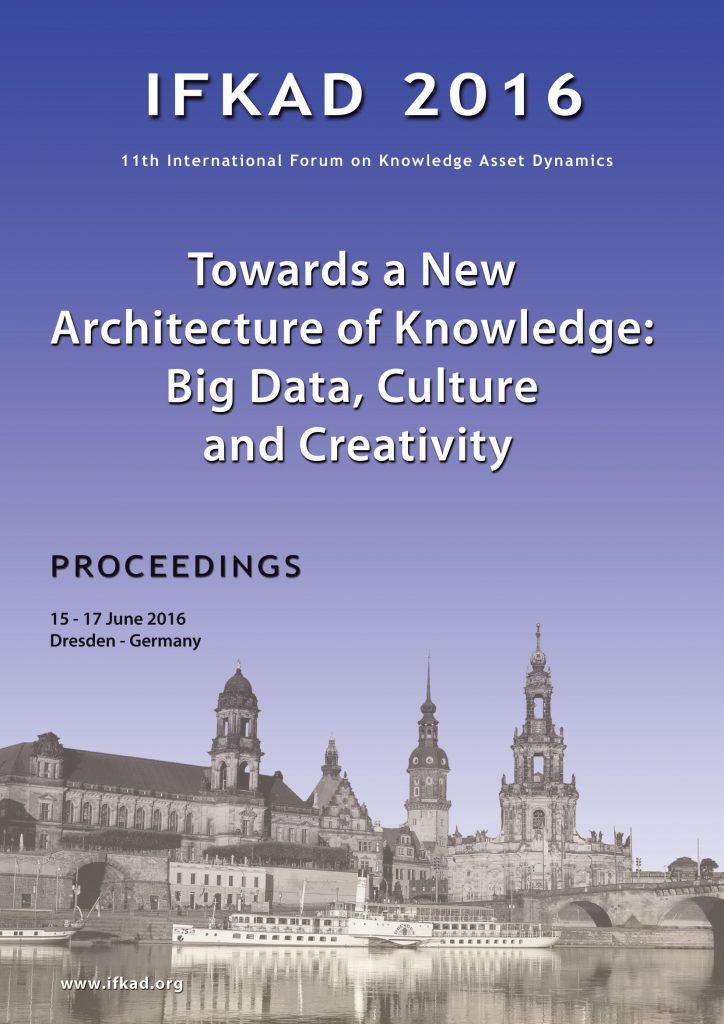
Proceedings IFKAD 2016

Towards a New Architecture of Knowledge: Big Data, Culture and Creativity
List of Included Articles:
A survey on Knowledge Management in Universities in the QS Rankings: E-learning and MOOCs
Teresa Anna Rita Gentile, Ernesto De Nito, Walter Vesperi

Many public organizations are employing Information Technology “IT” in Knowledge Management “KM” (Silwattananusarn and Tuamsuk, 2012; Alavi and Leidner, 2001; Chatti et al., 2007). Within universities, the use of IT could be an enabler to create and facilitate the development of knowledge (Joia, 2000; Garcia, 2007; Tian et al., 2009; Sandelands, 1997); to improve knowledge sharing (Aurelie Bechina Arntzen et al., 2009; Alavi and Gallupe, 2003); to develop communities of practice (Adams and Freeman, 2000). In the educational organizations IT is also a tool to improve the quality of learning (EC, 2000). E-learning is based on digital technologies (Aspen Institute Italy, 2014), through multiple teaching methods (Derouin et al., 2005), as tools for KM (Wild et al., 2002). The websites of some universities allows anyone to follow free lessons, through the internet. These types of free online courses are known as Massive Open Online Courses “MOOCs” (EC, 2014; Sinclair et al., 2015). The purpose of this study is to verify the type of teaching adopted by European universities and understand how training through e-learning can improve the processes of transmission and sharing of knowledge allowing everyone, not only to students, to take lessons through the web. The analysis allows detecting data on universities by region through the study of the websites of the top 100 European universities present in a ranking called Quacquarelli Symonds, “QS World University Rankings 2015/16”. The method used to collect the data was marked by the creation of a specific database in which are inserted, for each university, different information: status (public/private), size, age, number of enrolled students, references on websites. In this Excel spreadsheet was also taken into account the type of educational offer provided by each university, with particular reference to the provision of online courses and courses open to all. The article aims to provide a detailed study on the use of technology in the educational context. The exploration allows you to design, within other universities unranked, styles of teaching online to share knowledge. The survey, currently, is the first step of a larger project which aims to analyse the different types of e-learning platforms used by 100 universities in the European rankings QS to make teaching online. From the results of this first phase, it has emerged that all the surveyed European universities provide training not only through classroom lessons, but also with a variety of courses through e-learning even for free through MOOCs.

MOOC@TU9 Common MOOC strategy of the alliance of the nine leading German Institutes of Technology
Daniela Pscheida, Sabrina Herbst, Thomas Köhler, Marlen Dubrau, Katharina Zickwolf

Since April 2014, the alliance of leading German Institutes of Technology (TU9) has been jointly producing and running massive open online courses (MOOCs) on the subject of engineering. On the one hand, the collaborative MOOC@TU9 project aims to combine the unique characteristics and strengths of the engineering courses offered by the TU9 universities, making inter-institute, cooperative, open learning both visible and accessible. This will enhance both local teaching and the national and international marketing of the universities. On the other hand, the project also aims to help build communal experience and develop quality and production standards for the use of different MOOC formats in digital higher education teaching. In this sense, the MOOC@TU9 project contributes to the vital development of sustainable digitalisation strategies at German universities in the form of a feasibility study, which can then be used in other contexts as a valuable example of best practice. The MOOC@TU9 project has a primarily practical approach. The focus of the collaboration between the TU9 universities is therefore the discussion, exchange and coordination of concrete actions in addition to the evaluation and assessment of the solutions reached and implemented. The collaboration within the TU9 network results in inter-organisation working and learning processes for the parties and institutions involved. These have a particular value, as this is how, through collaboration, we can build an effective, sustainable, multi-dimensional experience. MOOC@TU9 is a joint inter-university project with the aim of strategically testing the possibilities, parameters and benefits of using massive open online courses in higher education teaching, the like of which has never been seen before in Germany. There is, therefore, currently no systematic development of quality and production standards for MOOCs: a gap, which MOOC@TU9 is actively attempting to fill. Results and findings of the project are not only taken from specific practical work, they are also fed directly back into it. In this respect, it can and should provide valuable insights not only for course participants, but also for other universities and/or initiatives.

Migration to the Flipped Classroom – Creating a scalable Flipped Classroom Arrangement
Anne Jantos, Matthias Heinz, Eric Schoop, Ralph Sonntag

This paper is part of an extensive project which focusses on creating and implementing a scalable flipped classroom framework to broaden information and media competencies in university staff in Saxony. A flipped classroom arrangement with a sensible mix of multimedia tools promotes meaningful learning and lowers travel costs by avoiding content consumption in face-to-face time and instead offers content beforehand using various sources. This paper will in particular focus on the approach to gradually apply a flipped classroom arrangement to a B2B-Marketing course specifically designed for part-time students and use the implications to promote this method and further the step-by-step migration to the flipped classroom at universities in Saxony. Gathering information by reviewing previous experiences in E-Learning over the past decade, we were able to create an overview of how to approach part-time students and identified various concepts to create a more flexible and meaningful learning environment. We decided on a flipped classroom arrangement which offers time sensible teaching and promotes meaningful learning. A flipped classroom framework has been created which can be adjusted freely. Finally, we implemented the framework to a B2B-Marketing course by adapting it to the course content, time frame and attendance number. This procedure is designed to gradually increase usage of multi media tools and self efficacy and thereby steadily migrates the course to the flipped classroom. Focusing on part-time students’ needs and satisfying them with a flipped classroom arrangement is an entirely new approach. This project connects part-time-learning with online learning in a yet unprecedented manner. This paper describes the project’s two main outcomes. Firstly, an independent scalable framework which can be adapted to different learners’ and teachers’ needs. Secondly, the application strategy is described in detail and offers explicit indications and methods to implement the flipped classroom gradually. Also, there will be an evaluation which will be interpreted and summarized in a guideline as well as patterns and lessons learned. In general, this project aims to broaden media and information competencies and encourage and strengthen collaboration in higher education in Saxony.

Innovation and Digital Marketing in Guadalajara and México
Juan Mejía-Trejo, Gonzalo Maldonado-Guzmán, José Sánchez-Gutiérrez

The Innovation (INNOV) process is considered as a driver to increase the competitiveness in the Digital Marketing (DM) sector; however, many firms ignore how their own DM resources and capabilities affect the INNOV process. So, through a DM-INNOV proposed conceptual model, the aim of this study is to determine which are the main factors of INNOV are affected from DM, in Guadalajara, México. The design is based on INNOV process model, construct published previously by Mejía-Trejo et al. (2014) and complemented with the DM model construct proposed here, with variables which are tested for validity and reliability through a pilot survey in order to get the final model. The study subjects were the most important customers of Monster Online (a mexican company, specialized in DM) and analysed by inferential statistics determining the Cronbach´s Alpha reliability in a pilot test and multiple linear regression (MLR) based on Stepwise Method using SPSS 20 program. The methodology is proposed as a descriptive, exploratory, correlational and a transversal study, based on documentary research to obtain a final questionnaire using the Likert scale applied to the total population: 900 Monster’s Online relevant CEO clients. So, we proposed: For DM: Web integration (WBI); Web Experience (WBE); Web Strategy (WBS) and Technological Resources (TRS) For INNOV process by Mejía-Trejo’s et al. (2014) conceptual model with: Innovation Value Added (IVADD); Innovation Income Items (IIIT); Innovation Process (INPROC); Innovation Performance (IPERF); Innovation Feedback Items (IFEED); Innovation Outcome Items or Results of Innovation (IOIT). The approach is based on the importance to relate the DM on INNOV process to determine their main factors that are affected and generate more innovation in the DM sector This article is aimed to determine the main factors that drive the DM on INNOV process to get more, about this, by mean of original theoretical models as a product of the principal related theories about DM and INNOV process. The Value of the study, is to obtain a first settlement for a generalized model able to be applied in other sectors in Mexico. The results obtained, will allow us measuring the level of correlation amongst the variables in study, and discover how the main factors of INNOV process are influenced for DM components.

Internet of Things development and co-evolution strategies between incumbent and new entrepreneurial firms
Rosangela Feola, Roberto Parente, Valter Rassega

The objective of our research is to analyze the forms and specific characteristics of co-evolution process between incumbents and new entrepreneurial firms in the context of IoT technologies. Our research is explorative in nature and aims to build a picture of start-up and incumbent firms involved in the development and exploitation of IoT technologies. Our research design follows a two steps approach. The first step, mainly based on secondary data aims to build, at an Italian and International level, a database of start-ups with technologies and competences applicable to the IoT sector. In the second step, we will analyze strategies and initiatives promoted by old companies to integrate competences and technologies developed by start-ups. The research, focusing on the dynamics of interaction and co-evolution among different actors, puts in evidence the different roles played by start-up and incumbent firms in the birth and evolution of emerging sector. In particular, according to more recent studies, our research shows that sometimes the relationship between new and old firms is more complex and it goes beyond the traditional paradigm, now widely accepted in the established literature on the subject, were old firms are replaced by new comers. The implications of the paper are twofold: theoretical and managerial. From the theoretical point of view, our research could contribute to the theory on the forces and actors that drive the transformation of economic sectors. From the managerial point of view, our research has important implication for policy makers and for the definition of adequate policies to stimulate the development of the IoT technologies. At the same time, our research could have relevant implications for the management of new and old firms involved in IoT industry, showing the necessity for them to adopt a more open approach in their innovation processes.

Internet of Things as a “rhabdomancy rod” for smart ecosystems
Marco Tregua, Tiziana Russo Spena, Francesco Bifulco, Cristina Caterina Amitrano

The aim of this paper is to shed some more light on the concept of smart ecosystem. This topic is used in different fields of science (Nam and Pardo, 2012; Petroulakis et al., 2012; Al-Nasrawi et al., 2015) and also business literature, in particular the studies from service science scholars (Spohrer and Maglio, 2008) have put much more emphasis on smart (service) systems (Maglio and Spohrer 2013; Maglio 2014). However, notwithstanding the growing recent interest a definition of what smart ecosystem represents is still missing, as an in-depth analysis about the elements more strictly connected to this notion. The role of technology in supporting the deployment of activities is the main element emerging in the concept of smart ecosystem. So, we have chosen one of the recent developments in the literature about technology, namely the Internet of Things (IoT) as a magnifier to analyse smart ecosystems (Kwon et al., 2015). We have selected the most relevant elements of IoT by investigating literature contributions on this topic with a bibliometric analysis through Bibexcel (Persson et al., 2009). Furthermore, we have developed a model gathering the emerging elements and we have tested it with the illustration on the DATaBenC ecosystem. The empirical context chosen to deploy our investigation is helpful to test if and how all the elements shaping the most recent contributions on IoT are useful to propose a definition of smart ecosystem. Thanks to this definition we can fill some of the gaps emerging from the analysis of recent scholars contributions on smart ecosystem and to favour a better comparison with the existing notions of ecosystem. The analysis of an empirical context will be useful to favour the adaptability of the concepts of ecosystem and smart ecosystem to the activities carried on by the actors shaping DATaBenC project; due to this the literature on the ecosystem can represent a frame to drive and analyse the deployment of an ongoing project, with mutual benefits for the research and the management in dynamic and evolutionary contexts.

Enriching the service cultural experiences through augmented reality
Tiziana Russo Spena, Cristina Caterina Amitrano, Marco Tregua, Francesco Bifulco

The role of new technologies and Internet of Things (IoT) (Ashton, 2009) are demonstrated to augment quality and performance of many public and private services industry (Lusch and Nambisan, 2014), including the cultural offerings (Jafari et al., 2013; Siu et al., 2013). This research aims at depicting how new technologies are shaping new service experiences choosing the cultural business as context of analysis where innovative offerings are based on the cultural content of an artwork partnered by the usage of new immersive context to favour the satisfaction of latent needs and the innovation in service provision. As part of our empirical study we analyse the service experience of users participating into a new project – Databenc –, launched to improve cultural-based and touristic-based offerings in Naples. We conducted narrative interviews with Event-Based Narrative Interview Technique (EBNIT) (Helkkula and Pihlström 2010). The interviews explore the challenges people have in their service experience and their innovative ideas how these challenges could be solved. Our contribution is framed into the literature about service experience and it aims at complementing the recent contributions on the role of new technologies in supporting both the organizations in proposing services in new ways and the visitors to be more satisfied through the immersive approach to visit. The novelty of the topics taken into account can represent even a research avenue for further investigations as several elements of marketing literature about cultural services still need to be analysed. Cultural organizations’ managers can benefit from the results of our analysis as the features of new technologies leading to high levels of satisfaction are highlighted, as it happened in previous contributions when combining the elements of a value proposition to the achieved satisfaction for visitors (Laws, 1998). Moreover, the results are even useful to combine the features of each visitor to the main elements of the new technologies employed in order to understand how to frame services in a better way and how suitable are the tools provided to visitors in order to favour service experiences (Andereck et al., 2006).

Beyond Data Scientists: a Review of Big Data Skills and Job Families
Andrea De Mauro, Marco Greco, Michele Grimaldi, Giacomo Nobili

This paper promises to shed light on the heterogeneous nature of the skills required to ‘win’ with Big Data by analysing a large amount of job posts published online. More specifically we: 1) identify the most important ‘job families’ related to Big Data; 2) recognize homogeneous groups of skills (skillsets) that are most sought after by companies; 3) characterize each job family with the appropriate level of competence required within each Big Data skillset. We implement a semi-automated, fully reproducible, analytical methodology that is able to cope with the significant amount of job posts obtained by scraping some of the most popular job search online portals. Job families are identified through the expert evaluation of the most important keywords appearing in job posts’ titles. Skillsets are instead obtained by using Latent Dirichlet Allocation (LDA), an unsupervised machine learning algorithm used for text classification. Finally, we characterize the job families through a measure of the relative importance of each skillset. This study represents one of the first attempts to classify jobs in families and describe them in terms of skill requirements by means of a large-scale, semi-automated job post analysis, based on machine learning algorithms. To do so, we propose an original combination of various analytical techniques, which are widely established in previous scientific works. The characterization of job families through text mining and topic modelling techniques is innovative and can be reapplied to similar future studies focusing on any other professional field. This paper brings clarity to the multifaceted nature of Big Data competency requirements and job role types. Our results can concretely help business leaders and HR managers create clearer strategies for the procurement of the right skills needed to leverage Big Data at best. In addition, the structured classification of job families and skillsets will help establish a common language to be used within the job market, through which supply and demand can more effectively meet.

Big Data: a proposal for enabling factors in Customer Relationship Management
Davide Aloini, Riccardo Dulmin, Valeria Mininno, Pierluigi Zerbino

This paper aims to investigate the potential impact of Big Data (BD) on Critical Success Factors (CSFs) of Customer Relationship Management (CRM). An extensive and sound literature review about CRM was developed, classifying results within an ad-hoc framework. Evidences were discussed and linked to the existing literature on BD. Then, five propositions linking BD and CRM were formalized. Literature lacks both a thorough review about CSFs in CRM and works dealing with the effect of BD on CRM implementations. According to our results, CRM could require a revisitation of some CSFs if BD is involved. In addition, we suggest that framing BD projects within already acknowledged implementations, like CRM, may help in dispelling the hype around BD, reducing the waste of resources.

Big Data in Law: how to support banks in a decision making process
Ylenia Maruccia, Gloria Polimeno, Giovanni Battista Pansini, Marco Cammisa, Felice Vitulano

In this paper we present a Big Data application in the banking field, Norma Search, developed by Exprivia with the final aim of monitoring the advent of new legislations or the variations of the existing ones, to evaluate the potential impacts on both management and strategic activities and to give support in taking those strategic decisions that could minimise potential costs. Starting from an analysis of literature, we propose our solution developed to manage the data generated from different sources and often coming in an unstructured format, at the aim of adapting it in the banking system. In particular, we want to describe how this application works, made up of two distinct components with different purposes. Finally, it will be described its application in the banking field and its potential benefits, as the support it can give in a strategic decision making process. Norma Search is a Big Data solution developed by Exprivia at the aim of managing huge amount of data, in particular in an unstructured format, and extracting knowledge from them. This application allows to browse the web and to research and analyse specific information according to certain user-defined rules. The importance of this application is that, once trained, it allows to analyse webpages and documents on sites, blogs, forums and so on, according to a process specifically designed for linguistic analysis and conceptual online content. The added value is its field of application of Norma Search, i.e. the banking system. The outcomes of the application are very important in the banking system. In fact, the aim of this solution is finding new legislations, understanding what are the differences with respect to yet existing laws or if they introduce new aspects or constraints and evaluating what could be the impacts on both management and strategic activities. In this way, the real time analysis of these changes allows to forecast what are the impacts and to take strategic decisions to minimise potential costs in the banking system. Keywords –Norma Search, Deep Knowledge, Banking System, Big Data, Decision Making.

Big Data & Companies: new strategies for marketing and customer care
Gloria Polimeno, Ylenia Maruccia, Marco Cammisa, Felice Vitulano

This paper aims at describing an Exprivia Big Data application, called Big Knowledge, and its components, showing how it works and, in particular, what could be the potential applications of this kind of analysis. In particular, we will present how the monitoring of data coming from different sources are useful in a marketing or customer care scenario, helping companies to improve the customer care or to customise the offer on their segments of customers. Starting from an analysis of literature, we propose a Big Data solution developed in Exprivia that aims at analysing a great amount of data , extracting important information and then classifying them in a useful way. In particular, we want to analyse the benefits that such a system could generate in different scenarios dealing of marketing or customer care and the possible support to the companies. Here we want to describe our Big Data solution, Big Knowledge, and its application in different scenarios. The added value of this component is due to the fact that it could be adapted in whatever scenario. This versatility allows to use this component in different kinds of applications and in different markets, too, supporting companies in their strategic decision making process. This paper puts in evidence how this component could be useful for companies in order to better understand what kind of customers they have and what is the perception that they have about the brand. It is a powerful tool that, combined with sentiment analysis, can help companies with strategic decisions, aiming at improving their products and sales.

Intellectual Capital in the Age of Big Data
Giustina Secundo, Pasquale Del Vecchio, John Dumay, Giuseppina Passiante

To contribute to the literature on the nexus of Intellectual Capital (IC) and Big Data by exploring emerging researchers trends. To present a literature review discussing contributions from IC research and Big Data highlighting novel and emerging issues. A conceptual framework demonstrating how Big Data perspective validates the need to shift IC research from focusing on the organization to the eco-systems focus. The framework has four main dimensions: Why: the managerial reasons for using Big Data for IC; What: the typologies of Big Data for IC practices; How: the Big Data processes adopted for IC management; Who: the organisation’s stakeholders involved and impacted by value creation. The paper is novel because it investigates the effects and implications that Big Data can offer IC research, by supporting the emergence of a fourth stage of IC research. Additionally, it explores recent literature on Big Data through an IC lens. Outlines the socio-economic value of Big Data, from and about the companies’ ecosystems; identifies entrepreneurial opportunities for existing companies through Big Data for renewing their value proposition; and outlines new tools for managing Big Data to support disclosing IC value drivers and for creating new intangible assets.

Neoclassical Theory and the female entrepreneurship as independent factor of production. A systematic review of the economic models
Gabriele Serafini

The production and availability of big data makes it possible to use them as a lever to create value. In order to measure the relation between big data solutions and female entrepreneurship and creativity, a preliminary step consists of the review of the literature which considers the existence of the female entrepreneurship as a factor of production. The main purpose of the article is to analyze the economic literature about economic models utilized to classify the female entrepreneurship and to detect whether it is considered independent from the other production factors – which in any case have to be identified. We propose an approach based on the review of the literature. The classification of the academic articles, about female entrepreneurship as a factor of production, is conducted by means of four variables. The value of the research is to identify a definition of female entrepreneurship and the relationship between the definition and the Neoclassical Economic Theory; that is: if the female entrepreneurship is not recognized as an independent factor of production then a positive correlation between its utilization and the added value should be considered as spurious and the relation as indeterminate. The outcomes of the application allow to better define the independence of the production factors and their productiveness in relation to the value added since the main implication regards the possibility to consider the female entrepreneurship as an independent factor. The article will also put in evidence whether female entrepreneurship is a quantitative and measurable variable and if it is, or not, a standardised variable.

Women in business and social media: state of the art and research agenda
Francesca Maria Cesaroni, Paola Demartini, Paola Paoloni

The aim of this paper is to carry out a literature review on women in business and social media in order to know the state-of-the-art and to understand whether and to what extent studies conducted so far have addressed these issues: how and why women entrepreneurs and managers are using social media? Do they use social media for marketing, networking, or personal reasons? The article relies on a literature review about women entrepreneurs/managers and social media. For this purpose a literature search on Scopus has been conducted, using a set of selected keywords. Selected papers have been analyzed and classified, in an attempt to identify main topics and results obtained thanks to research and analysis carried out so far. This paper contributes to expand the literature on women in business studies and it offers a new perspective applied to a topic of high relevance as social media. Our literature review puts in evidence that this is a new issue, which gives us the possibility to identify new trends and future directions for research. The major implication is to advance knowledge and practice in the area of gender in management and use of social media by focusing upon empirical research, theoretical developments, practice and current issues. Benefits are related to a better understanding of the debate on “Gender and Management” themes by reconsidering networking activities with social media.

Gender Diversity Indicator and Corporate Environmental and Financial Performance: Evidence from Europe
Paola Paoloni, Federica Doni, Carlo Drago

This paper aims to examine the presence of female in the European listed companies and to assess the extent of gender diversity information within corporate reporting. The second step of the research aims to evaluate the gender diversity impact on firm environmental and financial performance. The methodology consists in the analysis of the issues on gender diversity included in ESG (Environmental, Social and Governance) scores extracted from Bloomberg database. We will perform a Gender Diversity Disclosure Index (GDDI) which will be used in some bivariate and multivariate statistical analyses, to investigate whether and to what extent, GDDI affects the firm’s environmental and financial performance. Corporate Environmental Performance (CEP) will be evaluated by Environmental Disclosure Score, extracted from Bloomberg database and Corporate Financial Performance (CFP) will be measured both by accounting-based measurers (such as ROA, ROE, etc.) and market-based indicators (MTBV, EPS, etc.). The empirical research focuses on the analysis of corporate reports of a sample of the listed companies on the major European stock markets (Eurozone) and the process of data collection may be influenced from the availability of the ESG data. This methodology puts in evidence the development of a composite indicator which is able to broadly represent the position and the role of women in the European business context. This indicator is able to summarize four gender items and it can provide a wide gender diversity measure which can be associated with firm’s environmental and financial performance. The outcomes of this research could provide useful tips for policymakers on how to disclose non-financial information on gender diversity in corporate reporting thanks to innovative forms of corporate reporting. The expected findings may suggest a positive impact of a better gender diversity disclosure on firm’s environmental and financial performance.

The presence of female directors and their culture on boards. An empirical analysis on Italian public companies
Daniela Coluccia, Stefano Fontana, Silvia Solimene

In recent years, there has been a growing consensus that gender diversity could improve the economic and the social performance of companies, although the progress was painfully slow. In Italy, the Law n. 120/2011 required that from 2012 women should be at least 1/5 and from 2015 1/3 of boards. Our first aim is to study the level and the evolution of the presence of female directors on boards of Italian companies over the period 2009-2014. Secondly, we studied the relationship between the number of female directors and firm performance, in order to verify if the presence of women on corporate boards will affect the firm’s performance. We have selected the 30 biggest companies listed on the Milan Stock Exchange, ordered by their total assets. To verify the presence of women on the companies’ boards, for each company we have identified the number of female directors and, with a view to understand the power of them, for each female director, we verified if she is an executive director. With reference to the relationship between the presence of female directors and firm’s performance, we estimated for each year the companies’ ROI. Our first contribution is to do a descriptive analysis of the presence of female directors over the period 2009-2014 among the sample of companies selected. Basically, we want to provide a picture of the Italian situation in terms of gender equality. To our knowledge, this is the first study that focuses on the situation of Italian listed companies over such a long period. The second contribution is to study the women’s power on the board. Essentially, we want to verify if, in addition to the growing number of female directors, there was also an increase of their power. The last contribution is to verify, through a regression analysis, the effects on firm’s performance of the presence of female directors. According to previous literature, we want to test if women on corporate boards can improve firm’s performance. Our research aims to satisfy the following practical questions: – is women’s participation only required by law or there was even before 2012? -do women on boards have really power? -do female directors affect firm’s performance?

Does strategic and innovative fit indicate smart social media use in a company?
Jari J. Jussila, Heli Aramo-Immonen, Olli Rouvari, Pasi L. Porkka, Salvatore Ammirato

This study was conducted in order to find out if the strategic management maturity and the innovation capability of companies are also indicators of the extent of the use of social media tools. This study was conducted among companies in the Finnish car retail and service business. We conducted a survey questionnaire of 110 questions among CEOs and top managers. Access to managers was obtained via the Finnish Central Organisation for Motor Trades and Repairs. The sample covered all member companies in the central organisation (147 companies). This study provided us with a good overview of the focal industry in Finland. Of these companies, 70 % had a turnover of between 5-50 MEUR and 27% had a turnover of more than 50 MEUR. We obtained responses from 37 company managers at a response rate of 25.2%. A structured in-depth interview was also conducted with some of the managers. This methodology is used to identify the contemporary state of utilization of social media in the Finnish car retail and service business. Results gained can be compared to an earlier study among a population of 2488 Finnish decision makers from the Federation of Finnish Technology Industries (Jussila et al., 2014, 2015). The interviews with managers gave us valuable knowledge about the underlying contradictions and reasons for use/non-use of social media in these companies. The outcomes of the study increase our understanding of social media use in business, the challenges faced by companies, as well as social media strategy formulation. An increasing number of papers have been published on social media use in companies; however, only a few take a holistic business approach (Effing, 2013; Graf and Mandl, 2013).

Cognitive Overload and Related Risks of Social Media in Knowledge Management Programs
Ettore Bolisani, Enrico Scarso, Antonella Padova

Thanks to the advancements in Social Media, Knowledge Management is evolving to ways of implementation based on active participation of employees and free knowledge sharing. This shift is deemed to allow overcoming some limits of the traditional approach, and especially the ineffective management of tacit knowledge. The KM literature has often analysed the benefits and advantages of Social Media, but less attention has been devoted to their limitations and problems. The paper contributes to this topic by examining an unintended consequence of the use of Social Media: the “cognitive overload” effect. The paper analyses the experience of community managers (that is, the managers of the internal Communities of Practice) at a big consulting company that uses Social Media to support knowledge generation and transfer within its Global Communities. The study highlights the risk of cognitive overload and its implications. The research makes use of the case study method and focuses on the analysis of the particular Enterprise Social Media platform used by this company. A first contribution and original aspect of the paper is that it focuses on the problems and drawbacks of Social Media in KM that have not been properly addressed in the literature. Also, it provides an analysis of a real-life situation. It examines the notion of cognitive overload and related risks, which extends the antecedent notion of “information overload” and is particularly appropriate to explain potential drawbacks of Social Media in business. The analysis provides lessons for companies willing to use Social Media to support innovative approaches to KM, and can also give inspiration for future research in this field. Particularly, the study highlights the main problems that are associated to cognitive overload induced by Social Media, and suggests possible measures to mitigate them.

The role of WEB 2.0 in the evaluation of stakeholder engagement
Andrea Venturelli, Rossella Leopizzi, Fabio Caputo

This paper focuses the important role that the world wide web can play in the process of stakeholder engagement. In particular, through making use of online interaction, i.e. the tools of web 1.0 and above all web 2.0, particularly social media and social networks, the process of stakeholder engagement could improve. In such background, the aim of this work is to assess the quality of the process of stakeholder engagement in all non financial companies listed on the Italian Stock Exchange and, consequently, demonstrate that, in these companies, social media can help improve the quality of the process of stakeholder engagement In order to achieve this aim, the work has been developed as follows. We have analysed the level and assess the quality of the process of stakeholder engagement for all companies belonging to the sample which have published on line a sustainability report. In particular, we have conducted this process of assessment on three level: documentary; website; social media. Every level has been investigated through matching quantitative and qualitative variables. The originality of this work derives from the following considerations: – Firstly, literature and empirical studies have largely focused the impact of the internet on the financial and sustainability reports, while works about the impact of web-based technologies on the process of stakeholder engagement are less common. – Secondly, differently from the past, in this work the quality of the process of stakeholder engagement in all non financial companies listed on the Italian Stock Exchange is assessed analysing not only the content of the information in sustainability report but also the website and the specific tools offered by web 2.0.. The results of this work show that web 2.0, particularly social media and social networks (Sibilio Parri & Mainetti, 2014), offers interesting perspectives for tackling three fundamental challenges (Unerman & Bennett, 2004) and thereby achieving full stakeholder engagement: identifying and reaching a broad range of interlocutors, reaching general agreement on their expectations, starting from a heterogeneous and potentially conflicting set of viewpoints, establishing an interactive and dialogic relationship with them.

Social media as a driver of start-ups knowledge processes: an analysis based on Intellectual Capital
Vincenzo Corvello, Emanuela Scarmozzino

This study aims to analyze the entrepreneur’s use of social media especially in terms of knowledge exchange and acquisition. Intellectual Capital of organizations is essential to investigate entrepreneurs’ behaviour in their knowledge processes. In this study the Intellectual Capital framework is used to study the role of social media utilization in the knowledge exchange processes of start-ups. The methodological procedures of the research were predominantly qualitative. A questionnaire was distributed to a sample of entrepreneurs. The questionnaire focused on social media and how these are changing the way to create and exchange knowledge. This paper reports a descriptive analysis of the obtained results. This study puts in evidence the role of Social Media in the knowledge creation and exchange processes of start-ups. As a consequence, this paper examines social media utilization investigating, in particular, how intellectual capital drives entrepreneurs knowledge acquisition. Our descriptive analysis on the data collected allows a deeper understanding of social media usage on entrepreneurs’ knowledge processes. These results can contribute to the development of tools, such us guidelines, methods and indicators, aimed to better manage intangible in young high technology firms. Such tools are be useful both for entrepreneurs and managers and for consultants.

Proceedings IFKAD 2016
Towards a New Architecture of Knowledge: Big Data, Culture and Creativity

Submit the following information to receive the download link 

a valid email address where the download link will be delivered