PROCEEDINGS e-books

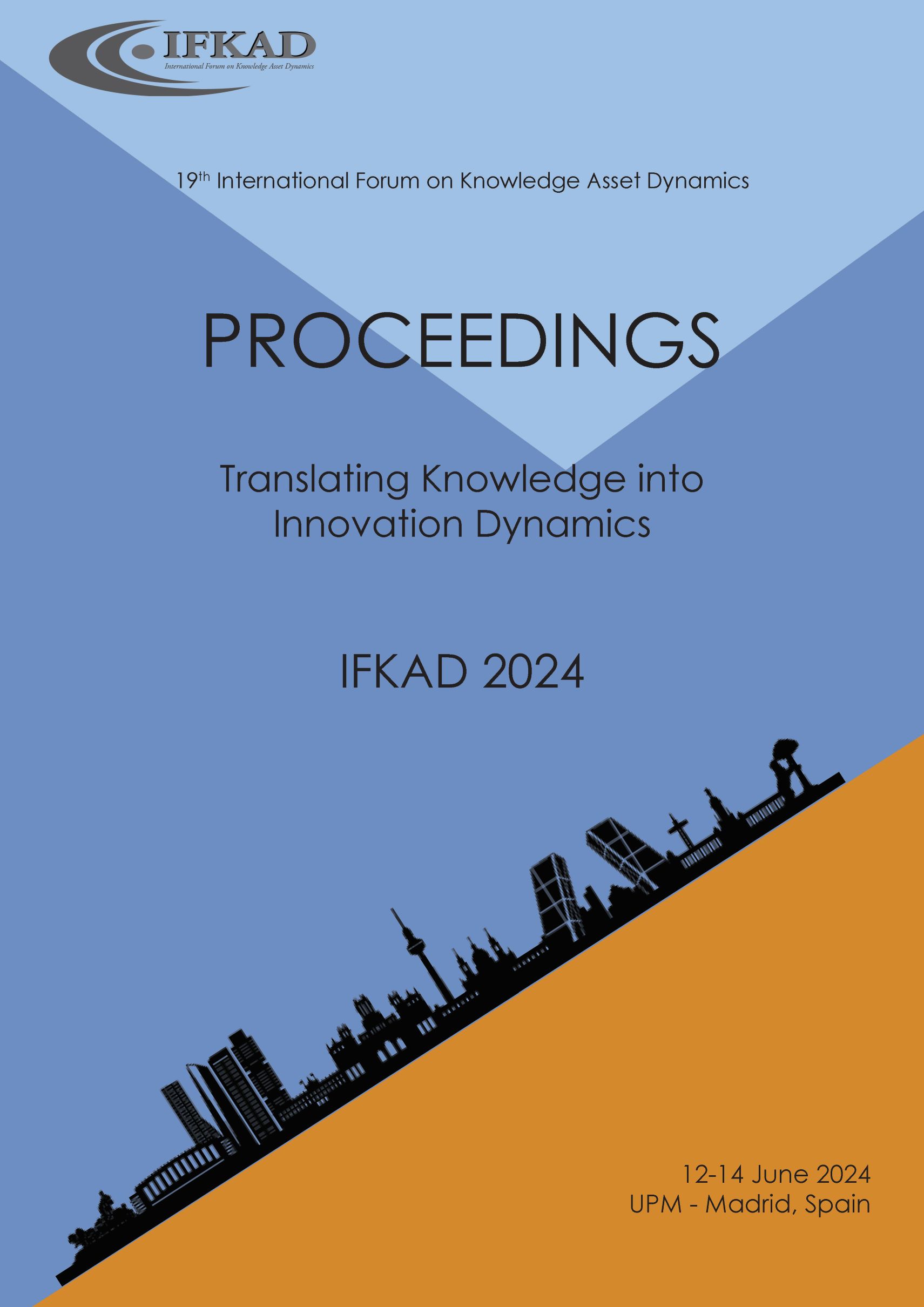
Proceedings IFKAD 2024

Translating Knowledge into Innovation Dynamics
List of Included Articles:
Knowledge Co-Creation for Flexible Packaging: Learning from a Case Study
Barbara Bigliardi, Benedetta Pini, Marco Scatto, Karen Venturini

The capacity of enterprises to create knowledge throughout the innovation process has been pinpointed as a pivotal source of competitive advantage (Bierly et al., 2009; Grant, 1996). In recent decades, corporations have come to recognize that such knowledge creation cannot be confined exclusively within the organizational realm. In order to increase their pool of knowledge, businesses are progressively involving external stakeholders during the innovation process in the co-creation of knowledge (Hoyer et al., 2010; Mahr et al., 2014). Different studies investigated and illustrated the process by which enterprises integrate a specific category of external stakeholders into their innovation processes (Horn and Brem, 2013). In particular, a current of research is dedicated to investigating the involvement of empowered consumers in such processes (Kazadi et al., 2016). As far as innovation process is concerned, environmental or green innovation has been the main innovation focus of interest for many researchers (e.g. Amores-Salvado et al., 2014). Beyond the environmental aspects, several benefits derive from environmental innovation. For example, it allows to lower external costs (e.g., Beise and Rennings, 2005), allows the improvement of companies’ efficiency, cost reduction, satisfies demand of environmentally friendly consumers, improves financial and business profitability (Amores-Salvado et al., 2014). However, Cainelli et al. (2015) have shown that environmental innovations are characterized by high levels of uncertainty, novelty and variety. Consequently, in such a context knowledge co-creation should have a fundamental role in facing the above mentioned challenges. Based on these premises, the purpose of our study is to improve our understanding of how knowledge is co-created with consumer involvement in the environmental innovation process, and which technological capabilities a lead firm requires to manage this knowledge co-creation process. In addressing these issues, we conducted a comprehensive literature review on the topic of knowledge co-creation, followed by a case study involving an innovative startup operating in the development of flexible packaging.

A Methodology for Knowledge-based Modelling of Production Processes and Assessment of Application of AI-driven KM solutions
Alessandro Massaro, Demetrio Alessandro Trunfio, Giovanni Schiuma, Francesco Santarsiero

The goal of the proposed paper is to provide a methodology to map electronic processes of manufacturing control systems matching with Knowledge Management (KM) processes. Specifically, the paper discusses an example of Proportional-Integral-Derivative (PID) process tuning a production machine and enabling quality management and predictive maintenance processes. The PID circuital model is designed by the LTspice tool, and the whole production process is designed by the Business Process Model and Notation (BPMN) standard, including the role of the Artificial Intelligence (AI) in the optimization of the machine control. Furthermore, the work describes possible Knowledge Base (KB) data sources enabling KM in Industry 5.0 scenarios characterised by AI-data-driven PID-controlled systems. Finally, are discussed the new manager roles matching with the proposed KM system.

Scientists in Action: A Brief Analysis of the Organizational Knowledge Creation Process
Daiane Souza Alves, Cleber Corrêa, Carlos Augusto Zilli, Neri Santos

Organizational knowledge management encompasses the processes of identifying, capturing, storing, disseminating, and applying knowledge within an organization. These processes are equally identifiable in pedagogical activities aimed at fostering entrepreneurial capabilities among high school students. This study, therefore, seeks to succinctly analyze the four pillars of organizational knowledge creation—socialization, externalization, combination, and internalization—as delineated by Nonaka & Takeuchi (1995), within the framework of the multidisciplinary project “Scientists in Action.” Utilizing bibliographic research methodologies and a case study of students from the New High School curriculum at a private school in Tubarão-SC, Brazil, the findings not only underscore the viability of integrating organizational knowledge creation processes into educational practices but also emphasize their significance and transformative potential in reshaping students’ learning approaches and knowledge construction.

Telemedicine in Post Covid-19 Pandemic: Organizing and Management Healthcare System
Marzia Ventura, Anna Maria Melina, Concetta Lucia Cristofaro, Rocco Reina, Walter Vesperi

The Covid-19 emergency forced the implementation of new ways of providing healthcare services, enhancing the combination of digital and telemedicine tools with traditional face-to-face services. To do this, it is necessary to have a Knowledge Management System (KMS), recognized and applied to define the actions useful to align people, data, processes and technologies to drive organizational performance. Telemedicine allows the delivery of medical care using information and communication technologies (ICT). Patients can receive care remotely, without face-to-face contact. To understand the impact of the Covid-19 and the implementation of telemedicine tools, an observation on a case study was carried out. Data were collected on a case study considered emblematic, due to its organizational characteristics. The data was collected on a project carried out by a teaching hospital which proposes a remote tracking and monitoring model for patients with multichronic pathologies. The objective of the project is to help patients receive quality healthcare at “home”, even in critical situations such as those experienced in the SarsCov2 pandemic.

An Investigation on the Sustainability of Rural Electrification Projects
Laura Del-Río-Carazo, Carlos Cuenca-Enrique, Emiliano Acquila-Natale, Santiago Iglesias-Pradas

By 2022, 660 million people in the world did not have access to energy yet and it seems that, despite all the efforts made over the last decade, the target set by the 2030 Agenda in SDG 7 will likely not be met. While the development of new technologies has facilitated electrification in last-mile communities, without an adequate management model neither the sustainability nor the success of rural electrification projects can be guaranteed. Therefore, the selection of appropriate management models remains a critical aspect of ensuring project success, sustainability, and affordability. This study conducts a systematic literature review, analysing 95 case studies of rural electrification projects to bridge the gap between theoretical management models and practical realities. Building upon existing dimensions of governance, technology, and business models, the study validates management model configurations and identifies key elements in rural electrification projects. The study underscores the need for comprehensive understanding and integration of these dimensions to guide future electrification projects effectively. The findings also highlight the importance of technology suitability and sustainable financing mechanisms in rural electrification projects.

Course Renewal in the University Project Management Education: Triggers and Results
Viktória Papp-Horváth

In the last few years, several factors forced project management lecturers to rethink their courses. New project management approaches and topics have emerged and become relevant, which made it necessary that the current approaches of project management (PM) education should be reassessed (Berggren & Soderlund, 2008; Cicmil et al., 2006; Winter et al., 2006). In parallel, higher education has become increasingly market-driven globally, and new concepts of the student-university relationship have emerged (Tomlinson, 2016). The university-labour market partnerships have also got a growing attention and practitioners are often invited into the education and into the program development. Different generations characteristics should also be considered when lecturers are updating their project management courses, especially when they are considering education approaches and teaching methods (Magano et al., 2021). Higher education is currently in the period what is known as Education 4.0, which comes along with the fourth industrial revolution, the emergence of new technologies and pedagogical procedures, and it could be characterized by four components; competencies, learning methods, information and communication technologies and infrastructure (Miranda et al., 2021). In this explorative research, eight semi-structured interviews were conducted with lecturers of higher educational institutions (HEI) teaching project management courses at various educational levels (e.g., undergraduate, graduate, and post-graduate programmes) in Hungary, who implemented changes in their courses within the last five years. The renewed syllabi were also involved into the investigation. The study aims to answer the following research questions: What are those factors that made it necessary to implement changes to the project management courses? How did the lecturers renew the PM courses within the HEIs?

Competence-Based Development in Education
Éva Pintér, Attila Virág

The generations differ in their attitudes, talents, and knowledge. We can reach out to young people using focused and valuable professional communication. Soft skills and a foundation of professional competence are essential in education. Challenge-based learning is becoming increasingly crucial, as is taking advantage of the potential presented by digitalization and artificial intelligence. Financial culture continues to be a priority topic for development. Real, professional information is crucial for students; in addition to ability-based growth, a professional knowledge base is required. Learning through “design thinking” is important because, in addition to re-creating creativity, we must identify the source of every problem and create a solution to it. Creating the foundations for collaborative development is critical, and information transfer is insufficient; effective knowledge exchange is required. Novel educational techniques and platforms have highlighted the importance of transforming course design and evaluation mechanisms, as well as developing new reference values and educational technology frameworks. This has become the level of Education 4.0, with the goal of adapting to market needs and challenges and implementing a higher education concept in which a generation of competitive, highly qualified professionals emerges from the education system, capable of applying appropriate digital tools and channels to corporate and social challenges in order to find a solution. The literature incorporates modern technologies, an understanding of current social settings, and novel teaching approaches into this notion. The education system is built on heutagogic and connectivist principles. The instructor takes on a learning-supporting, collaborative role, and the student can use this to create his own knowledge. It is a difficult task, however, to determine which educational methodological aspects should be retained in the era of new living conditions, and which should be revised in order to connect with the digital and knowledge-sharing competence-based education system. The goal of the article is to categorize and examine these aspects in order to develop an effective and sustainable education system, as well as an effective knowledge transfer process. The article explores the literary history of the development of education and carries out a comparative analysis of the specialized literature, separating educational eras.

Lessons and Development Paths Based on the International Comparison of Entrepreneurship and Innovation Masters’ Programs
Nikolett Deutsch, Ilona Hoffer, László Berényi Key

Interest in entrepreneurship among students is growing quickly, and the number of programs devoted to it is increasing. Due to their roles as centers where education, research, and knowledge production occur, higher educational institutions (HEIs) can provide diverse formal and informal learning opportunities to develop entrepreneurial mindsets and skills. However, despite its long history and popularity, further research is still needed to consider the different understandings and terminology, the philosophical foundations, and the content and methodological questions regarding entrepreneurship education. The purpose of this paper is twofold. First, it aims to highlight and identify the main trends in entrepreneurship education development based on a qualitative comparative analysis of six Hungarian and thirty-six international master’s degree programs in Entrepreneurship and Innovation. By investigating the target groups, learning objectives, program structures, curricula, and learning activities of these master’s degree courses, similarities and differences in the assumptions on the key components of entrepreneurship as competence and the best practices can also be identified. Second, the study attempts to contribute to the existing knowledge base of entrepreneurship competence analysis by exploring the perception of entrepreneurship among a group of Hungarian experts representing the labor market. The relative importance of entrepreneurial skills and competencies and the characteristic patterns of the opinions are defined by Q-sort evaluation. While the analysis can be acknowledged as a pilot study, key findings can provide valuable inputs for HEIs to offer diverse formal and informal learning opportunities to develop entrepreneurial mindsets and skills.

Methods and Business Process Analytics in Emergency Departments: A Systematic Literature Review
Marco Berdini, Davide Aloini, Elisabetta Benevento, Alessandro Stefanini Predictive

Emergency departments (EDs) are vital components of healthcare systems. However, they are under increasing pressure due to limited resources, demographic changes, and growing demand for healthcare services. Improving the operational efficiency of EDs is crucial for managing the pressures they face. Predictive modeling, supported by advances in hospital information systems and the development of artificial intelligence (AI) methods, is recognized as a promising strategy for enhancing emergency department operations and patient care. This study presents a systematic literature review of predictive modeling in the EDs. After screening more than 14,206 articles, we selected and analysed a final set of 54 articles. The analysis focused on four main dimensions: forecasting objectives, methodologies, predictors used, and managerial implications derived from these forecasts. This review offers valuable insights for scholars and practitioners by providing a comprehensive overview of the current landscape of forecasting applications in EDs and identifying areas that require further research and improvement.

The team leadership in the football clubs: the case study of “Democracia Corinthiana”
Raffaele Trequattrini, Fabio Nappo, Federico Schimperna, Simone Digennaro

In European football clubs playing in continental leagues, the separation of technical and administrative management is often used, with the former being reserved for the coach and the latter for the general manager and/or sports director. Traditionally, the coach of a professional football club is entrusted with the organisational function, which involves assigning tasks and responsibilities to the players of the team and the professional figures dealing with player-related issues. Additionally, the coach should support the team to build greater cohesion. In this scenario, leadership becomes a strategic function to drive performance. However, leadership is not determined by authority but stems from the individual ability to influence others. In light of these considerations, our study aims to analyse leadership dynamics within football clubs, focusing on the paradigmatic case of “Democracia Corinthiana”. The main objective is to understand how an alternative leadership model, characterised by collective decisions and rotation of the captain, influenced the team’s performance. Additionally, we aim to contextualise this phenomenon in the football landscape and take out significant insights for the theoretical and practical advancement of leadership, also integrating the theoretical contribution of Brafman and Beckstrom (2006) regarding the dynamics of networked organisations. The methodological approach relies on a single case study based on an in-depth analysis of retrieved documents and a critical review of existing literature on leadership in the football and organisational context. The in-depth analysis of the results shows that the absence of a traditional leadership figure improved the sporting performance rather than worsening it. The cohesion resulting from collective participation in decision-making stimulated members’ deep commitment to common aims, creating a culture of intrinsic performance. This model demonstrates that a leaderless leadership structure can be compatible and advantageous in organisational contexts prioritizing performance, emphasising the need to reconsider traditional conventions regarding leadership and business results. The originality of this study arises from its specific focus on the singular and revolutionary case of the “Democracia Corinthiana”, with an innovative integration of Brafman and Beckstrom’s theoretical contribution to networked organisations. Adopting a leadership model that affected not only sporting performance but also social debate in Brazil gives uniqueness to the examined phenomenon. The results of this paper can be used by the academic community, policy-makers, managers, professional football clubs, athletes, and practitioners as theoretical and practical advances, supporting the development and application of alternative leadership models.

A Truncated Poisson Model to Approximate the Firm-Level Innovation Generation Process
Haschka Rouven Edgar

In today’s high-technology markets, innovativeness and competitiveness are paramount for firm success. This article delves into the intricate relationship between research and development (R&D) investments, knowledge generation, and patent outcomes, with a specific focus on the pharmaceutical industry. Drawing upon existing literature and empirical evidence, we propose a novel theoretical model that captures the firm-level knowledge generation process, considering the intermediary role of patent applications. Unlike previous studies that overlook the patent application process, our model integrates this crucial step. Using a truncated Poisson model, we analyse a dataset comprising 137 independent European pharmaceutical firms to empirically test our theoretical framework. Our findings reveal that accounting for truncation significantly influences the estimation of innovation input elasticities, emphasizing the importance of considering the patent application process in assessing the effectiveness of R&D investments. The empirical results highlight the complexity of the innovation process, wherein R&D investments translate into latent knowledge, which in turn manifests into patent outcomes subject to the patent application process. By considering these intricacies, our model provides a more accurate approximation of the firm-level innovation process.

The Impact of Knowledge Management on Sustainability: The Case of European Banking Sector
Carmelo Intrisano, Francesco Minnetti, Anna Paola Micheli, Benedetta Cuozzo, Loris Di Nallo

Sustainability in the financial sector encompasses integrating environmental, social, and governance (ESG) factors into investment decisions and risk management. This integration not only helps in mitigating sustainability-related risks but also fosters long-term sustainable development. The growing emphasis on sustainability in corporate and investment strategies signifies an increased understanding of the interplay between financial, environmental, and social well-being. As pivotal players in the developmental landscape, banks hold significant potential to expedite a company’s sustainability journey by embracing ESG frameworks in their investment decision-making processes. Stakeholders, ranging from investors and policymakers to regulators, increasingly demand enhanced attention to ESG issues within the banking system. Consequently, banks are increasingly pressured to adopt socially responsible practices, ensuring responsible investment decisions. In Europe, regulatory advancements have mandated the incorporation of ESG factors into the credit process. The European Banking Authority (EBA) report in 2021 marked a significant milestone in this direction, requiring alignment across all member countries. Within this regulatory context, the primary objective of the discussed research is to analyze the impact of Knowledge Management (KM) on ESG performance in the banking sector. In this perspective, the study develops in two phases. Initially, content analysis research involves a sample of European listed banks. This entails examining information from annual reports to formulate a Global Index of knowledge management and an ESG index. Subsequently, a regression analysis is performed between the Knowledge Management Global and ESG indexes. Findings from a sample of 32 listed banks reveal that while the disclosure of knowledge management information isn’t yet widespread, there’s a discernible uptrend in awareness. Moreover, a weak positive association is established between the disclosure of knowledge management information and ESG performance. These insights augment the existing literature and spotlight the absence of a universally accepted framework for knowledge reporting, underscoring the role policymakers could play in endorsing knowledge management disclosure. The study’s novelty lies in establishing a robust knowledge management measure, offering an initial framework for this metric. Unlike many prior studies focusing on the broader impact of knowledge management on a bank’s performance, this research uniquely zeroes in on its influence on sustainability performance within European banks. Thus, it enriches the body of knowledge in this domain and provides invaluable insights and guidance for researchers and managers alike.

Copyright and Works Created by Artificial Intelligence: A Critical Analysis
Sabrina Picone

This article provides a critical and detailed analysis of the legal landscape concerning copyright law, with particular emphasis on emerging challenges related to works created by Artificial Intelligence (AI), both nationally and internationally. The rise of AI has brought significant changes to our relationship with technology and society, presenting new perspectives and giving rise to ethical, social, legal, and economic challenges. The delicate balance between AI’s innovative drive and copyright protection will be at the centre of this reflection. The advent of AI raises ethical and legal questions regarding intellectual property and the creation of works generated by algorithms. How can generative works be attributed and protected? What are the limits of machine creative autonomy compared to human vision? This inquiry will not only define the legal landscape of AI but will also shape society’s way of creativity and responsibility. A crucial aspect of this investigation is to examine the legal challenges associated with recognizing and protecting copyright for works created by Artificial Intelligence. However, it is important to note that attributing authorship to these works and defining their rights and protections is a complex challenge. The main objective is to examine how the Italian legal system deals with creating, protecting, and managing AI-generated works, considering ethical and technological aspects in addition to legal ones. The discussion also covers how copyright law should adapt and evolve to address emerging challenges, balancing promoting innovation with protecting authors’ rights. However, the emergence of Artificial Intelligence works raises doubts about whether AI can be considered the author of the works it creates. The concept of sui generis rights for Artificial Intelligence works implies the creation of a distinct form of legal protection, separate from traditional copyright. The article presents a future-oriented perspective that embraces the diversity of human and artificial minds. It suggests an interdisciplinary approach to model new effects and consider possible solutions. These solutions include adapting existing laws to recognize specific protection, adopting International Conventions, establishing common guidelines for copyright protection, and organizing workshops and seminars related to AI-generated works.

The Relationship between of Organizational Ambidexterity and Competitive Advantage in Multi-Business Companies
Arkady V. Trachuk, Natalia V. Linder

Assessment of the impact of organizational ambidextrity on the competitiveness of multidisciplinary companies, expressed by indicators: productivity growth, the share of products certified according to international standards in the total volume of production of the company and the number of new competencies of the organization through the implementation of projects aimed at achieving organizational ambidextrity. An author’s complex model has been developed that allows analyzing how the achievement of organizational ambidextrity of business units affects the competitiveness of doing business by multidisciplinary companies, expressed by the level of productivity, the share of products certified according to international standards and the number of competencies of the company. The study offers a theoretical model that is empirically verified using structural equation modeling (SEM). The empirical basis of the study was 327 completed projects in 16 multidisciplinary companies. Based on the results of empirical analysis, it is shown that when implementing projects aimed at achieving organizational ambidextrity (expressed by indicators – the number of new categories of products and/or services introduced in the reporting year and reducing operating costs) is higher by 6-17% with an average value of 12.4%. It is shown that achieving the effectiveness of search activity has the greatest impact on productivity and the number of new competencies; while the improvement of operational activities is due to the share of products certified according to international standards in the total volume of production of the company and the number of new competencies of the organization through the implementation of projects aimed at achieving organizational ambidextrity. Firstly, this study defines the features and conditions for achieving organizational ambidextrity by multidisciplinary companies: effective knowledge exchange between business units, the development of learning and absorptive abilities in business units, as well as the sharing of opportunities and resources. In addition, this study shows that for multidisciplinary companies, knowledge sharing and resource sharing are key to achieving organizational ambidextrity. Secondly, an analytical model is proposed, the novelty of which lies in combining several areas of research on the relationship between organizational ambidextrity and competitiveness.

Urban Air Mobility: Organisation and Governance of a Frontier Ecosystem
Francesca Castaldo, Maria Virginia Sirolli, Stefano Armenia

This paper explores Urban Air Mobility (UAM), a new frontier in the aerospace sector. It emphasises the importance of comprehensive integration among all stakeholders, both human and technological, involved in planning and implementing UAM processes. This integration is crucial to ensure the resilience of the envisioned ecosystem. The research utilises documents from influential organisations such as NASA, the European Union Aviation Safety Agency (EASA), and the Federal Aviation Administration (FAA). It blends theoretical insights with empirical analysis to emphasise the significance of comprehensive coordination of digital platforms in integrating Urban Air Mobility with other urban transport modes to effectively manage air traffic. As the urban population expands and conventional transit becomes increasingly unsustainable, UAM presents a viable alternative using advanced air mobility technologies. It is considered to have the potential to revolutionise existing modes of transport and to be a disruptive phenomenon capable of creating a new sub-sector of the aerospace industry. However, the organisation and governance of the Urban Air Mobility (UAM) ecosystem presents complex elements due to the involvement of multiple stakeholders, including governments, regulators, technology providers and urban planners, required for planning, implementation, and operation. The microfoundational approach, which emphasises how macro-phenomena emerge from the nuanced interaction of individual actors, is therefore presented as a potential feature of a proposed framework for understanding, organising, and managing behavioural interactions within the UAM constellation. Our analysis also covers the challenges of designing adaptive and distributed digital systems that can dynamically respond to operational disruptions and emerging threats, including cybersecurity. This need arises from the large amount of data that needs to be exchanged and processed to ensure system functioning. From this perspective, the concept of panarchy provides another valuable element for the proposed framework, as it allows to examine how different levels of governance and operations can coexist and influence each other, thus allowing to apply a systems perspective in order to achieve a robust, scalable, and flexible ecosystem, thus ensuring its overall resilience. Ultimately, this paper aims to highlight the need for a systemic approach to collaboration between all stakeholders to manage the complexity of UAM and harness its potential to transform urban transport. As we navigate the intricacies of the rapidly evolving digital transition, this work aims to provide preliminary insights to inform the strategic development of UAM platforms, ensuring that they are safe, efficient, and aligned with broader social and environmental goals.

Investigating the Relationship between Gender Composition of Entrepreneurial Teams and Sustainable Orientation: Preliminary Insights from the South Italian Startup System
Francesco Paolo Lagrasta, Pierpaolo Pontrandolfo, Barbara Scozzi

Entrepreneurs are increasingly recognized as agents of social change, with entrepreneurial action serving as a pivotal mechanism for promoting sustainable production and consumption patterns. The paper delves into the realm of ecopreneurship and social entrepreneurship, investigating the influence of gender composition within entrepreneurial teams on the development of socially oriented and eco enterprises. Drawing from a dataset of 456 early-stage startups in Puglia (Italy), the study adopts logistic regression to identify the role that the presence of women in the team and the economic sector play in predicting social and environmental orientation. Findings reveal a significant positive influence between the percentage of women in entrepreneurial teams and social enterprises. Conversely, this relationship does not manifest with eco-enterprises. The research contributes theoretically by shedding light on the interplay between gender and sustainable entrepreneurship, providing results from a homogeneous sample by stage of startup development and regional culture.

The Impact of Middle Managers Narcissism on Knowledge Sharing Propensity
Simona Leonelli, Federica Morandi, Fausto Di Vincenzo

Research addressing the microfoundations of knowledge sharing is emergent and growing, but there is still a lack of studies analyzing the trait of narcissism. This lack of studies appears relevant for middle-management figures, who increasingly play a strategic role in transferring knowledge, especially within professional organizations. This paper aims to study how three dimensions of narcissism, namely leadership/authority, grandiose exhibitionism, and entitlement/exploitativeness, impact the knowledge-sharing behavior of middle managers within organizations. A community of 115 Italian doctors who held middle management positions (head of ward unit) was investigated. The results indicate that leadership/authority and grandiose exhibitionism are negatively related to the propensity to share knowledge. In contrast, entitlement/exploitativeness has a positive relationship with the knowledge-sharing propensity. The study offers necessary evidence both for scholars and organizations.

The Story that Only Circular Products Can Tell: Empowering Consumers through Background Information
Vinicio Di Iorio, Shripathy Swaminathan, Francesco Testa, Daniel Korschun, Natalia Marzia Gusmerotti

Used clothes have a story to tell, carrying with them the essence of their previous lives. Whether second-hand or remanufactured, clothes passed down from someone else entail something special, embodying not just a product, but a narrative. Literature suggests the need for more value-based studies on consumer behavior, such as satisfaction and perceived quality, especially in the post-purchase stage of circular products. One less-explored value-based attribute is the concept of provenance, where the impact of the prior owner of an item remains largely unexplored. Hence, the primary objective of this study is to analyze the impact of provenance effect on consumers’ purchase intentions, focusing on its inherent values in circular products. To study these effects, two between-subject experiments were conducted in consecutive years. Study 1 explores how product circularity and provenance interact with the presence of blockchain technology. Study 2, inspired by the initial findings, focuses solely on product circularity and the provenance effect. Our analysis from both studies offers insights into consumer purchase intentions and how they perceive the value of circular products. Through the insights gained, this study aims to provide guidance for developing a new strategy to enhance the longevity and circularity of used products in the market.

New Frontiers of Digital Finance: Banca Popolare del Cassinate Invests in New FX12 Platform
Vincenzo Formisano, Domenico Celenza, Maria Fedele, Anna Turchetta

This paper delves into the emerging realms of digital finance, with a particular focus on Banca Popolare del Cassinate’s investment in the FX12 platform. It explores the concept of digital finance and its transformative impact on the financial sector, discussing both its advantages and challenges. Digital finance, or fintech, has fundamentally reshaped financial services by harnessing technological innovations. It encompasses various facets, such as digital payments, banking, and lending, revolutionizing how individuals and businesses manage their finances. The investment by Banca Popolare del Cassinate in the FX12 platform underscores the growing interest of traditional financial institutions in digital finance. FX12, a pioneering start-up based in Naples, has developed IncassaOra, a platform dedicated to digital and sustainable finance. It is the first platform to offer three distinct digital finance solutions: dynamic discounting, supply chain credit, and invoice trading. The FX12 platform serves as a marketplace for creditors of low-risk profile companies and professional investors. It aims to establish itself as a leader in invoice trading and fintech adoption in southern regions. To ensure rapid and informed growth, FX12 operates on a network model, actively engaging professionals, specialized consultants, and investors of varying scales. Banca Popolare del Cassinate, a regional bank headquartered in Cassino, Southern Lazio, pioneers a program of process dematerialization, viewing digital finance as a complement rather than a replacement to traditional services. By investing in FX12, the bank seeks to bolster its foreign exchange capabilities and provide customers with seamless financial experiences. The adoption of digital finance brings forth myriad benefits, including enhanced financial inclusion, reduced transaction costs, and increased sectoral efficiency. Furthermore, it fosters innovation, giving rise to products like robot-advisors and crowdfunding platforms. Nonetheless, the adoption of digital finance is not without challenges. Security and privacy concerns loom large, given the susceptibility of the digital realm to cyber threats and data breaches. Robust regulatory frameworks are imperative to safeguard consumers and uphold the integrity of financial systems. Additionally, bridging the digital divide, especially in developing nations, remains a significant hurdle to widespread adoption. In essence, Banca Popolare del Cassinate’s investment in the FX12 platform epitomizes the evolving landscape of digital finance. It underscores the potential for traditional financial institutions to embrace technology and offer innovative services. While digital finance offers immense opportunities, addressing its challenges requires concerted efforts from policymakers, financial entities, and consumers as technology continues to advance.

Value Decomposition in Platform Capitalism: Towards a Resilient Platform Integration Meta-Model
Mario Calabrese, Alessia Sciarrone, Gerardo Bosco, Raffaele D’Amore, Davide Liberato Lo Conte

The transformation of capitalism associated with the rise of digital platforms has radically redefined the creation and distribution of value. This study delves into the evolution of value within the context of platform capitalism, underscoring the shift from a traditional model grounded in physical production to a circular and multidirectional one centered around digital interaction and data processing. Particularly, it examines the economic and socio-political implications of this paradigm shift while proffering a politico-institutional model for effectively managing emergent dynamics. Employing scrutinizing the governance of platform ecosystems, the intricate interplay among involved actors is elucidated, thereby advocating for the imperative of equitable redistribution of generated value.

Proceedings IFKAD 2024
Translating Knowledge into Innovation Dynamics

Submit the following information to receive the download link 

a valid email address where the download link will be delivered