PROCEEDINGS e-books

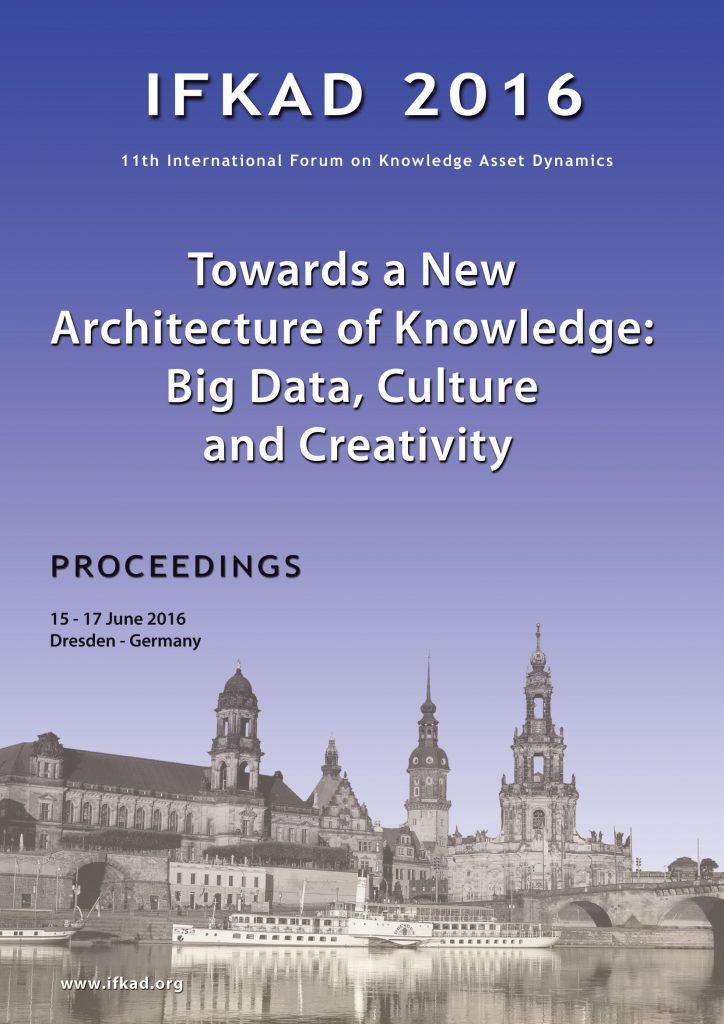
Proceedings IFKAD 2016

Towards a New Architecture of Knowledge: Big Data, Culture and Creativity
List of Included Articles:
Professional as agent and co-producer: Asymmetry and mutuality in the value creation of professional service firms
Tale Skjølsvik, Karl Joachim Breunig

This conceptual paper addresses the nature of value creation in professional service firms (PSFs). An extensive number of scholars have been looking at PSFs within law, consulting and engineering to understand knowledge as sources of competitive advantage. A dominant part of this literature build on agency theory to suggest that information asymmetry is an important characteristic and precondition of value creation in professional services. This paper identifies a contradiction in the notion of information asymmetry in reference to professional services firms. The paper reviews theoretical contributions explaining the value creation processes in PSFs. While the context of professional services might be considered marginal in reference to agency theory, knowledge has been identified as one of the key sources of competitive advantage in the 21st century, and understanding how to develop and leverage such sources of advantage has gained extensive interest. In addition, the context of knowledge intensive and professional services has been referred to as extreme and strategically relevant to understand knowledge based value creation. We argue that it is necessary to revisit the assumption of information asymmetry for two main reasons, First, any asymmetry that is proposed to exist is that of knowledge rather than information. Secondly, value creation in the context of PSFs is characterized by mutuality rather than asymmetry as co-production with clients as a core component in PSFs value creation. While PSFs might have superior esoteric professional knowledge, buyers often have superior knowledge of their own context and problem. Both of these types of knowledge are relevant in the value creation in PSFs due to the contextual and customized nature of the services they provide. Two important contributions are suggested in the paper, First, the characteristics of value creation of PSFs should be revised and extended by the inclusion of knowledge asymmetry and mutuality. This is important for practitioners in that the co-operative and mutual nature of value creation needs to be recognized and nurtured, which has impact of the conduct of both suppliers and buyers of professional services. Secondly, this more complex nature of value creation needs to be recognized from an institutional perspective in that the certification of professionals should incorporate and promote the mutuality and the importance of client needs while at the same time emphasising esoteric professional knowledge and attitude and the desire to deliver what is objectively best for the client.

Networking in process of knowledge creation and development and sharing: focus on high-tech companies and organizations
Alexander Tanichev, Vitally Cherenkov

To find tools and methods to research networking process of the knowledge creation, development and sharing The creation and management of knowledge has become a central concern to business and management, both as a source of value and as an opportunity to achieve and sustain competitive advantage We propose an approach to analyse the current situation with networking as a key factor for knowledge creation. This methodology puts in evidence several examples of successful profiting from using of knowledge by high-tech companies and organizations The outcomes of the application can be used in business environment by high-tech companies and organizations for building up, development and using their technologies

Enablers and Restraints of Knowledge Work – Does profession make difference?
Nina Helander, Jussi Okkonen, Vilma Vuori, Niina Paavilainen, Johanna Kujala

Knowledge work (KW) has risen to a significant role in modern societies, leading to an increasing number of the knowledge workers. Digitalization changes the work life, challenging individuals representing different professions as well as organisations. KW and the traditional professions are changing in many ways, opening up new vistas. The purpose of this paper is to analyse and compare the enablers and restraints of KW in different professions, the medical practice, the clergy, the legal profession and the teachers. The paper seeks the KW enablers and restraints similar or different when digitalization changes inevitably the ways of working. The theoretical background for the paper is addressed by the concepts of professions and KW and certain professions. The empirical data was gathered with unstructured interviews using a narrative interview method. Questions were open so that the situations were similar to a discussion. The interviewer posed further questions to deeper the interviewee’s answers and to build the continuity of the interview upon them. Using the narrative interview method meant that the researcher tried not to influence or lead the interviewee to a significant extent and the differences and similarities could be seen as they are perceived by the respondents This methodology puts in evidence on similarity of working habits, socio-technical systems and work-flows of within and between professions. The originality of the study is laid on the unique comparison of different professional groups and the parallel analysis. The paper concludes by discussing the enablers and the restraints of KW in the era of digitalization in the chosen professions. The paper also builds profession related taxonomy of key findings and discusses those from the managerial perspective.

Agile Competence Management for flexible Production Systems
Nicole Oertwig, Mila Galeitzke, Fabian Hecklau, Holger Kohl

Customers and their requirements are increasingly influencing product development and production processes and at the same time products are becoming more and more individualized. Thus, individualization is no longer restricted to the final products; it increasingly influences all process of companies. New strategies and methods for an effective and flexible management of the production system are needed that include a certain agile approach to personnel planning and deployment. Existing approaches do not meet these requirements of dynamic production environments. We propose an approach which allows connecting flexible process networks with a model-based dynamic competence management. The flexibility of the process network, used for all enterprise processes in the company, is created by a modular framework for the process description. Flexibility in this case means, that the structures can be easily changed for every customer order. This approach offers the possibility to describe required skills in relation to processes and to assign them to employees, so that the planning of the needed staff does not remain on fixed role concepts and offers an increased degree of freedom in planning. Competence management largely relies on competence profiles of individual employees. These profiles are matched to specific positions, thus the flexibility to engage personnel in cross-position tasks is impeded. A decoupling from individuals and the compilation of competence-based reference models is a significant step towards agile human resource management in flexible production systems. The organizational and production process automation is progressed in terms of the deployment of personnel controlled by the process itself. Furthermore, the human resource development is enhanced via process controlled coaching and mentoring, where idle capacity of personnel is assigned to tasks for transferring implicit knowledge additionally. The combination of flexible process networks and dynamic human resource management leads to increases in productivity, effectiveness and implies new approaches e.g. under the constraints of Industry 4.0. Especially in combination with models of flexible working and the resulting new forms of employment the employees are actively involved in the future by bringing in all of their skills which leads to an increase of their individual responsibility. Furthermore, this approach could be a solution to counter the demographic change, as the required competences for the considered processes are referenced to the respective personnel along with demographic data.

Ambidextrous Learning and Performance: the role of Human Resource Flexibility. An empirical study in Spanish Hotels
Mercedes Úbeda-García, Enrique Claver-Cortés, Bartolomé Marco-Lajara, Patrocinio Zaragoza-Sáez

The purpose of this paper is explore if human resource flexibility (HR flexibility) facilitates the development of organizational ambidexterity (OA), which in turn brings positive effects on firm performance. We proposed a quantitative approach. The theoretical model and the hypotheses proposed were tested using a sample of 100 Spanish hotels. We chose the hotel industry because their dynamism requires companies to have to anticipate (exploration learning) and the sectorial hostility forces the firms to offer good price (learning exploitation). This paper represents a valuable contribution to the literature in several ways. Firstly, this research advances in the understanding the factors that stimulate the OA. It determines the extent to which Human Resource Flexibility influences organizations to develop, simultaneously, learning exploration and exploitation. This “micro” approach about the OA complements the current literature about this topic. Secondly, this paper provides empirical evidence on the relationship between OA and performance. And thirdly, the results obtained allow us advance in the understanding the relationship between Human Resource Flexibility and performance. Our findings demonstrate that the relationship between these two variables is not direct. This relationship is mediated by OA. This conclusion can be a reference for further research in this area. The practical implications that emerge from this paper are the following. The conclusions of the research demonstrate that the ability of the firm to follow, at the same time, exploration and exploitation learning, has a positive effect on organizational performance, and the HR flexibility is an antecedent factor in this process. This is a conception of HR flexibility that would be placed within the paradigm of organizational dynamic capabilities. More precisely, a need would exist to encourage behavioral flexibility; that is, to develop all those employees’ ability to adapt their responses and actions to any new circumstances which might eventually arise in the workplace. This behavioral flexibility will be viable as long as skill flexibility is previously developed; in other words, employees need to be versatile in order to perform different tasks and/or functions, and they must also be given the opportunity to develop new skills in the future. Finally, the human resource management has to implement people management practices which can easily adapt to any potential organizational contingencies.

Justifying the Intangibles: Review of Information System Justification Research
Michal Krčál

Although intangible benefits of information systems (IS) can seriously contribute to organizational success (Remenyi et al., 2007), their poor assessment can falsely dismiss IS as uneconomic (Kim et al., 2010; Marsh and Flanagan, 2000). Despite rich research in the field of IS justification (see Schryen, 2013), it seems that this effort yields insufficient outcomes. Organizations still struggle with finding reasons why to invest (or not to) in IS and what benefits such investment will bring, and researchers report lack of knowledge of justification methods (Bernroider et al., 2014). Therefore, this study reviews the past IS justification research with the attention on intangible benefits. As the research of IS justification has broadened and dispersed, mainly literature review studies were analysed. The reviews were identified by various ad-hoc database search queries and by backward and forward citation search. Subsequently, relevant review articles were narratively reviewed with focus on types of methods and possibilities for further research. Finally, according to analysis, taxonomy of methods was designed and further research directions were suggested. This study is the first attempt of justification methods taxonomy since Irani and Love (2002) study. The taxonomy can be used in future research efforts helping researchers to navigate through the domain. Besides, it synthetizes reviews helping another researchers to quickly orient in the research domain as it analyses recent research development in the IS justification field. Practitioners can use this research in order to gain more knowledge about justification methods, as the knowledge of this field is not very spread in companies. This research identified five categories of IS justification methods, financial, strategic, analytic, multi-criteria, process. The ability of most methods to justify intangible benefits of information systems is rather low or non-existent. With current justification methods, companies are unable to properly justify information systems that provide many intangibles. Therefore, instead on focusing on developing other new methods, more effort should be directed into gaining more insight into the practice of justification process in order to understand the reasons why companies struggle to evaluate intangible benefits of information systems.

Research and education in visual humanities by using digital 3D reconstruction and visualization methods
Sander Münster

The proposed research work is intended to support a methodological development of digital 3D reconstruction by investigating (a) scenarios and practices for the employment of digital 3D reconstruction and visualization methods and approaches for scientific research in visual humanities, (b) to identify requirements and recommendations for digital tools, and (c) to develop and evaluate how to educate on the use of digital 3D reconstruction and visualization methods in visual humanities. The proposed paper presents preliminary results as well as research prospects from previous and ongoing work in which our department is involved in and which deal with various aspects of 3D reconstruction, primarily in the context of visual humanities. Research methods and approaches mainly derive from social sciences as for example social network analysis, quantitative and qualitative content analysis, and Grounded Theory. Moreover, various methods from usability engineering as well as from business informatics are employed. An overarching objective of our research work is to draw a currently outstanding “big picture” on digital 3D reconstruction and visualization and related “knowledge” issues by combining both theoretically and practically grounded research parts as well as including multi-disciplinary perspectives. Against this background, this article is intended to provide a structured overview of previous and future research activities within our department as well as preliminary results. With regards to the described activities, an intended outcome of the proposed research work is to contribute to a comprehensive discourse on a unique epistemology of digital 3D reconstruction in visual humanities as well as to deliver related practically tested implications for software design and education as well as methodological and organizational settings.

Strategy for the automated diagnostic of the openness degree in government data
Ramon Reyes Carrion, Elio-Atenógenes Villaseñor, Mario Graff Guerrero

An information extracting and modelling strategy, based in big data analytics, aimed to evaluate in a (semi-)automated manner, the Mexican government data, analysing the pertinence, quality, usability and organization in the open data of the Mexican government. We propose a detailed study of the formats, structure, temporality, uniformity, ease of access, available tools, to determine the openness degree of the data of the Mexican government. Additionally, the results obtained from the study, will be useful for the modelling and evaluation of the information to design and implement the strategies of analysis of the open government data, using big data analytics advanced techniques. This methodology puts in evidence the feasibility of the categories defined by the research group, “Seminario de Investigación de gobierno abierto y big data”. Lastly we diagnose the Mexican government open data using big data analytics tools. The outcome will be the application of big data analytics tools to open data susceptible to be applied to data from developing countries government. The modelling of the data will be the starting point for the design and implementation of the data analysis strategies to be applied to open government data through the use of big data analytics advanced tools.

Enhancing bank security and safety: a knowledge based approach
Salvatore Ammirato, Cinzia Raso, Alberto Michele Felicetti, Alfredo Mazzitelli

Assets protection (mainly, people and properties) is a crucial topic for any bank. Anyway, even if protection of electronic money transactions and deposits gained big investments, physical protection of bank branches didn’t receive similar attention over recent years. This paper aims to propose an organizational and technological management platform able to manage a bank branch as a cyberspace remote controlled, with the twofold objective of increasing the degree of security and safety of the branch and reducing operational and management costs due to protection measures. We adopted a research method that consists of five phases, Risk identification. Identification of a set of threats from which bank branches must be protected. Risk assessment, Definition of a Risk Function for bank branches. Identification of appropriate actions to reduce risks, identification of technological and organizational protection measures to minimize values of the risk function. Definition of the risk model, Definition of a model able to classify each kind of threat, to determine the degree of risk and suggest appropriate protection measures. Definition of a cybersecurity platform, Definition of a platform aimed to remotely control and manage the set of protection measures of the branch. Results of the project led to the definition of a cybersecurity platform in the form of an innovative, integrated and adaptive knowledge management platform for the security management of bank branches. The branch becomes a cyberspace where the proposed platform, by means of an integrated network of sensors (e.g. motion detection, gesture recognition, smart face recognition, chemical/electronic sniffer, geometry alteration, contact sensors, etc), is able to detect and measure real-time risk of attacks (crimes), and to indicate appropriate countermeasures. Results represent a valuable support to the re-engineering of the bank branches. The cybersecurity platform is able to improve the performance of the bank in terms of, Increased efficiency, achieved through optimization of technological resources and reduction of costs directly related to the deployment of protection and preventive measures (number of armed guards, number of sensors, number of individuals in charge of monitoring the camera images, armour and metal grates, compensations for physical and moral damage to be paid to employees and customers, etc.). Increased effectiveness, through the significant reduction of “false positives” attacks and the implementation of appropriate countermeasures to real attacks.

Social-Software-Supported Collaboration: A Design Model for Social Software Usage in Organizations
Volker Stich, Jan Siegers, Philipp Jussen

Organizations seek to expand the utilization of social-software-solutions to boost collaboration among employees. However, the existing scientific data regarding the improvement of intra-organizational collaboration as a result of social software is not applicable for companies. Therefore, this paper aims to investigate corporate collaboration based on social software. It describes a holistic design model for intra-organizational collaboration based on social software by addressing relevant possible company goals and highlighting the advantages of integrating social software solutions into corporate communication. The model in this paper aims to take a variety of different variables into account and therefore consists of four main elements goals, functions, effects and collaboration which allow a detailed planning of social software supported collaboration as well as a strategically organization. Currently there are many social software solutions with different functions and functional characters. To choose the fitting one, the design model can be of use. It helps selecting the applying strategy respectively the applying solution. The design model presents the functional classes and possible support when attaining entrepreneurial goals. Thus it is possible to prioritize the function module and to plan ahead, as well as to evaluate when it comes to different types of social software based collaborations. This paper shows what kind of potential social software holds when used to support corporate communication and collaboration. The designed model enables businesses to structure and plan their implementation of social software and organize what kind of goals they want to achieve and which areas of their company they wish to connect. Thus, the model supports the growth of collaboration based on social software and is an important guideline for business that wish to transform themselves into an Enterprise 2.0.

Subversive Marketing and the Conscious Consumers
Juan Antonio Vargas Barraza, Luis Uriel Hernández Ramírez, Antonio Jesús Vizcaíno

Subversive advertising – or just subvertising, a word made by the words “subvert” and “advertising” (San Nicolas Romero, 2004) – deals with the lack of ethics in modern advertising and how has impacted young people, modifying the purchasing intentions and the refusal to continue shopping brands related with non-ethical practices (Aouina et al., 2011). Subvertising becomes the mean to generate awareness that allows clarifying the full range of practices of companies that use advertising. So people can display a model of respect for human rights, the environment, and freedom of expression and open a small way of alternative thoughts (Cortés, 2009). The study enables the hypothesis that there is greater resistance to continue consuming the products of a particular brand if the youth persons are exposed to a longer time of subvertising. An exploratory and descriptive research based on a pretest and post-test experiment shows the reaction of viewers to the subvertising, this allows determine the relationship between young people and these content. Exploratory study is generally used when the research question is not clear or when the available literature does not seem clear enough or directly related to the object of study (Aouina et al., 2011) or when the objective is to examine a issue or problem little studied, of which you have many questions (Hernandez Sampieri et al., 2007). An experiment where the impact of publicity against the impact of subvertising is important because we can determine whether exposure to the latter modifies the perception that young people have for brand advertising, letting know more about this phenomenon and how is evaluated for those affected by it. Joseph D. Rumbo (2002) found that young consumers goes against postmodernism, which is due to the saturation of advertising culture, having the feeling of be more and more invaded by the hyper-reality, a fantasy created by manufacturers to encourage to consume and marketers from large firms stimulate this with advertising (Firat & Venkatesh, 1995, p. 251), which for young people is not entirely true, because what companies want to show is different from what reality is.

Strategic management tools and techniques: the cultural influence
Anikó Csepregi, Lajos Szabó

This paper aims to fill in the gap of investigating the relationship of strategy development and knowledge strategy and the integrating role of key strategy management tools and techniques between business strategy and knowledge strategy influenced by the culture the organization operates in. The paper first introduces different approaches of strategy development and the general process of developing an organizational strategy. It continues with the most used strategic management tools and techniques based on the results of the Bain & Company 15th Management Tools & Trends’ empirical survey. The most used management tools and techniques are also presented in details. The survey has been conducted in different countries and the results are summarized in different cultural clusters. Thus, the paper introduces the characteristics of these cultural clusters highlighting the similarities and differences among them. The comparative analysis in this case is rooted in the dimensions of Hofstede’s model of national culture. Furthermore, the paper discusses why the preferences in the usage of strategic management tools and techniques differ in these cultural clusters. This is followed by focusing on different knowledge strategies identified by De Toni et al. (2011). Besides the analysis of the differences of preferred knowledge strategies in different cultural clusters, the paper also aims to reveal the knowledge strategy being more effective in given cultural clusters. The paper helps practitioners and academics to understand the role of culture in the strategy development process and knowledge strategies implementation. Several papers have been dealing with management tools and techniques from a very technical perspective introducing empirical research results on how to use them in practice. Other papers analyze the values of the dimensions of national culture according to Hofstede’s database. However there is a lack of combination of these two fields and this paper highlights the importance of using management tools and techniques adequate to the cultural characteristics of the organizational environment. For strategic decision makers it is of high importance to take cultural differences also into consideration during the organizational and knowledge strategy development process. The paper helps leaders of multinational and international companies to understand why certain management tools and techniques are preferred in different cultures. Furthermore, an integrated view is provided for leaders on organizational and knowledge strategy development, on effectively applicable management tools and methods applied for the development process, and the adjustment of these strategies to each other.

Adapting service-based working culture as the key driver for organisational creativity and innovation
Sanna Ketonen-Oksi

The purpose of this study is to examine, why and how adapting service-based working cultures could be prominent for organisational creativity and innovation. The analysis, entirely based on theoretical discussions, is made following the ideas and concepts of Complex Adaptive Systems theory and Service-Dominant Logic. The originality of the study lays on understanding the importance of organisational cultures as the key driver for managing creativity. The implications of adapting a service-based organisational culture will thus be examined, resulting in significant insight on how to develop creativity and innovation related management practices. This study offers both deliberation and practical advice for companies interested in enhancing creativity and innovation.

Knowledge Sharing Intention; the University of Baghdad Perspective
Farag Edghiem, Khalid Abbas

This study aims to measure the intention of the University of Baghdad’s academics to conduct knowledge sharing behaviour. The study also opts to contribute towards addressing the significant gap in the literature on knowledge sharing practices within Iraqi higher education institutions; involving distinct management procedures, infrastructure, as well as cultural and political implications. The University of Baghdad academics’ intention to conduct knowledge sharing behaviour is measured by testing the theory of planned behaviour (Ajzen, 1991) three factors of intention determinants including; attitude towards knowledge sharing, subjective norms and perceived behavioural control. A survey questionnaire was distributed among a sample of 226 academics in the University of Baghdad whereas the collected data was analysed through the IBM software SPSS. the study findings provide a novel insight and contribute to bridging the literature gap by highlighting the intention of the University of Baghdad academics to conduct knowledge sharing behaviour. The outcome of this research may guide policy-makers in the concerned international organisations as well as in Iraqi higher education institutions by revealing the extent to which the University of Baghdad academics are prepared to conduct knowledge sharing behaviour, of which would assist in making informed decisions on knowledge sharing practices.

An extension of the Technology Acceptance Model (TAM) in the Big Data Analytics (BDA) system implementation environment
Surabhi Verma

By expanding the TAM model, this paper aims to investigate the impact of organizations’ IT prespective in benefits of a technology and two widely recognized technology implementation success factors (information quality and system quality) on perceived usefulness and perceived ease of use for the adoption of big data analytics systems. To test the proposed research model, data was collected through a questionnaire survey sent to business managers of 700 firms in India. The value of this paper is in demonstrating the role of information quality and system quality on the perspective that users form about the benefits of the BDA system and perception of benefits impact on the perceived usefulness and ease of use of the BDA system, leading to more effective strategies for BDA system adoption. For the adoption of BDA systems, business managers should pay more attention to the quality and contextual features of information and systems involved.

Estimating power-laws and network externalities between explicit and tacit knowledge in online education
Juan-Francisco Martínez-Cerdá, Joan Torrent-Sellens

The development of a knowledge-based economy implies a change in the paradigms of behavior of our society that affects, among other things, two areas of life, i) the need of improving professional skills, which becomes a must for individuals who wish to be valid on the labor market, and ii) the use of explicit knowledge existing in learning contexts, which becomes a key factor to socioeconomic development. In this way, our research is aimed to analyse some of the network effects that occur in online education platforms for lifelong learning, which are based on increasing the tacit knowlege (internalization) through the use of explicit knowledge (externalization). We propose an approach based on study network effects related to e-learning by analysing the HarvardX and MITx courses of the edX platform public dataset in six European countries. We estimate and compare the value of the network of this dataset by using three laws related to netwok effects (Metcalfe, Odlyzko, and Sarnoff) and several metrics related to this network (nodes, edges, degree, diameter, density, path lenght, and topology). Thus, we analyse two areas of knowledge-based content activities in e-learning courses, i) processes of transforming explicit knowledge (content interactions, number of events, number of days, number of play videos, and number of chapters explored) into tacit knowledge (certificate); and ii) measurement of value of network externalities based on explicit knowledge existing in e-learning courses. This article shows how observable knowledge related to content interactions in online education is related to the effects of direct and indirect network externalities. Also, it puts in evidende its dependency by the intrinsic value of different types of explicit knowledge (events, days, videos, and chapters), the marginal value (the contribution of a new content-student interaction), and the relative size of the network (power-laws). The outcomes of the application are useful for estimating a power-law valid in student-content networks in online education. Moreover, the analysis of relationships between explicit and tacit knowledge in online education can help to design learning strategies that take into account how processes related to explicit knowledge management work in online education, which are very useful for detecting potential dropout.

The development of a toolbox for assessing and communicating intellectual capital of SME in the context of the lending process of banks
Sven Wuscher, Holger Kohl

Purpose of this paper is to show the work in progress of the author’s Ph.D. which is about the development of a method to support the communication between SME and their respective bank regarding intellectual capital (IC) within the lending process. Based on a theoretical and practical requirement analysis selected methods on intellectual capital reporting (ICR) will be analysed in order to identify suitable modules to support the communication interface between small and medium-sized enterprises (SME) and banks. This paper presents the approach and the development process of the project “IC Future Check” (Wuscher et al., 2014) where the requirements of financial experts and SMEs were collected by case study research activities and structured interviews. Based on the collected requirements the paper will outline the main challenges of ICR in the use of the lending process of banks. Approach – The definition of IC and the methodology of proceeding ICR in small and medium-sized enterprises as well as in larger companies and organizational networks have been adequately researched in the last years. But how can the concept of ICR help SME to get a better rating and better conditions of credits? Companies and especially SME are mainly assessed on the basis of their financial data and financial guarantees. However these data do not cover intangible assets, which represent a significant share of the value and the future development potential of an enterprise. This missing information might lead to an uncertain assessment of the company and in consequence to unfavourable credit conditions for SME. To reduce the risk assessment on the banking side and to enhance the credit conditions on the company side, structured and additional information on non-financial information can reduce the existing information asymmetry. In this context detailed field reports and surveys have shown that complementing financial data with information on intangibles can sharpen the view on creditworthiness of an organisation. Especially SME are facing the challenge that the intangibles which thus far have not been taken into account are to make transparent for their respective banks. Value and The paper is about the theoretical and practical requirements of banks and SME as the basis for the development a suitable methodology for assessing and communicating intellectual capital of SME in the context of the lending process of banks.

The reasons of coopetition in low-tech industry
Maciej Rzadca

The subject of the research work is characteristic of coopetition in the low-tech SMEs in Poland on the example of the brewing industry. The author intends to combine the two streams of research dealing with issues of cross-organizational cooperation, coopetition theory and network theory. We propose an approach of interpretative symbolic paradigm, qualitative research method, use of grounded theory and data collection will be made by interviews. Majority of research was conducted in large and/or hi tech companies, also the author is interested in two main factors, how small low-tech companies can establish and profit from coopetition and are there any differences between low-tech and hi-tech coopetition networks in regard to knowledge sharing and success factors the author wants to examine how the phenomenon of coopetition, which has been very well described in the hi-tech sectors and in large organizations, can be used by small organizations belonging to the low-tech industries. An additional aim is to show how knowledge is distributed in conditions of very little trust.

Lemon System Product’s Innovation Networks
Joel Bonales Valencia, Carlos Francisco Ortiz Paniagua, Joel Bonales Revuelta

Innovation is associated with concepts such as change and value creation, because it is a transformative process that expands the possibilities of a country, productive sector or company; besides being the driving force behind growth, innovations allow farmers in a country to move up the value chain of international agricultural export markets. Innovation and its transfer are fundamental for the development and source of competitive advantage that goes beyond the endowment of natural resources, capital and labor engine; making innovation networks indispensable, which are a form of flexible collaboration between members, organizations or institutions working together in pursuit of a common goal. Mexico has a tremendous potential in the agricultural sector to venture into international markets for its excellent environmental conditions, in addition to a high and diverse agricultural production, especially in lemon’s production and exportation; unfortunately, despite the competitive advantages of the country, agricultural marketing has diminished by problems that have blocked the development of the lemon industry. The research was conducted in the Valley of Apatzingan, integrated with ten municipalities that concentrate most of the lemon production of Michoacan. The object of the study were 4200 producers, 50 packers, 10 industries, 13 suppliers and 15 nurseries. This region is at the top in agricultural production in Michoacan, and the problems the lemon production has faced, despite its benefits, it hasn’t been adequately promoted in international marketing; thereby preventing further integration of innovation networks. Based on the above, the purpose of this paper, is to describe which are the variables that drive the increase in export competitiveness. Lemon-System-Product’s of Michoacan state, based on innovation networks and actors. For the design of methodology, we propose an approach, the following hypothesis, There is a positive relationship between innovation network and the actors who compose, reflecting in the export competitiveness of Lemon-System-Product’s in Michoacan’s state. This methodology puts in evidence twofold, the dynamics of technological innovation and analyzing innovation networks, exchanging information between both approaches to enrich the analysis. The outcomes of the application, proposes the Lemon Product System’s Innovation Network based on what actors involved in it.

The role of transformational leadership in organizational innovation through knowledge management practices intervention for increasing organizational resilience
Aleena Shuja

The study aims to investigate the role of transformational leadership style in knowledge management related practices particularly knowledge acquisition, creation, sharing and storage that strive for achieving goals of organizational resilience together with organizational innovation. Based on the tentative suppositions derived from knowledge based view (KBV) of an organization, analyses have been performed including partial least square (PLS) for structural equation modeling (SEM) in order to examine these hypotheses. The sample in the intended cross-sectional study contains empirical or primary data collected from managerial employees in IT companies of Pakistan. There is empirical indication of mediating role of knowledge management practices i.e. acquisition, creation, sharing and storage between transformational leadership and organizational innovation in order to sustain resilience of the organization. Conforming to literature based studies and theory, it has been witnessed that leaders with their inspirational guidance help encourage their managers to enhance organizational innovation through emancipating KM practices. Consequently organizational innovation of IT based organizations leads exceptional resilience. Findings hold the substantiation that km practices exercise an ambidextrous capability of exploration and exploitation using knowledge acquisition, creation, sharing and storage respectively by the virtue of transformational leadership, thereby resulting in an increased resilience and vigor of IT based organizations through the entrenchment of organization innovation. The paper takes valuable and evidence based insights based on objectivist approach from previous empirical and exploratory research studies and reveals an empirically proven relationship between transformational leadership and organizational innovation through mediating role of knowledge management practices, which consequently leads to high organizational resilience. Top management and leadership teams at IT companies can gain maximum input from this research in order to maximize the potential for organizational innovation using knowledge management practices and finally make their organizations highly resilient to effectively bounce back any likely disruptions. Knowledge management practices encompassing acquisition, creation, sharing and storage of new knowledge evolve as a result of the efforts made by transformational leaders that play a noteworthy role in managing even the most technical and critical aspects of workplace disposed to external vulnerabilities and turbulence and help support innovation based performance of the organization. Additionally, the outcomes of organizational innovation as a result of executing knowledge management practices owing to the influential motivation of transformational leaders help an organization become highly adaptable, flexible, bouncy or resilient under uncertain environmental conditions.

Proceedings IFKAD 2016
Towards a New Architecture of Knowledge: Big Data, Culture and Creativity

Submit the following information to receive the download link 

a valid email address where the download link will be delivered