IFKAD editions

IFKAD 2013

Smart Growth: Organizations, Cities and Communities

Zagreb, Croatia

Purpose

In today’s business landscape the creation of sustainable value and wealth appears more and more related to the capacity of shaping smart organizations and communities. Increasingly the concept of ‘smart growth’ is becoming a key issue in the strategic agenda of both business organizations and public authorities. Creating and evolving towards smart, sustainable and inclusive organizations and communities emerge as a key-lever to activate and support development paths in the 21st century. This is the focus of the European Union’s Europe 2020 strategy and US Smart Growth America programme.

The aim of the 8th IFKAD was to explore the relevance of the knowledge and intellectual capital management for supporting business organizations as well as regional and urban systems to evolve and become smarter.

The 8th IFKAD 2013 was organized by the Institute of Knowledge Asset Management, University of Basilicata, University of Zagreb and Arts for Business Institute. The event was held on 12-14 June 2013 in Zagreb, Croatia.
Key Themes

  • Smart growth for 21st century organizations: characteristics and applications
  • Relationships between knowledge assets and smart organizational configurations
  • Knowledge-perspective of smart organizations and communities
  • Knowledge management strategy for smart organizations and communities
  • Knowledge and innovation capacity for smart organizations and communities
  • Knowledge resources for smart R&D
  • Customer-supplier relationships changing for smarter value chains
  • Planning smarter regions and cities
  • Intelligent regions and cities
  • Knowledge value drivers and smart mobility
  • Knowledge value drivers and smart health
  • Human capital and smart education
  • Knowledge and social innovation models for communities development
  • ICT solutions for smart government
  • Linking knowledge assets to smart culture and tourism
  • Knowledge management applications and tools for renewable energy and smart grid
  • Performance measurement of smart organizations and communities
  • Arts-based initiatives for shaping smart organizations and communities

Special Tracks

Knowledge Assets, Knowledge Sharing and Intermediate Organizations (Clusters, Industrial Associations, etc.) in the Creative Sectors
Organized by:
Diane-Gabrielle Tremblay (Teluq-University of Quebec, Canada)
Amina Yagoubi (ARUC-GATS, UQAM, Canada)

Entrepreneurial Firms and Location Economies in an International Context: An Intangibles Approach to Growth and Innovativeness
Organized by:
Susanne Durst (Institute for Entrepreneurship, University of Liechtenstein)
Miguel González-Loureiro (University of Vigo, Spain)

Linking Knowledge Management and Entrepreneurship
Organized by:
Susanne Durst (Institute for Entrepreneurship, University of Liechtenstein)
Ingi Runar Edvardsson (School of Business, University of Iceland)

Prospects for Smart Growth in Developing Countries’ Organizations, Cities and Communities
Organized by:
Umar G. Benna (University of Dammam, Saudi Arabia)
Ismail Abubakar (Florida State University, USA)
Talal N. Al-Harigi (Saudi Aramco, Saudi Arabia)

Knowledge Networks: Management and Policy-Making
Organized by:
Enrico Scarso (University of Padua, Italy)
Ettore Bolisani (University of Padua, Italy)

Knowledge Management Research and Practices for the Development of Smart Communities
Organized by:
Riccardo Mercurio (University of Naples Federico II, Italy)
Stefano Consiglio (University of Naples Federico II, Italy)
Marcello Martinez (University of Naples Federico II, Italy)
Gianluigi Mangia (University of Naples Federico II, Italy)

Reinventing Management: Smart Organisations through Social Innovation
Organized by:
Mariano Corso (Polytechnic University of Milan, Italy)
Antonella Martini (University of Pisa, Italy)
Emanuele Lettieri (Polytechnic University of Milan, Italy)
Luca Gastaldi (Polytechnic University of Milan, Italy)

Keynote Speakers

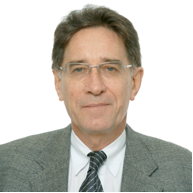
Nicolas Gorjestani is a former Chief Knowledge & Learning Officer at the World Bank. An economist by training, Mr Gorjestani had held a variety of senior staff and management positions at the World Bank for more than three decades, before retiring in July 2007. A global thought leader on organizational knowledge and learning themes Mr. Gorjestani now devotes his time to advising, lecturing and writing on development strategy, knowledge-based development, organizational knowledge sharing and learning, and leadership development issues. Mr Gorjestani is currently a Senior Adviser/Consultant at the World Bank; an Adjunct Professor in Knowledge Ecology at the Polytechnic University in Hong Kong; and has been Executive Director, Secretariat, Global Indigenous Knowledge and Innovation Partnership. He was one of the pioneers of knowledge sharing, learning and innovation at the World Bank, having designed and managed several cutting edge and award winning programs and approaches to enhance the efficiency and effectiveness of the way to do business in development. Mr. Gorjestani was also Program Director of the World Bank’s Indigenous Knowledge for Development Program. He has also been a member of the Learning Innovation Laboratory (LILA) at Harvard University, and a member of the New Club of Paris, a think tank focused on issues of the global knowledge economy. Mr. Gorjestani has published extensively on knowledge and development topics and keynoted at major international conferences. The World Bank is five-time MAKE Award winner and six-time winner of AQPC Best Practice Partner Awards.

Karim Moustaghfir is Associate Professor and Program Coordinator of Human Resource Development, and member of the Academic Council at Al Akhawayn University in Ifrane (The public American-based University in Morocco). He is also a Visiting Research Fellow at the Centre for Business Performance – Cranfield School of Management (UK) and Visiting Professor at the International School for Business and Social Studies (Slovenia). After completing his Masters and Ph.D degrees, he worked as Researcher at the University of Salento (Italy). He published different articles and papers in the fields of knowledge asset management, strategic human resource development, entrepreneurial learning, organizational behavior and performance. He also coordinates different national and international research projects in knowledge management, human resource development and e-business management. Karim Moustaghfir is member of several journal editorial boards and conference boards and also member of different professional associations in Morocco, Europe and the US. Prior to his academic career he held management positions in the banking and management consulting fields. Karim Moustaghfir speaks four languages (Arabic, French, Italian and English) and he is father to one child.

JC Spender – www.jcspender.com
BA MA (Engineering) Oxford UK; PhD (Corp Strategy) Manchester Bus. Sch. UK
Served in experimental submarines before Oxford. After graduation, did reactor design and development work with Rolls-Royce & Associates on the UK nuclear submarine program. Moved to IBM as large account salesman and team leader, and then into strategy consulting.
Next to a career in investment banking – but quit commerce in 1971 to enter the Manchester PhD program. Thesis awarded the US Academy of Management AT Kearney Prize in 1980 and published as Industry Recipes (Blackwell 1989).
Served on the faculties of City University (London), York University (Toronto), UCLA, University of Glasgow, and the Chair of Entrepreneurship and Small Business at Rutgers (New Jersey).
After a year’s sabbatical with the Advanced Technology Program (US Department of Commerce) appointed Dean, School of Management, New York Institute of Technology and then Dean, School of Business and Technology, Fashion Institute of Technology (SUNY), New York. Retired April 2003.
Awarded, jointly with Robert Grant, the Strategic Management Society’s 2007 Best SMJ Paper Prize for the 1996 Special Issue on Knowledge.
Currently Svenska Handelsbanken Visiting Professor at the School of Economics and Management, Lund University (Sweden), Visiting Professor ESADE/Universitat Ramon Llull (Spain), Visiting Professor Cranfield School of Management, and Visiting Professor Open University Business School.

All proceedings details and information are available at IFKAD eBOOKS

To see more information about the proceedings of this edition, click here below