PROCEEDINGS e-books

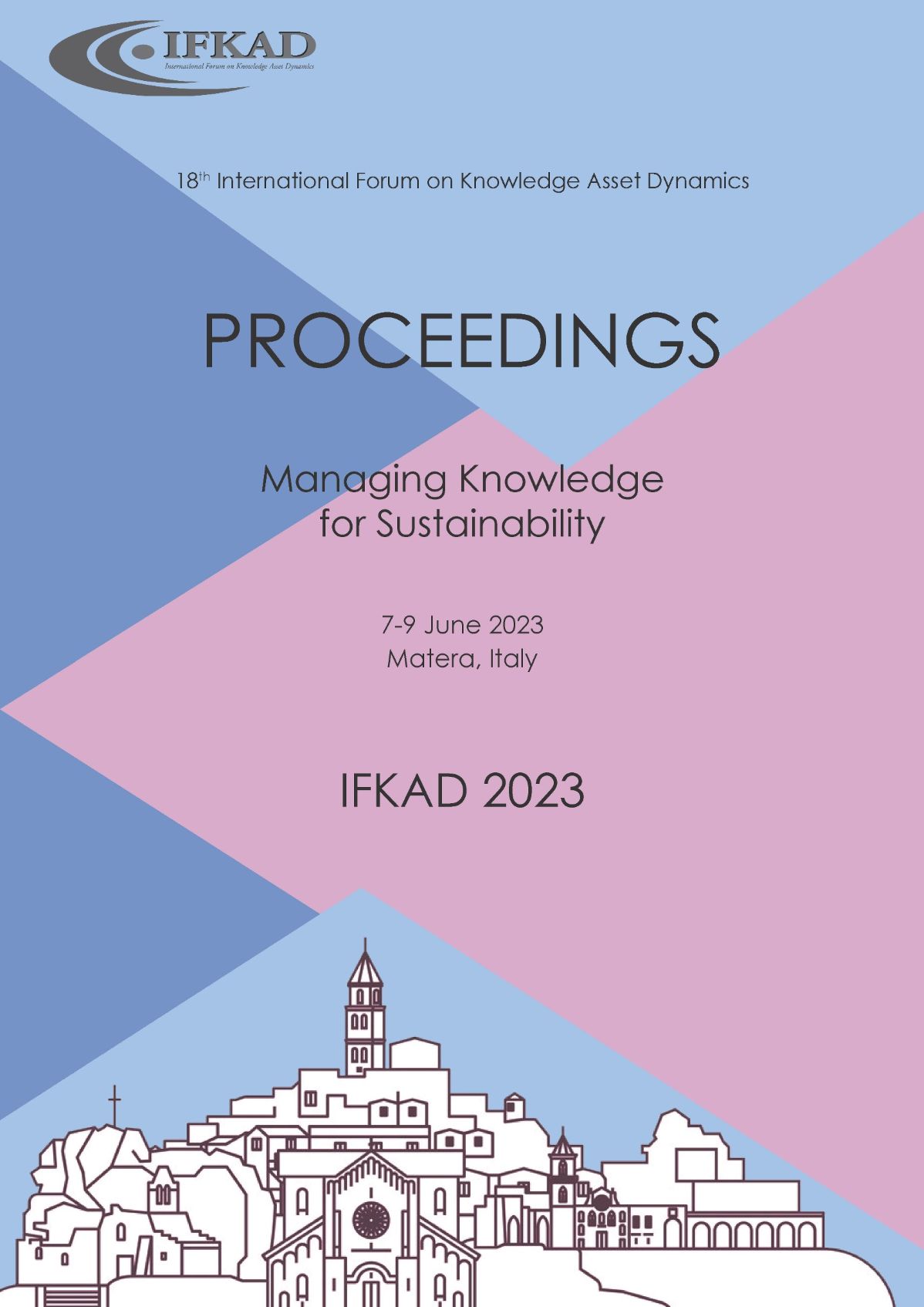
Proceedings IFKAD 2023

Managing Knowledge for Sustainability
List of Included Articles:
Paradoxical Tensions in Producing Knowledge for Environmental Planning and Decision Making
Jonna Käpylä

Environmental impact assessment (EIA) is a procedure for producing knowledge for environmental planning and decision making. The aim of this study is to find out the information and knowledge management challenges of EIA and consider the connection between the identified challenges and paradoxical tensions in the knowledge production process. The aim is to answer the research question: What kind of information and knowledge management challenges and paradoxical tensions appear in the production of knowledge for environmental planning and decision making? The study was conducted as an interview study of EIA consultants and EIA authorities in Finland (n=24) with the aim of finding out how the practitioners of EIA understand the knowledge management practices of EIA. Results demonstrate the existence of different paradoxical tensions in the EIA procedure. Findings also reveal different identities of EIA authorities and EIA consultants and resulting differences between practitioners’ way of thinking. For the EIA practice, this study concludes that even though EIA is a legal procedure, many paradoxical tensions affect how it is implemented in practice and what kind of impacts it has. An argument is presented that paradoxical tensions lie behind many of the challenges of information and knowledge management. Future research could delve deeper into the question of how EIA practitioners respond to the paradoxical tensions, and how these responses affect the effectiveness of EIA and sustainability outcomes.

Towards a Definition of Tourism Ecosystem
Rachele Vanessa Gatto, Simone Corrado, Francesco Scorza

Public investment programs consider tourism as a key driver to support the process of territorial development in in-land rural areas. Tourism activities increase production, safeguard tangible and intangible cultural heritage and foster social cohesion due to the high level of collaboration among operators and multifunctionality in a tourism supply chain. A generalised feature of tourism development strategies and projects is to be proposed as an alternative means of solving problems facing rural economies. The goal of enhancing local cultural resources is to stimulate demand for goods and services from external sources, ultimately aimed at mitigating the negative effects of marginalization and demographic decline. Studies on systems for evaluating the effectiveness of current tourism-related policies adopt a fragmented and sectorial approach that may be useful for identifying variations in structural socio-economic trend but, mainly, fail to produce a comprehensive picture of the impact of tourism development investments over time. However, given that tourism is a complex, multifaceted phenomenon that involves the contributions of multiple disciplines in both research and policy-making, the absence of an integrated framework for monitoring is a structural weakness. Such a framework would enable a more comprehensive understanding of the impact of tourism in a specific location. The study sets forward a framework hypothesis which, through the systematic reading of selected practices, introduces evaluation criteria for successful strategies proposing an operative definition of “tourism ecosystems” to be adopted in multidisciplinary research project promoting tourism sustainable development (TechForYou). The paper, after highlighting the lack of a common metric and the problems relating to tourism strategies, proposes an operational definition of the tourism ecosystem considering the cross-sectoral nature of tourism sector.

Learning Spaces Based on Advanced Technologies: Towards a Management and Assessment Tool
Rosaria Lagrutta, Daniela Carlucci, Giovanni Schiuma, Francesco Santarsiero, Antonio Lerro

The increasingly complex and uncertain socio-economic scenario and the new challenges and opportunities of the digital revolution are forcing organizations to anticipate changes and boost more and more their innovation processes in order to maintain their competitive advantage. In such scenario, are emerging new spaces of action and interactions based on tangible and intangible elements that influence learning and knowledge processes and dynamics. These innovative learning spaces include a combination of elements enhancing the learning process, with a strong technological component. In such a context, how to manage and assess the effectiveness of learning spaces, especially based on advanced technologies, has become a key topic. Despite that, to date, how to assess the effectiveness of learning spaces remains under-investigated. This study proposes a conceptual framework that highlights the relevant variables and dimensions to assess in a learning space. For this purpose, the study adopts a systematic literature review approach. The theoretical findings suggest specific variables and dimensions to consider in assessing learning spaces, especially the ones supported by advanced digital technologies. Moreover, the paper provides managers with a conceptual framework supporting the decision-making process in managing and assessing LS.

Quantum Computing Impacts and Technological Integration Improving Business Process Modelling and Production Protocols in Industry 5.0 Scenarios
Alessandro Massaro, Giovanni Schiuma, Francesco Santarsiero

The paper discusses the impacts of Quantum Computer (QC) technology in Industry 5.0 scenarios by focusing attention on application fields such as production management in manufacturing and business modelling. The analysed literature allows for comprehending possible QC implementations and integration in technological architectures. Specifically, the work highlights QC impacts on organization, production and marketing and defines QC perspectives, advantages and possible limitations. The study also addressed the design of workflow modelling production protocols in Industry 5.0 environments implementing QC processes. The analysis of the impacts, together with the technological aspects and the QC process management, are the main topics of the proposed paper. The paper is structured as follows. In section 1, an outline of the main QC applications and potential impacts is provided. Section 2 proposes a framework to explain the role of QC in the technological integration of Industry 5.0 production systems. Section 3 introduces a Business Process Modelling and Notation (BPMN) workflow embedding QC processes and oriented on standardising industrial production protocols. Finally, the conclusion summarizes QC advantages, perspectives and limits matching with the performed analysis.

Inspiring and Leading Innovation, Digital Transformation and Entrepreneurial Dynamics in Cultural Industries: State-of-the-Art and a Future Research Agenda
Antonio Lerro, Francesco Santarsiero, Daniela Carlucci, Rosaria Lagrutta, Giovanni Schiuma

The main objective of this research article is s to briefly present the current state-of-the-art about the emerging innovation and entrepreneurial dynamics and the impact of the digital transformation in the Creative and Cultural Industries (CCIs) and to delineate potential future research directions. The paper combines a deductive and an inductive approach. The research outlines the needs to addressing in a more specific way the dimensions of innovation, the role played by digital transformation and the potential paths of entrepreneurship in CCIs. The value of the article mainly resides in its attempt to identifying and clarifying relevant themes and unanswered research questions about innovation and entrepreneurial dynamics in CCIs to be effectively declined and investigated according to an inter-disciplinary perspective.

Strategic Knowledge Management as a Key Driver for Social Innovation Deployment
Oscar Alejandro Espinoza Mercado, Jorge Pelayo Maciel

Nowadays, innovation has become the staple of every company. The nature of global economic growth has also been modified by the high speed of innovation, due to a very distinctive rapid and everlasting evolving technology, shorter product lifecycles, programmed obsolescence and a higher rate of new product development. Companies, institutions and organizations have to make sure or even guarantee that their business strategies are unique and innovative in order to build and sustain competitive advantage, otherwise they would simply die. It is important to stand out that strategic knowledge management processes are quite significant for innovation, since they conceive knowledge creation, knowledge transfer and knowledge application. It all aims to create a unique knowledge resource that can eventually be added into products, processes and services (Nonaka & Takeuchi, 2009). The main purpose of it is contributing towards improving social well-being, enhancing economic growth as well as improving technological readiness (Kanter, 2015). In this sense, the current study aims to identify and analyse the key drivers for social innovation deployment. Chiva et al. (2014) state that knowledge is widely regarded as a new novel solution for a wide range of issues which have been wracking havoc all around the world. On the one hand, there is a widespread agreement among authors, researchers, consultants and thinkers in the field of management. When it comes down to innovation, they all posit that it is the central capability for all organizations and they are all interested in it. It is all about doing different things with the same elements. On the other hand, social innovation turns out to be a vital outcome since it is related to providing a better understanding and results to global issues. These two concepts must be considered to fully understand the abovementioned intrinsic relationship. The latter does not only solve specific problems, but also encourages collective action and inclusion. To sum up, the current study aims to delve into these concepts and their contribution to science, technology and society. Once key drivers have been identified and analyzed, a theoretical methodology will be applied and interpreted through a thorough examination. By doing this it will also be important to determine the degree of importance so that data can be properly easily understood. Finally, it is worth to mention that the output is expected to be disseminated in order to enhance practical scenarios facing up current circumstances regarding social innovation.

Lights and Shadows of Sustainability in Healthcare: A Literature Review
Federica Asperti, Emanuela Foglia, Elisabetta Garagiola, Lorella Cannavacciuolo, Eleonora Gheduzzi, Stefania Manetti

Sustainability is becoming a crucial research area, not only considering industrial contexts, but also managing healthcare, environmental, and social issues, adopting a holistic, multidimensional, and multi-stakeholders’ approach. In a world where economic growth has been the primary objective in all the industries, the need to integrate environmental and social sustainability into business strategies first and then into daily activities is strongly emerging. Sustainability could be declined in three main pillars: economic, social, and environmental, traditionally in all the industrial and organizational settings, but this could generate peculiar instances also in the healthcare field. Being sustainable is becoming an urgent priority for the development of worldwide population. This unmet need should be addressed in any settings of the healthcare context, considering macro (i.e., healthcare system), meso (i.e., hospital) and micro (i.e., process) levels. Healthcare services are necessary for sustaining and improving human well-being, but the environmental impacts and the carbon footprint generated by these services, contributing to environment-related threats, are high. Assuming the One Health approach (Atlas, 2013) and referring to the health, environmental and social dimensions as closely interconnected, the importance of investigating the link between technology and sustainability emerges. To achieve this goal, a systematic literature review was conducted, including 86 articles that were divided into three different clusters considering papers devoted to technological aspects, models, assessment frameworks’ development, and telemedicine. An analysis of the research areas interested was performed considering a double perspective, assessing environmental and social issues. From the literature evidence, a strong relevance of technologies as the principal driver to guide the sustainable transition and an impulse to define quantitative indicators and assessment tools, emerged, also considering the necessity to support the decision-making process and the stakeholders’ knowledge, to guarantee a green and sustainable development of healthcare systems. The results included in the review demonstrate a significant diffusion of performance measurement models and systems, especially in relation to the environmental aspects, also considering innovative processes and technologies. The analysis of the social aspects is still limited, particularly in relation to the corporate social responsibility topic. Therefore, this contribution would highlight the need to define multidimensional assessment models, integrating the different pillars of sustainability, also into the technological governance process.

The Marketing Role in Multi-Stakeholder Engagement: An Empirical Examination
Cristian Rizzo, Augusto Bargoni, Ciro Troise, Mark Anthony Camilleri, Stefano Bresciani

The goal of stakeholder theory, which was primarily developed in the field of business ethics, is to examine the interactions between the company and all of the actors in its ecosystems. Despite the growing recognition of the significance of communication strategies focused on internal and external stakeholders, the role of marketing has been largely neglected. In this research we propose an empirical assessment of a marketing-based theoretical framework. The analysis is aimed at analysing how the components of stakeholders’ engagement (recognition, support, and dialogue), and knowledge exchange, affect stakeholders’ response and firms’ outcomes (financial performance, risk, and reputation).

Organizing Knowledge Creation Processes in the Agri-Food Business: An Institutional Perspective in the Italian Context
Giuseppe Ceci, Michela Iannotta, Mauro Gatti

The purpose of this research is to understand how Institutions influence the knowledge creation process in the agri-food sector. Based on Knowledge Creating theories we aim to examine how institutions shape knowledge creation processes in the Italian context. We employ a qualitative approach by conducting a document analysis that includes several organizational and institutional reports, survey data, and various public records. Our study is carried out in the Italian scenario in which the agri-food business represents a milestone of the Made in Italy economy worldwide, to create meaningful insights. From a theoretical view, this paper will extend knowledge management theories by providing an institutional perspective that will shed light on the important role of institutions in knowledge creation process. On the practical side, the results will be used by agri-food companies to promote new organizational frameworks capable of supporting knowledge creation processes in non-knowledge-intensive contexts, enhancing collaboration with institutional bodies, governments, and regional entities.

Aluminium Alloy Roofing Systems for Sustainable Architecture
Giacomo Scrinzi, Enrico Sergio Mazzucchelli, Sofia Pastori, Angelo Lucchini, Alberto Stefanazzi

The present paper intends to advice readers about the potentialities of aluminium roofing systems in terms of general sustainability, recyclability, and achievement of energy requirements. The use of metal sheet panels for buildings roofing and cladding has been progressively increasing since the very beginning of the last century. Nowadays, several different products are available on the market, either basic or even highly engineered, in different materials, shapes, colours and, of course, prices. Among these, aluminium alloy systems play a major role thanks to the material’s inherent characteristics. For what concerns sustainability, aluminium production allows to use high contents of recycled material resulting in a reduction even over the 95% of the energy required in the process compared to the bauxite ore extraction and raw metal production. The total and theoretical infinite and degradation-less recyclability of aluminium when compared to other metals used in the roofing systems industry makes it easily preferable overall. Such solutions can either concern new roofs covering or refurbishment of existing ones. In the latter case, lots of construction waste is usually generated and eventually ends up in landfills. Instead, aluminium alloy roofing systems allow to be fully recycled and reused at the end of the service life, which is already longer than other non-metallic products, eventually reducing waste transferred to landfills. In fact, the higher cost of such material is largely compensated by its service life expectancy, which is among the longest lasting roofing materials and can reach up, in certain conditions, even to a hundred years. For this reason, complete replacement interventions are still quite uncommon, which favourably contributes on the final environmental impact of the roofing system. In this respect, aluminium alloy systems are particularly suitable, especially when compared with other different solutions, towards design for recyclability. Furthermore, aluminium systems are also indicated for rainwater harvesting purposes, as their surface retains less pollutants than other traditional porous materials and is less likely to give place to mold or concentrated collection of polluting particulates.

Cryptocurrency, Fintech and Islamic Entrepreneurs: Shaping the Prospects of the Islamic Digital Economic System
Gioia Arnone, Gunawan A. Tauda

The research identifies the essential fintech solutions available in the Islamic nations and the shaping factors that are classified based on the economic growth. For accomplishing the goals of the current study, a qualitative secondary research survey is conducted. The study involves collection of 30 research journals from the leading Islamic web sites. Data have been analyzed for shaping perspectives of economic development as per Sharia Law. The results indicated that there is a need for development of existing services and enhancing the use of fintech technologies. The proper regulation of cryptocurrency based on Sharia compliance was analyzed and the study findings indicated that Islamic entrepreneurship needs to emphasise more on the technology development and marketing. The overall shaping prospects and regulations parameters for the Islamic digital economic system are processed as per the Sharia law and the beliefs of Muslim people. The study states that the Economic factors such as Fintech, Cryptocurrency, and Entrepreneurship must be more transparent, cost-effective and must provide effective customer satisfaction.

Exploring Learning Spaces for Innovation Capacity: A Multiple Case Study
Rosaria Lagrutta, Daniela Carlucci, Giovanni Schiuma, Francesco Santarsiero, Antonio Lerro

Innovation capacity is considered a distinctive driver, for organizations, to face the challenges of the current, increasingly complex, scenario. In such perspective, several researchers emphasized the importance of learning orientation, knowledge sharing, and learning environment as key determinants of innovation capacity. In this vein, developing learning spaces and learning environment fostering knowledge and learning dynamics, become a key objective of public and private organizations. In this prospect, this study aims to provide a comprehensive and holistic view of the distinguishing dimensions of a learning spaces, enriching the findings emerged from the literature review that, through the lens of a conceptual descriptive framework, identify dimensions and features that characterize effective learning spaces supporting the development of innovative capacity. The research is carried out through a multiple case study, involving learning spaces designed and developed in Finland. The findings provide an integrative picture of a descriptive conceptual framework that supports the identification of the relevant dimensions to manage and evaluate. Specifically, in terms of theoretical implications, it aims to guarantee and enhance the effectiveness of a learning space supporting the development of more effective and impactful guidelines for management and decision-making. Then, in terms of managerial and policy implications, the analysis of the conceptual model developed and discussed can be helpful to different actors aimed at developing effective learning spaces to foster innovation capacity of public and private organizations.

Manage Integrated Social Health for a Sustainable Home Care Model
Stefania Mele, Sabrina Bonomi, Concetta Lucia Cristofaro

Covid 19 has increased the need to integrate the service chain by imposing transformation processes on healthcare organizations, challenged by the complexity of the demand for health and the evolution of the service chain (public and accredited private). This process increases the need for integration between parts of the health system, such as the social-health district. Alongside the need for integration, “navigability” is developing between operators and users, especially among chronic population targets with greater socio-medical complexity. All this determines a growing demand for connection which sees in the care models in transition a new form of job specialization that requires new role profiles, relationship skills and dialogue between operators, operational management tools relating to the service chain of territorial services, specific information collection, and management systems. In this context, change is activated by Knowledge Management (KM).

Female Directors, Critical Mass and CSR: The Moderating Role of Family Ownership
Gaetano Corte, Federica Ricci, Sara Saggese, Fabrizia Sarto, Vincenzo Scafarto

Using a sample of 76 Italian publicly listed firms for the year 2019, this paper investigates the association between the presence of a critical mass of women directors on the board and the firm’s CSR performance. It also examines whether the family firm status moderates this association. The OLS regression analysis shows that the presence of a critical mass of female directors positively influences the CSR performance. In addition, the empirical analysis shows that the family firm status has a negative direct effect on CSR performance, but has a positive interaction effect with a female critical mass. Overall, these findings support the conclusion that the effect of female directors on CSR performance is influenced by the family ownership structure. This finding contributes to both the literature on board gender diversity and to the literature on family firms by providing evidence on the role of family ownership as a contingency variable that positively moderates the effect of a critical mass of female directors on CSR performance. With regard to practical implications, this research calls the attention of board nomination committees on the key role of appointing a critical mass of female directors for achieving a better CSR performance.

Our Business is Different: How are Inclusive and Sustainable Business Models Tackling Hybridity towards Sustainability?
Federico Ceschel, Plinio Limata, Lucia Marchegiani

The United Nations and the Agenda 2030 have clearly recognized the role of for-profit organizations in boosting sustainable development and reducing inequalities. This process has led to a profound change in International Development Cooperation (IDC), where private enterprises are called to develop Inclusive Businesses (IB) aligning business values with social impact, following responsible environmental, social, and governance standards. This result is often reached through the creation of Hybrids, combining different organizational logics (e.g., social and commercial). In this research, we will focus on this last aspect (sustainability). Using interviews and focus groups, we aim at highlights those elements of tensions that derive from hybrids and sustainability goals. Hybridization involves a mix of different organizational logic (e.g., commercial vs. social) that may have different outcomes (e.g., innovative patterns or challenges and disagreement); therefore, we aim to understand how hybridization has been reflected in Knowledge Management practices between local and international dimensions. Moreover, as businesses are asked to submit a project proposal to get access to funds by AICS (in line with Lundin et al., 2015), we aim to explore how organizational logic is affected by the institutional framework and social goals (Sabini and Alderman, 2021) provided by IDC (e.g., what elements differ from a traditional pattern of internationalization), and whether such tensions due to hybridity can be reconciled through sound knowledge management practices. While during the years, the former (inclusive and sustainable models) has experienced a growth in numbers and quality of the proposal, the latter (HR Management) seems confined to traditional practices that do not take into consideration the peculiarities of the local dimension, showing an increasing tension between business and social (and sustainable) goals.

The Role of Corporate Entrepreneurship in Society and Industry 5.0 Era
Ricky Celenta, Massimiliano Vesci, Roberto Parente, Rosangela Feola

Society 5.0 and Industry 5.0 concepts are gaining more importance in the academic and political debate, going beyond the boundaries of the policy brief, and becoming growth models interesting for other countries (Fukuyama, 2018; Carayannis, 2021). These new paradigms start from different focuses, one on society and another on the industry, but there are many common elements. Our interest in this paper is to highlight the common point of this element, with the intent to identify the “Context 5.0”. This Context 5.0 involved many actors, including government, industry, and Civil Society. As Management and Entrepreneurship scholars, in studying this new context our focus is on the role of industries. In this paper, we aim to understand how Corporate Entrepreneurship can support companies that want to do business in line with the imperative of Context 5.0 and finally open a debate based on the possibility of integrating the theory of Humane Entrepreneurship with Corporate Entrepreneurship.

Assessment of Knowledge, Attitude and Practice of University Students towards Sustainable Development Goals (SDG’s) in Tanzania
Mrigo Shamimu Nyamota, Alfred Jubilate Ngowo

This paper reports the outcomes of Tanzanian undergraduates and postgraduates’ knowledge, attitude, and practice towards Sustainable Development Goals (SDGs). University students from eight universities in Tanzania participated in the study. A set of survey questionnaires based on knowledge, attitude, and practice (KAP) was shared online and 269 responses were obtained to analyse the awareness level (95% confidence level with ±5% margin of error). Data analysis was performed SPSS Statistics version 20. As per descriptive statistics, respondents had a high level of understanding and a positive attitude toward the SDGs. Spearman’s rho coefficient correlation was applied to determine the relationships between students’ levels on knowledge with practice and attitude with practice. The results revealed no negative correlation between the knowledge and practice towards SDGs (r = 0.021

Effects of Virtual Influencer Marketing on Purchase Intention: Perceived Characterizations as Mediators
Yini Lin, Tzu-Hsuan Kuo

In recent years, the discussion around virtual influencers has been growing. These virtual personalities have a huge following among young people, with an engagement rate three times higher than that of YouTubers. This has made people realize the business opportunities in this industry. To explore how influencer attributes and perceived characterizations affect consumers’ purchase intention, this study uses the S-O-R theoretical framework proposed by Mehrabian and Russell in 1974. The study focuses on three influencer attributes: attitude homophily, physical attractiveness, and social attractiveness, and three perceived characterizations: trustworthiness, parasocial interaction, and brand equity. Perceived characterizations are regarded as a mediator in this study. The research sample consists of 479 people who were sampled from VTubers research groups on social media. The study uses structural equation modeling (SEM) to test the proposed model. The results show that influencer attributes have a significant and positive effect on perceived characterizations. Perceived characterizations, in turn, have a significant and positive effect on consumers’ purchase intention. Additionally, perceived characterizations have a significant mediation effect. This research provides valuable insights for VTubers marketers. By understanding the influence of attributes and characterizations, marketers can develop more effective strategies for promoting their products and services through virtual influencers. In conclusion, virtual influencers have a significant impact on consumers’ purchase intention, and this study provides important insights into how influencer attributes and perceived characterizations affect consumer behavior. By understanding these factors, VTubers marketers can improve their marketing strategies and better leverage the power of virtual influencers.

Biophilic Architecture to Promote Environmentally Sustainable Behaviour in Children: The Project for the New School in Rionero in Vulture
Marco Laterza

This paper aims to examine how biophilic architecture can be considered a key tool for promoting environmentally sustainable behaviour in children through the analysis of a case study. The first part expounds on the key principles of biophilia and the effects that a daily relationship with nature can generate on our mental and physical well-being. The paper explores the applications of biophilia in the field of architecture, as well as strategies to enhance the restorative experience that living spaces can have through the use of biophilic design. The second part examines the case study of the project for the new secondary school in Rionero in Vulture, developed as part of the doctoral research on architecture and biophilia for the “Aree Interne”’ of Basilicata, currently being carried out at the University of Basilicata. The project developed in collaboration with architect Matilde Suarez Ruiz, came out as the winner of the “Futura” design competition organised by the Italian Ministry of Education, applies design strategies based on the 14 patterns of biophilic design (Terrapin bright green, 2014) and on major environmental psychology theories such as Attention Restoration Theory (Kaplan, 1995) and Stress Recovery Theory (Ulrich, 1981). Through the use of biophilic design and restorative design strategies, the aim is to create spaces that help prevent attention deficit problems and learning disorders, promote psychophysical well-being and the development of eco-sustainable behaviour. Finally, the third part of the paper will focus on the knowledge management process in architecture with special reference to the design competition system and the case study under consideration.

What is Intercultural Competence and for Which Situations is it Necessary? Validation of the Content and Application Areas of a Test for Measuring General Intercultural Competence and Culture-Specific Competence
Petia Genkova, Christoph Daniel Schäfer, Jonathan Herbst, Henrik Schreiber

Advancing globalisation processes entail that businesses increasingly have to orient themselves internationally in order to remain competitive. Growing labour mobility and international economic networks imply a rise in intercultural contacts, and thus a rising demand for intercultural competence. However, the relevance of intercultural competence is often underestimated outside of the academic community. In order to elucidate the significance, the necessity and areas of application of intercultural competence, an explorative (primarily qualitative) study was conducted with students and professionals with and without a migration background. The central objects of study were the experience-based attitudes of students and professionals. In this qualitative study, 61 structured interviews were examined using a content analysis. After the presentation of a definition of the construct, the interviewees were asked about aspects of intercultural competence. The aspects mentioned most frequently was a general open attitude, followed by impartiality, self-reflection of one’s own culture and person, and lastly, culture-specific knowledge. Regarding the areas in which intercultural competence is needed, respondents mentioned the education sector most frequently, followed by references to business, as well as internationally operating companies. These results provided indications for the development of a measurement instrument of intercultural competence and related constructs. Therefore, another qualitative study was conducted with 249 interviewees to identify aspects of both, general intercultural competence, and culture-specific competence in a German cultural environment. Eleven dimensions of general intercultural competence, relating to personality traits, relational attitudes, and skills, were identified in a content analysis of the interviews. Further, six culture-specific aspects were derived from the interviews, containing culture-specific knowledge, norms, and communication skills. Based on the responses, three scales were generated: two graded response scales for general intercultural competence and culture-specific competence, and a culture-specific situational judgement test. The resulting measuring instruments were thereafter validated in a quantitative study with a total of 6338 participants, including students, professionals, and unemployed, each with German background, international background, refugee background, or emigrated. The scales’ and subscales’ reliability and validity were tested in the individual subsamples, using methods from both classical test theory and item response theory. The items were reviewed twice, based on the calculated item characteristics, as well as on results from a focus group with immigrants and expert discussions. The present paper thus contributes to a differentiated understanding of cross-cultural and culture-specific aspects of intercultural competence in an increasingly culturally diverse global society.

Proceedings IFKAD 2023
Managing Knowledge for Sustainability

Submit the following information to receive the download link 

a valid email address where the download link will be delivered