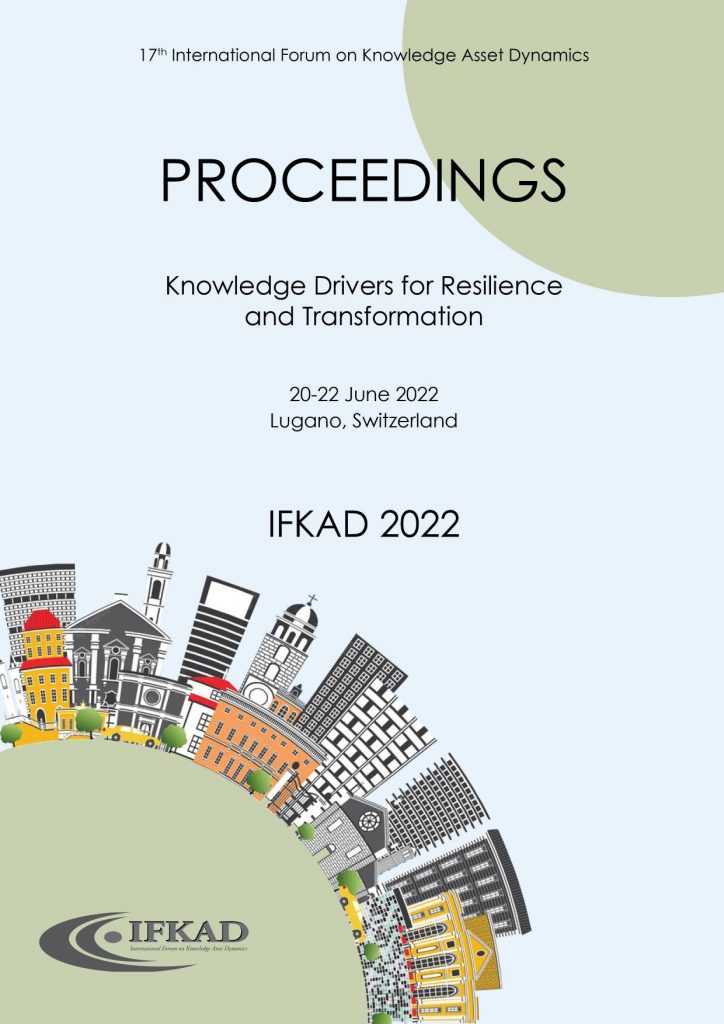
PROCEEDINGS e-books

Proceedings IFKAD 2022

Knowledge Drivers for Resilience and Transformation
List of Included Articles:
Hybrid Organizations and Projects of Urban Regeneration: A Case Study to Promote Cooperation, Sustainability and Innovation
Alessia Berni, Rosita Capurro

The paper aims to pointing out the hybridization paths that organizations could embrace to try combine profit, economic sustainability and to reach – at the same time – their social mission. The work intends to contribute to organizational and strategic management literature by focusing on the emergence of hybrid organizations through the analysis of a project of urban regeneration. Through a case study analysis, our research deals with organizations that through a project of re-functionalization boost environmental and economic development, creating a community of cultural and creative actors. Our findings highlight how hybrid organizations can promote social activities, job inclusion and training emphasizing the principles of cooperation, sustainability, and social entrepreneurship.

Agrifood 4.0: Assessing the Impact of Digital Technologies in Family Business
Domenica Barile, Giustina Secundo

During the 21st century, digital technologies have developed exponentially, leading society to experience a fourth industrial revolution. One of the sectors most affected by the Digital Transformation is the AgriFood sector, traditionally not very inclined to innovation, revolutionized not only in terms of improving efficiency but also for the realization of responses to new food safety requirements. Within AgriFood sector several changes and innovations are affecting the management of the entire Supply Chain (production, logistics, etc.) where the combination of tradition and innovation still implies certain challenges today. The research analyses how digital technologies such as mobile computing and big data analytics are innovating the sub-chains of bakery products and pasta within agrifood sector with reference to the activities related to customer interactions, delivery and marketing during the Covid-19 pandemy. Moving from a critical literature review about the perspectives of digital technologies within the tradition of Agrifood sector, an action research has been adopted to analyse in deep a case study of the start-up “ArteBianca Delivery” located in south Italy. Insights about the digital transition realised through the adoption of methodology for assessing the level of digital maturity of companies defined Digital Maturity Model (DMM) is presented to support the digital innovation of companies belonging to more traditional sector. Finally, the development of a KPI – Key Performance Indicators tool applicable when measuring the performance of start-ups has been developed to support decision- making of family business entrepreneurs.

Investigating Entrepreneurial Universities’ Logics through System Dynamics: A Causal Loop Analysis
Canio Forliano, Paola De Bernardi, Alberto Bertello, Francesca Ricciardi

With the introduction of the third mission concept, universities have been increasingly asked to perform different activities besides teaching and researching, outreaching knowledge outside their boundaries and assuming a leading role in fostering innovation in modern knowledge-intensive societies. However, how do the three academic missions pursued by entrepreneurial universities interact with each other? To what logics do they refer? To address these questions, organizational logics are leveraged as a theoretical lens in this study. Thus, a qualitative system dynamics model (i.e., a causal loop diagram) was developed to investigate how entrepreneurial universities respond to logic multiplicity, providing different implications for both researchers and policy-makers.

Building Smart Communities in Health Care Sector: The COVID-19 Mobile Applications
Walter Vesperi, Marzia Ventura, Concetta Lucia Cristofaro, Anna Maria Melina

The Covid-19 pandemic is radically changing the national and regional health systems. Technological innovation represents a solution capable of solving some of the key points of the pandemic emergency, specifically the speed of response, the need to maintain social distances and support for patient autonomy. In recent years, the potential of the new paradigm called “Internet of Things” (IoT), and its applications in the healthcare sector, has attracted the attention of scholars, practioners and policy makers (Atzori et al. 2014, 2017; Dhanvijay and Patil, 2019). The application of IoT has allowed the introduction of digital technological solutions capable of responding to the new cost containment and social challenges that the healthcare sector is facing. Mobile health (M-health) represents the most promising IoT applications in the healthcare sector. In fact, during the lockdown that the Covid-19 pandemic imposed, medical visits were reduced to limit face-to-face contacts. M-health technology have enabled healthcare professionals to continue delivering healthcare services by monitoring patient parameters, providing timely medical care or information. The impact of the implementation of the IoT in healthcare has gained more and more attention in the academic and industrial world. Kai and Ahmed (2013, pp. 1016-1020), point out that the combination of M-health and the Internet of Things (IoT) can make life easier for patients and doctors. The growing number of smartphones allows for a rapid spread of health monitoring apps. The spread of this combination of M-health and IoT has ignited the academic debate on the creation of a smart community in the health care sector. Giorgini (2006) identified the main players in M-health: User/Patient, hospital, doctor, Health Authority (HA), Medical Information System (MIS). In this study, we consider M-health technology a mechanisms of knowledge transfer. This study aims to provide an overview of the smart community concept in healthcare, focusing attention on mobile applications (M-Apps) used during pandemic period. In order to achieve this, this study is based on qualitative and deductive approach. This aims to build the theoretical premises regarding smart community in health sector and E-health innovation, with particular reference to Mobile applications (M-App). This phase was set up as a definition of a theoretical framework that allows us to understand how to analyze the phenomenon being observed. In the second part, a taxonomy of the M-apps created and used by the Italian regions as a support tool for the emergency from Covid-19 is reported. The data/information used in this research is the result of the analytical study on the M- App issued by the Italian regions and the M-App issued by the Italian Government (IMMUNI). The apps considered have common characteristics. Specifically, the M-Apps are officially released and approved by the regions as tools to combat Covid-19 and are present in the most popular operating platforms (Play Store and iTunes). The identified M-Apps were subsequently classified according to the type, technical functionality, description, number of downloads, and user feedback. The results of this study also highlight how the use of M-apps allows to improve the efficiency of the healthcare sector and support the doctor-patient relationship. In addition, the results put in evidence like the concept of smart community, smart city is nebulous and has undefined theory (Harrison & Donnelly, 2011; Chourabi et al, 2012; Goodspeed, 2014; Tok et al, 2014; Albino et al 2015). In particular, the definition and construction of a smart community in the healthcare sector is still unexplored.

Collective Intelligence and Highly Structured Groupwork: Engineering Team Success
Andrea Smith

Corporate organizations are not what they once were. The advent of the information age and explosion of the Web have brought sweeping changes to the way businesses pursue profit. One such change—the marked increase in the use of teams—has attracted a great deal of attention among scholars and management practitioners alike. As numerous empirical studies and popular press articles have lauded teams for bolstering innovation, creativity, and productivity, businesses across the globe have embraced groupwork, touting it as critical to organizational success. But despite the rosy picture painted by the dominant discourse surrounding teams, the harsh realities are that (a) teams vary wildly in their effectiveness, and (b) team-related conflicts are a major source of stress in the workplace. In this paper, I explore one dimension of the dominant discourse of teams— that adults can manage workplace conflicts without supervisory intervention. More specifically, I examine a few of the ways that that discourse impacts teams, team members, and their willingness to share knowledge. I also draw on two important streams of research from the fields of psychology and education to suggest alternative methods of conceptualizing and structuring modern day teams with an eye toward helping organizations to access, more fully, the vast stores of knowledge which each team member has to offer.

Stakeholder’s Engagement in Value Co-Creation Process in a Post Covid-19 World: Shaping the Future of the Hospitality Industry
Valentina Della Corte, Giovanna Del Gaudio, Fabiana Sepe, Simone Luongo

The Covid-19 outbreak has caused profound implications for companies operating in the so-called “high-touch industry”, where the experiential aspect plays a key role. To adjust to the new reality, new social forms that focus on value co-creation approach are needed (Ratten, 2020). This requires a more effective use of entrepreneurial passion aimed at alleviating social uncertainty due to the crisis by underlining the value derived from collaboration and shared practices (Bacq et al. 2020). This means to put attention on innovation and entrepreneurship that includes social value co-creation, in a logic of stakeholders’ engagement. Accordingly, the purpose of this study is to investigate on the ways to incorporate more social value co-creation and entrepreneurial approach to crisis management in hospitality industry during, but above all, after the Covid-19 pandemic. Social value co-creation is especially important for the hospitality industry because the survival and growth of hotels largely depend on creating and offering unique and tailored experiences for their customers. In this light, hotels that focus on social value co-creation and customer experience outperform competitors and report higher revenues (Roy et al. 2018). To reach the purpose of this research, this work proposes a conceptual framework based on the value co-creation behaviour and its main components. The study reveals how a critical situation such as the current pandemic leads hospitality companies to search for novel solutions taking into consideration the eco-system in which they play, focusing particular attention on the social value co-creation processes. The contributions of this study are twofold. As for the theoretical side, this study provides a conceptual framework based on social value co-creation and social entrepreneurship to put in evidence the need for stakeholders’ collaboration and collective action by integrating social purposes into daily activities carried out in the hospitality industry. Furthermore, it lays the foundations on finding the correct evaluation for new concepts of marketing in the hospitality industry to increase perceptions of future experiential intentions in a post Covid-19 world. From a practical point of view, this study will benefit marketers in the hospitality industry and provide them with an opportunity to understand how to create an environment that makes customers feel like social value co-creators of the overall tourist experience.

The Application of Blockchain Technology for Sustainability Innovation: A Bibliometric Analysis and Mapping Study
Ylenia Cavacece, Tiziana Russo-Spena, Cristina Mele

The adoption of new technologies for sustainability innovation is a theme of current interest in the scientific literature. In particular, the role of blockchain technology is gaining significant attention. Despite its recent introduction, a large number of publications have been produced on the topic. The aim of this paper is to provide a quantitative review of contributions on blockchain for sustainability innovation. The method of bibliometric study including performance and keyword co-occurrence analyses was used. The results show the performance of articles, authors, journals and countries in terms of productivity and citations, and a mapping of the intellectual structure of the research field. This work provides scholars with a comprehensive view of publications on blockchain technology and sustainability, facilitating the understanding of how to contribute to the advancement of research on this topic. For practitioners, this work provides an overview of the most important and current research findings from which to gain insights into techniques and strategies that best suit the implementation of blockchain in their organisations for sustainable goals.

Collecting and Analyzing Students’ Process Data through Digital Performance Assessments: A Synopsis of the Current State of Research
Jennifer Fischer, Olga Zlatkin-Troitschanskaia, Johannes Hartig, Frank Goldhammer

As the 21st century progresses, learning using the Internet has become essential for study success in higher education (HE). The Internet is the most widely used source of information today, and today’s students are more likely to learn through digital media than through traditional sources, like print textbooks. Students’ skills to competently use digital media are therefore of central importance. To measure these skills, there are many approaches and assessments, for instance, using student self-reports or simulation-based performance assessments. Over the course of increasing digitalization, digital performance assessments for measuring students’ skills are also becoming increasingly popular. They offer many advantages, for example, process data, such as log files and eye-tracking data, can be collected during the completion of a task. The process data collected in digital assessments provides a detailed observation of a participant’s task-solving process and the underlying thinking and learning processes. Based on a recent literature review by Zlatkin-Troitschanskaia et al. (2021), we performed an extended and in-depth structured document analysis of the current national and international research on collecting process data when using performance assessments to measure students’ use of digital media and online information in their academic studies. In this analysis, we particularly focus on the various research approaches to collect and analyze students response process data.

Individual Learning, Knowledge Sharing and Innovative Behavior of Employees in Small Businesses in Kampala Uganda
Janet Kyogabiirwe Bagorogoza

This study seeks to determine the effect of individual learning, knowledge sharing, and innovative behaviour among employees in small businesses in Uganda. The research model demonstrates the relationship between individual learning, knowledge sharing and innovative behaviour among employees. Individual learning (self-initiated learning and problem solving) and knowledge sharing (information collection and information donation) are the independent variables while innovative behaviour among employees (supervisor related) is the dependent variable of the study. We used a quantitative approach and a cross-sectional study research design. The study uses primary data source collected from a sample of 360 welding small businesses in Kampala district in Uganda. These businesses are selected because it is a developing segment of the small businesses that has exhibited innovative potential and they are likely to make a significant contribution to the growth of the Ugandan economy. The purposive sampling technique was used to select the sample. The data was analysed using correlations and regression analysis. When employees share knowledge in form of information collection and donation, it helps them to strengthen their understanding which is relevant in boosting their innovative behaviour. Similarly, knowledge sharing and individual learning that is self-initiated learning and problem solving is important in promoting innovative behaviour among employees. The study findings will help small business owners/managers to develop strategies that will enhance the innovative behaviour of their employees during pandemic such as Covid 19. Policy makers will use the study findings to design policies that will foster innovative behaviour among employees especially the youths in Uganda. The results contribute towards the limited empirical and theoretical evidence regarding the individual learning, knowledge management and employee innovative behaviour in small businesses in a developing country perspective. The study was limited by the design which was cross sectional focussing on snapshot perceptions which could probably not provide quite realistic occurrences of study variables.

The Impact of Covid-19 Pandemic on the Italian Regions’ Economy: A Forecasting Model
Nunzia Carbonara, A. Claudio Garavelli, Michele Gorgoglione

The economic and social impact of Covid-19 is not yet fully assessed. Although the recovery measures adopted by the Italian Government allowed for a compensatory action of the losses, the pandemic crisis heavily affected the Italian economy. If the economic effects of the pandemic will be significant almost everywhere, it can be assumed that in some areas they will be even heavier on the basis of the different economic conditions. Starting from this premise, this work intends to analyse the impact that the first emergency phase linked to the Covid-19 pandemic had on the Italian Regions. To this end, a forecasting model is proposed aimed at determining the impact of the pandemic on the Italian Regions and identifying which of these may have suffered most as a consequence of the pandemic crisis.

Critical Thinking as Part of Teacher Education in Switzerland
Natalia Ronderos, Doreen Holtsch, Sarah Forster-Heinzer, Richard J. Shavelson, Julián Mariño, Guillermo Solano-Flores

In the age of information, with the internet and social media being progressively influential in the decision-making processes essential for democracies, critical thinking (CT) is an increasingly important competence (Nagel et al., 2020; Oser & Biedermann, 2019; Wineburg et al., 2019). Teachers play an essential role in fostering students’ CT by modeling their own competence in CT (Pettersson, 2019). Therefore, it is of high importance that teachers are trained and competent in CT. This presentation explores if CT is an intended and potentially implemented learning outcome in Swiss lower-secondary teacher education programs. We report the results of an analysis of the Swiss curriculum (322 documents) carried out on policy documents (macro-level), teacher-education program documents (meso-level), and course syllabi (micro-level) regarding the question whether CT is an integral part in Teacher Education. Additionally, we draw on the analysis of the lower-secondary school curriculum guidelines, the Lehrplan 21, and six semi- structured interviews conducted with teacher educators as representatives of the macro, meso, and microsystems. The results indicate that CT and most of its facets are expected learning outcomes in the intended and potentially implemented curriculum, although system levels differ. The most frequently mentioned facet is reaching a conclusion or recommending a course of action and communicating it coherently, justifying it with solid arguments, while by far, the least mentioned facet is analyzing and applying quantitative data to solve a problem or decide on a course of action. The results also show that in teacher education, the facets of critical thinking appear the most at the micro-level, in the potentially implemented curriculum, with little to no mentions at the macro and meso levels, in the intended curriculum. However, at the macro-level, in the intended curriculum of lower-secondary school education (Lehrplan 21), both CT and its facets are more frequently mentioned.

The Consumer as a Linchpin in Sustainable and Smart Urban Innovation Ecosystems
Inéz Labucay, Mauro Romanelli

Against the backdrop of the literature on technological innovation systems and innovation ecosystems, the paper analyses the sustainability transition in Smart Cities from an angle which we argue has not received enough attention so far, the central role of the consumer. The consumer is centrally positioned at the crossroads of Circular economy sectors making him a linchpin for sustainability transitions in which ICT figures prominently as a core technology and enabler of processes of consumption and production in industrial symbiosis. The recycling industry, the mobility sector and Green ICT – industries pertinent to the sustainability transition of Smart Cities – serve to illustrate and further flesh out this new role of the consumer. Current Smart City projects from around the globe are then mapped out with an interest in how the consumer (citizen) is involved in the process beyond being addressed as a service customer and beyond e-participation. The paper combines two hitherto separate but really closely intertwined areas: the technical sphere (industrial symbiosis and industry 4.0) and the management sphere (the Smart City) to reconcile the economic, ecological and social sustainability dimensions as envisioned in the industry 5.0 concept of the European Commission. Bringing the consumer to the forefront of sustainability analyses of Smart Cities can leverage the extent to which Sustainable Development Goals (SDGs) are actually met.

Digital for Real: How Digital Storytelling Contribute to Real Audience Engagement and Participation
Elisa Bonacini, Paola Demartini, Lucia Marchegiani, Michela Marchiori

Digital technologies provide an excellent leverage of innovation in the cultural sector, as they can provide unprecedented opportunities for audience development and engagement. The Covid-19 pandemic emergency has exacerbated these opportunities, as digital tools allowed to break down physical, cognitive and economic access barriers, reaching out to isolated communities, and to provide a tailor-made cultural offer for people with special needs. At the same time, the Covid-19 pandemic has exposed the fragility of the business model of most small and medium-sized museums and cultural organisations (SMMs). Against this background, the present study is aimed at unveiling how digital transformation could act as a strategic shift and profound organizational change for SMMs: rather than focusing on a single digital cultural initiative, it is strategic to assume a broader perspective that includes the organisations but also spreads beyond to include their cultural ecosystem. The study relies on a qualitative approach, and it offers an in-depth case study of the digital participatory storytelling platform iziTRAVELSicilia and of a selected SMM that initiated a digital storytelling project as a part of a broader digital strategy. Through personal interviews with the stakeholders that compose the ecosystem of iziTRAVELSicilia and of the International Puppet Museum, the paper reveals how new technologies and global free platforms can help small museums to fill their gap in digital communication by engaging local communities, provided that a proper process of digital transformation is conceived and enacted. By emotionally engaging people in the co-creation of app content, the iziTRAVELSicilia project highlights the strategic importance of innovative free tools in promoting cultural heritage and it clearly offers insights to policy makers on the possibility for defining territorial promotion strategies. These results show that, although some museums have been able to invest resources to increase and improve their online activity, small and medium-sized museums have small teams, often with limited knowledge, skills and capacities to use innovative digital tools, and limited financial resources; consequently, they have many difficulties to put in place specific online services and/or activities (e.g. virtual tours, streaming activities or searchable catalogues, AV/VR experiences, or use of social media), unless they are for free and simply to create. Our discussion of the results underlines those digital technologies are an opportunity not only to manage the core activities of museums and cultural organizations in an innovative and more effective way with positive effects on their performance and on the impact generated on society; they can also allow to regenerate and rethink their service / business models and new public engagement proposals.

A Holistic Impact Assessment for Cultural Organisations
Mauro Baioni, Alessandro Bollo, Annalisa Cicerchia, Paola Demartini, Lucia Marchegiani, Michela Marchiori, Flavia Marucci

In this paper a new approach has been proposed by a recent H2020 European project, called SoPHIA (2021), which aimed to draft a Holistic Impact Assessment model to evaluate investments on cultural heritage (CH) and that, we believe, could also provide effective insights for cultural organisations in the process of drawing their Sustainability Reporting. Building on these premises, we selected an Italian cultural organization that represents an excellence for its governance model and for the quality of its management: Polo del ‘900 (Turin, Italy), and we analyzed its sustainability report. This aims at highlighting how the management communicate their main objectives and results to the stakeholders. The case study analysed revealed that the overarching model of SoPHIA could be usefully adopted in the drawing of the SR of Polo del ‘900 to detect and to monitor the main area of impacts of their cultural initiatives. The implications of our study are manifold. First, this study contributes to the debate on the evaluation of the value created by cultural initiatives. Second, this study also proposes a new path of self-reflection, useful for managers and professionals of cultural organizations. Finally, a strategic approach can be implemented in cultural organisation as the consequence of this effort.

How Critical Thinking Manifests itself in an Unconstrained Online Environment: Preliminary Results from Feasibility Study
Iryna Kavalchuk, Ekaterina Orel, Ksenia Tarasova, Daniil Talov, Anastasia Belyaeva, Denis Federiakin

Students are dealing with the information gathered on the internet on an everyday basis. They need to evaluate arguments in various contexts, look for credible sources of information and make valid judgements and conclusions, both for their studies and everyday life tasks. This is why Critical Thinking (CT) is crucial for students on various levels of education. There are various theories about the nature and structure of critical thinking, however, many similarities can be recognized among classical and modern research in this area (Facione, 1990, Lai, 2011). One of the most influential definitions of CT by R. Sternberg presents CT as the “mental processes, strategies and representations people use to solve problems, make decisions and learn new concepts” (Sternberg, 1986, p. 37). A systematic literature review presented by Lai (Lai, 2011) showed that the list of the components of critical thinking typically includes the following items: analysing arguments; making inferences; judging or evaluating, and making decisions or solving problems. However, the implications of CT to the online environment is a relatively new area of study, where the research of critical online reasoning performed by R. Shavelson and O. Zlatkin- Troichanskaya can be singled out (Shavelson et al., 2019). The next generation of standardised assessment is currently being developed and validated for the purpose of evaluation of CT on the various levels of education (Shavelson et al., 2019, Uglanova, Pogozhinz, 2021). These performance assessments use age appropriate complex realistic problem scenarios, thus, students are able to show their real life performance. These scenarios usually combine selected-response and constructed-response items and tasks, which allow students to show various aspects of CT within reasonable time limits. In this study, we would like to present a new measurement tool for the assessment and evaluation of CT in the online environment among university students. CT is considered as a complex structure that includes a sequence of cognitive operations and a not domain- specific type of thinking, which can be developed and assessed in higher education. Based on the literature analysis, the critical thinking definition for purposes of our assessment was suggested – the ability to analyse statements, assumptions and arguments, build causal relationships, select logically correct and convincing arguments, find explanations, draw conclusions and form their own positions when solving problems in an online environment. It consists of three sub-components: Analysing arguments – the respondent evaluates and analyzes the evidence and arguments, as well as the context of their application. Developing sound arguments – the respondent makes logically correct and true conclusions and considers their consequences. Understanding causation and explanation – the respondent establishes causal relationships. (This dimension is not being evaluated in this study.) This measurement tool is made within the framework of the Evidence-centred design (ECD) approach (Mislevy, Almond, and Lukas, 2003). According to this methodology, the researcher should explore what behaviours or performances can reflect the construct. The tasks should be based on the evidence collected from the students’ behaviour and work products, which could make proper inferences about students’ level of critical thinking.

Higher Education Knowledge Development in the Information Age: Fostering Students’ Critical Online Reasoning and Narrative Competence through Performance Tasks
Mita Banerjee, Olga Zlatkin-Troitschanskaia

In this paper, we demonstrate that the PTs developed in iPALare particularly suited for increasing students’ COR ability and narrative competence. To analyse this potential of PT described here, we bring together educational psychology (e.g., with regard to simulating students roles as future decision-makers and professionals in organizations), education research in economics (e.g., in measuring the COR ability of students in economics versus students of other disciplines), and narrative research (e.g., for measuring students’ competence in understanding that information is always embedded in narratives, that may “lead” students’ in a particular direction with regard to a specific topic). Our study combines quantitative empirical research (e.g., by measuring the COR ability of cohorts of students using the PT) with qualitative analysis (e.g., analyzing students’ narrative competence on the basis of both information provided in the PT and students’ written answers using this information).

Belief in Education for Addressing Digital Age Challenges and the Fundamental Attribution Error
Richard Shavelson, Olga Zlatkin-Troitschanskaia

Education is often viewed as the elixir for addressing all kinds of societal ills. This is certainly true in the information age and the challenges posed by social media. PLATO, for example, is a prime example: This remarkable research program focuses on tertiary-level students and uses education as the tool to combat misinformation promulgated on the Internet. To be sure, students (as well as citizens more generally) need the intellectual, emotional, and motivational tools to be savvy and successful users of the Internet, at least to the limits of their capabilities. However, by focusing on the student (person), the goal of combating Internet challenges may be illusive. Such a focus is akin to a version of the fundamental attribution error where the people, educator or researcher tends to focus on, a student’s competence, character, or personality in being duped by social media to while ignoring external situational factors outside of the student’s (person’s) control. In addition to considering how best to educate students and the public in using the Internet to obtain reliable and valid information, three other factors should be considered: the student’s upbringing, the ecology in which learning via the Internet occurs, and the limits of human information processing.

A Human Resource Analytics Dashboard to support People-Centred Organizational Transformation
Alessandro Margherita, Gianluca Elia, Gianluca Solazzo, Alessandra Lazazzara

Human Resource (HR) analytics (or people analytics) includes a large family of methods and applications aimed to analyse people-related data and build robust and effective HR- centred organizational processes. The development of HR analytics is a relevant trend, of major interest for scholars and practitioners, and this is particularly true in the post- pandemic scenario, characterized by growing volatility, uncertainty and complexity. Such conditions are requiring organizations to increasingly put human resources at the centre of their resilience building and transformation processes. Advanced intelligence and decision support capabilities are crucial to build people-centred organizations, and new theory contributions and practitioner advancements are thus needed to provide robust conceptual frameworks and real-life applications. In such endeavour, we present HUMANWISE, an integrated HR analytics system providing analytics tools to support workforce status monitoring, competence re-allocation and development, and predictive analysis. We adopt an interdisciplinary and multi-dimensional approach and a mixed research process, which includes a systematic review of literature on HR analytics and a design science and group model building activity, aimed to involve key stakeholders in the conceptualization and development effort. We describe the conceptual architecture of the HR analytics system, with key design choices in terms of data input, processing and output. Next, we formulate a set of corporate scenarios and an illustrative dashboard to generate decision support functionalities for company managers and provide them with insights useful to build more robust HR-centred transformation plans.

Uninformed, Misinformed or just Ambiguity-Averse? At the Root of the Students’ University Choice and Implications for Policy
Miloš Borozan, Riccardo Palumbo, Barbara Luppi

In this exploratory study, we track beliefs, preferences, knowledge and information-search strategies of high school students in their final year leading to university enrollment. Namely, labor markets and societies of the modern world are presently troubled by skill- mismatch problems and rising numbers of unemployed and inactive graduates, with significant negative financial and public consequences. While macro indicators seemingly point out a generalized problem, recent analyses pinpointed the issue as being significantly specified by differential under- and over-supply of graduates from specific fields. These results have prompted us to explore the actual decision-making process behind the choice of degree program. We have construed a tailor-made survey to investigate awareness, choice sets, determinants and locus of choice behind this important decision. Our results, while reiterating the complexity of this research object, point out significant difficulties and inconsistencies students and their families face in this pivotal choice. First, ever-growing availability of information is not mirrored by enhanced quality of students’ knowledge neither by the level of their awareness of available curricula. While schooling decisions may depend on individual’s joint expectation of many different events, the data underlying these expectations seems to be scarce and low-quality. Students also manifest significant belief ambiguity regarding their own preferences. Furthermore, in a view of schooling decisions as investments in human capital, future work prospects, while featuring prominently among individual stated choice motivations, are not backed up any sort of thorough and coherent information search strategy, so much so that almost half of the students declare to have never looked up the expected employment and earnings associated with their preferred choice. Finally, we discuss both research and policy implications of our findings. In the case of the former, we identify some novel research questions while for the latter we delineate possible action paths for policymakers, mainly regarding the need for precocious and carefully designed information campaigns and centralized and frictionless databases of reliable university-related information.

Diversity Attitudes and Sensitivity of Employees and Leaders in the German STEM-Sector
Petia Genkova, Henrik Schreiber

The increasing diversity of cultural backgrounds shapes modern working life. On the one hand, this diversification offers potential for a more elaborated information processing. On the other hand, diversity of migration status and age has been shown to be challenging for individuals, due to intergroup hostility, prejudices, and difficulties of intercultural communication. Current research thus focusses on the interaction of employees with different cultural heritages, as well as on their intergroup attitudes and competences. Thereby, leaders have been shown to shape the way diversity is considered in their teams in a top-down process. However, their perception of diversity as well as related challenges and chances are poorly investigated. The current paper thus aims to contribute to the understanding of leader’s perspective on and role in diversity-management. Building on a comparative qualitative study with sixteen employees and twenty-two leaders. The overall research questions are how employees and leaders perceive cultural diversity from their specific point of view, which experiences are likely to contribute to their opinion on and perception of diversity and in how far do employees and leaders differ in these aspects. The results show that employees are aware of the topic of diversity in general but have poor competences in dealing with diversity in their daily working life. This seems to be associated with lack of experience with intercultural interaction and a lack of support from the respective organizations/leaders. Leaders are rarely aware of this lack of support. The results indicate that leaders’ experiences with cultural and age diversity, their identification with the company and previous diversity measures in the context of the companies’ policy towards diversity seem to be relevant for the formation of leaders’ attitudes. As a consequence, most participants focus on the question whether they do or do not want diversity within their teams and companies, while they actually fail to perceive the diversity that is already there.

Proceedings IFKAD 2022
Knowledge Drivers for Resilience and Transformation

Submit the following information to receive the download link 

a valid email address where the download link will be delivered