PROCEEDINGS e-books

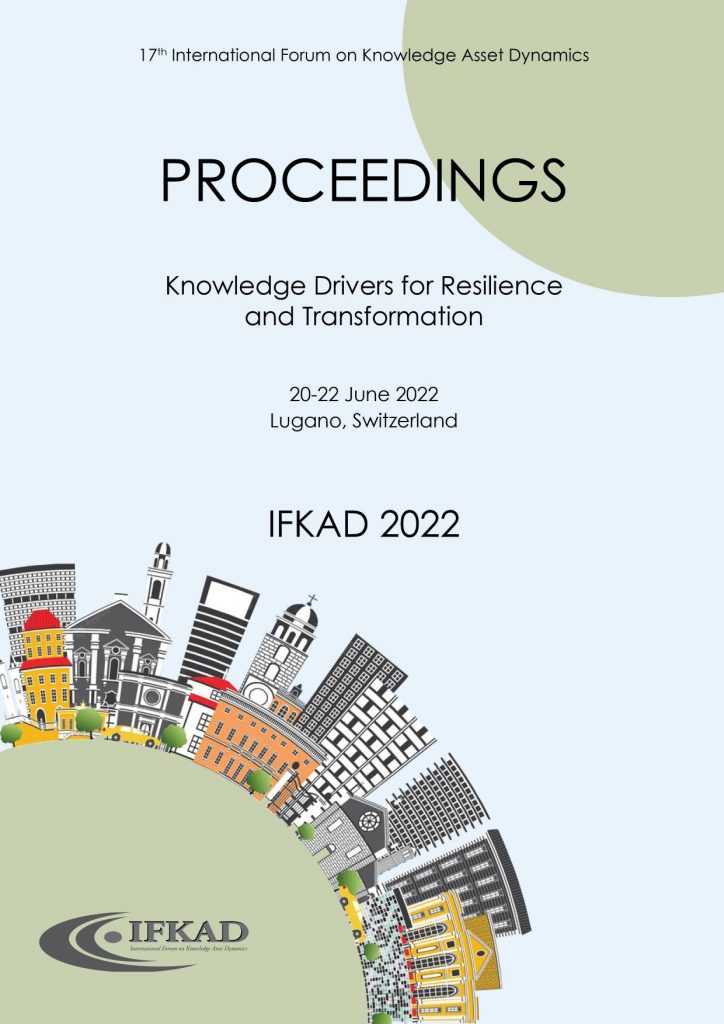
Proceedings IFKAD 2022

Knowledge Drivers for Resilience and Transformation
List of Included Articles:
How an Insourcing Manufacturing Strategy and a Doing-Using-Interacting (DUI) Mode of Innovation Was Used to Gain Competitive Advantage
Paul Trott, Aldo Stornelli, Christopher Simms

The “knowledge distribution power” of the innovation system helps us to understand how and why innovation occurs. In this study we show how an SME implemented a strategy of insourcing & innovation to achieve sustainable competitive advantage and compete with the dominant market leaders. Specifically, our research shows how this family run automotive trailer manufacturing business in Busto Arsizio, Italy, accessed knowledge from universities to enable it to secure advanced manufacturing technology with a Doing-Using- Interacting mode of innovation (DUI) to gain competitive advantage. We identify an internal innovation process that captures the relevant specific Doing-Using-Interacting phases. This study contributes to the stream of literature on DUI innovation, specifically to Trott and Simms’ (2017) study.

How to Deal with Dynamic and Huge Information Dependency in Industrial Marketing Strategies
Nour Matta, Nada Matta, Nicolas Declercq, Agata Marcante

Due to the dynamic nature of the market ecosystem, businesses must constantly think and plan ahead to stand a chance of surviving. Companies must keep track of their competitor’s offerings and adapt to their customer’s altering needs and criteria to stand out. Thus, the importance of Marketing for any business. This paper compares Industrial Marketing and customer-oriented marketing from an information dependency point of view through a field investigation. Our focus will be on industrial marketing and its need for information. We highlight the textual information dependency and the lack of decision support systems based on the knowledge extracted from textual data. A novel ontology approach is proposed to enable Information Analysis for Industrial Marketing.

Social Business Incubators: Evidence from Senegal, Uganda and Cameroon
Davide Moro, Giuliano Sansone, Martin Lukeš, Paolo Landoni

Even though some studies have analysed incubators in developing countries, only a few have analysed incubators in Africa. However, developing countries need entrepreneurial endorsements. Nevertheless, the attention on social and economic aspects in developing countries is relevant. To better understand it, this work aims at establishing a link between incubation and its social dimensions by answering the following Research Question: How can the social engagement of incubators be categorised in Cameroon, Senegal and Uganda? To answer this Research Question fifteen incubators in Cameroon, Senegal and Uganda were interviewed. In conclusion, this study proposes a new taxonomy on the social engagement of incubators through their support on projects and people. We explain that incubators in developing countries may be identified as Social Business Incubators. The results also explain how the incubators’ procedures and sponsorship are related to this categorization.

Resilient Project Management
Antonio Bassi, Giacomo Amorati, Jonathan Bertossa, Mark Brauer, Katiuscya Gianini, Michela Manini Mondia, Simona Sala Tesciat

The faculty of Innovative Technologies of the University of Applied Science of Southern Switzerland (SUPSI), started in January 2022 a study focusing on setting a snapshot of the current situation and assessing the maturity of organisation and project management with respect to the topic of resilience. The study has been based on a structured online google survey that will be sent via email to a selected target working in companies located in Switzerland and Italy and operating in different sectors, whose size will range from small, mid-size to large, including both local and global organisations. Former SUPSI project management graduates were also invited to participate in the survey. The aim of the entire study is to take a snapshot of the current situation and assess the maturity of project managers and organisations with regard to the issue of resilience. In particular, we want to know which practices are already implemented by organisations and which are the most critical and difficult to manage. In addition, it is intended to start raising awareness among the entities focused on, of the importance of this component of project management. The faculty of Innovative Technologies of the University of Applied Science of Southern Switzerland (SUPSI), as a training and research Institute, will therefore be able on one hand to define courses or study programmes to fill these gaps; on the other hand, to continue to disseminate information and useful content on the subject in order to increase the awareness of organisations related to the importance of resilience in project management.

Jazz and Management: Jazz as a Metaphor for the Management of the Third Millennium
Luca D’Elia

What can jazz and management have in common? At first glance, an unusual combination appears. Management recalls the concepts of organization, management, control, planning. Jazz immediately evokes creativity, energy, an unpredictable and sometimes disordered flow of notes. As much as they may seem like two very distant universes, jazz and management share many more aspects than we can imagine. In an era in which change, flexibility and innovation are the pillars that guide the development of organizations, jazz can provide interesting stimuli and food for thought to management, presenting itself as a suggestive metaphor for the organizational dynamics of the companies of the third millennium. The great complexity, turbulence and uncertainty that characterize our time require organizations to redefine their approach to management. In a chaotic and unpredictable context, managers will have to know how to make quick and effective decisions, creating the future based on the interpretation of fragmented and incomplete information, instilling courage in their collaborators, encouraging them to be innovative. This is what jazz musicians do: they learn by experimenting, they develop new solutions without any guarantee of the result, trusting in their own technical skills and those of the members of the group. Managers and jazz musicians share the same mission today more than ever: to abandon a certain degree of control and build the future by continuously shaping new ideas.

Gratitude and Multi-Business Model Innovation – How Can Gratitude Increase the Innovative Competences?
Jane Flarup, Peter Lindgren

Speed, effectiveness, efficiency and learning in multi-business model innovation are vital for gaining competitive advantage and even surviving in global business model ecosystems. However, the challenge is: How can businesses influence the participants and teams in these processes to stay and increase their multi-business model innovation competences, capabilities and appetite? This paper investigates how gratitude can influence participants in multi-business model innovation processes; more specifically, how gratitude as a tool and method can stimulate and strengthen the participants’ competences to stay engaged in the multi-business model innovation process. Gratitude techniques and exercises are very practical and easy to work with and end up with the same state of mindfulness as yoga, meditation and other techniques. The research is based on psychological theory on gratitude as a positive emotion linked to other positive emotions such as joy, creativity, optimism, passion and recognition. The research shows how gratitude in a multi-business model innovation process can have an effect on the output, the level of quality and the individual’s performance in the working process. Moreover, it shows that the individual’s mood, wellbeing and social relations in the teams improve when working with innovation processes. Finally, the paper discusses ways of measuring gratitude and positivity by means of, for instance, AI and face recognition, and self-assessment.

The Influence of Need for Cognition and Need for Cognitive Closure when Solving an Information Problem
Alice Laufer

Critically reflecting on online information and identifying misinformation are increasingly becoming skills that every consumer of information should possess in the Digital Age. However, it is still unclear how individual predispositions combined with website characteristics influence the way people deal with online information. The aim is to derive insights for educational research on the critical use of online information. For this purpose, this work uses the data from the ongoing project and explores whether and how Need for Cognition (NFC) and Need for Cognitive Closure (NFCC) and website characteristics influence the search strategy of 144 young professionals from three domains. An online search task is used to measure so-termed critical online reasoning, for instance whether young professionals verify sources, check citations, and how their search terms are phrased. Qualitative analysis of the website characteristics assessed are combined with quantitative analysis, indicating that NFC and NFCC and sociodemographics, such as course of study and gender, can explain some differences in source verification, citation checking and specificity of search term. Website characteristics, like up-to-dateness and indication of evidence, are also related to the participants performance in the search task. The results presented show a demand of refining curricula in terms of more awareness of personal characteristics and sensitizing learners to critically reflect online information.

Leadership in the Digital Age: Trying to Assess its State in Swiss Companies through Machine Learning
Claude Meier, Roland Krell, Urs Jäckli

Today’s leaders need to have an adequate understanding of leadership for the digital age. This understanding we call “digital leadership”. It is a strategic knowledge asset and is indispensable for companies to be successful in a world characterised by volatility, uncertainty, complexity and ambiguity (VUCA). In their study Jäckli & Meier (2020) first asked the question as to what dimensions digital leadership actually consists of. After answering the question by establishing 10 dimensions, they next conducted surveys in 2018 and 2020 in Swiss companies to examine where they stand concerning digital leadership. It was planned to do the survey every two years. Conducting such surveys is time-consuming, mainly due to the fact that voluntary participants at the appropriate management level have to be identified, contacted and convinced to participate every second year. Additionally, experience shows that despite efforts, the response rate overall is low. Therefore, this study investigates the machine learning approach of text mining as an alternative option to the traditional survey. The conducted text mining-experiment is based on the data from the surveys of 2018 and 2020, using the contributors’ information contained therein as a basis for web scraping and training an artificial intelligence (AI) supervised learning model. The corpus obtained includes texts from 211 company websites, which are processed with Natural Language Processing algorithms and used for model training after labelling. This allows predictions to be made about digital leadership dimensions based on company websites. The experiment developed in the programming language Python showed that there is predictive power in company websites, but the prediction accuracy is low, ranging from 35 to 71 percent (49 percent on average) across all 10 digital leadership dimensions. Further, the imbalanced training data across all 5 values of the applied Likert scale leads to additional challenges. Predicting values that are rarely or not at all present in the training dataset is made impossible by the bias of the model. Opportunities exist to improve prediction accuracy with additional training data. Further surveys will most likely not correct the imbalance in the training data, but qualitative approaches in combination with unsupervised learning algorithms seem to be promising developments.

Assessing Perceived Innovation Performance of ICT Enterprises: Capitalizing upon Inter-Organizational Relationships through Knowledge Sharing with Social Capital as Moderator
Aleema Shuja, Aleena Shuja

The empirical study explains how the phenomenon of knowledge hub enables institutions establish collaborative linkages to boost their innovative performance. Knowledge hub helps cluster firms to develop an indispensable capability, anchored through exchange of knowledge locally, for accelerating growth and innovation in Asian region. Gaining sustenance from Dynamic Capability View (DCV), the study investigates perceived enterprises’ innovation performance as a result of inter-organizational relationships embedded with social ties and knowledge sharing among each other. This research proposes a moderated mediation effect on innovation performance, reflected through vigorous ICT enterprise innovations; supportive relationships pursuing emerging ICT initiatives and finally frequent transfer of knowledge with ultra-modern innovation concepts. It explains how inter-organizational relationships based on robust trust and commitment lead organizations to achieve higher levels of innovation performance, while sharing important knowledge among each other. It also examines the interaction effect of social capital on association between inter-organizational relationships on firms’ innovation performance with knowledge sharing as mediator. Cross-sectional data was collected from managerial level employees working in ICT enterprises in Pakistan. Model 4 of Process by Andrew Hayes was used to test the influence of inter-organizational relationships on enterprises’ innovation performance with mediation of knowledge sharing. Model 1 tested moderation for determining the interaction effect of social capital on relationship between inter-organizational relationships and knowledge sharing. Moderated mediation, exhibiting the conditional indirect effect was analyzed through model 8. The study findings stated that in knowledge hub, ICT businesses are collaborating to build strong social relationships while sharing practical experiences and support each other through abstract resources for achieving higher levels of innovative outcomes. Inter- organizational relationships have an affirmative impact on innovation performance, invariably, knowledge sharing mediates the correlation between both. The influence of inter-organizational relationships on innovation performance through knowledge sharing is significant for firms with strong social capital. Consistently, social capital considerably moderates the relationships, as such organizations co-ordinate and work jointly with other organizations for driving service and product improvements. The research steers focus towards developing relationships among ICT enterprises, building ties based on faith and exchange key information consistently to help and polish each other’s innovation capabilities.

Data-Driven Entrepreneurship and Co-Creation: Mapping User Journeys of Five Norwegian Start-Up Companies
Ingvild Joranli, Karl Joachim Breunig

Data-driven innovation is a key pillar for economic development in the 21st century, and the role and value of data in developing new products, services and business models has gained attention. This study presents the user journeys of five data-driven start-ups, and the study discusses the opportunities and barriers the entrepreneurs have met when aiming to use public data in the business development process. The study shows that young entrepreneurial firms identify opportunities – but face substantial barriers when striving to take advantage of data that can be used in value creating activities. The study reveals three important insights: first, the ecosystem for data-driven innovation is immature. Differences in culture, communication and work methods across stakeholders and sectors affect and delay the process of gaining access to data. Second, access is needed as well as network and expertise that make the process of accessing and applying data easier and quicker. Third, guidance and assistance is needed in the process of gaining access to external and public data.

Research and Innovation Performance of Western Balkan Countries
Maja Bacovic, Tamara Backovic, Nikola Milovic

The Western Balkan region, despite achieving evident economic progress, is still significantly less developed compared to European average, in terms of per capita income and labour productivity and lags behind developed Europe in the intensity of research and innovation activities, but also in the quality of education and quantitative educational outcomes. Aim of this study is to investigate impact of lower research and innovation potentials to the economic growth of Balkan countries. In order to examine the causal relationship between GDP and variables which define the level of innovation development, the Granger-causality test based on the estimation of VECM and VAR models was performed on the panel data sample of 36 European economies and time frame from 2014 to 2019 (annual data). The results show that relationship between GDP and employment in knowledge intensive sectors do exist, but in only one direction. Changes in employment in knowledge intensive sector will have impact on the change of GDP value, but the GDP change will not have significant impact on the value of the number of people employed in the knowledge intensive sector. Relationship between GDP and R&D expenditure in the business sector is present in both directions. Relationship between GDP and R&D expenditure in the public sector indicate obvious relationship between those two indicators also. Relationship between employment in knowledge intensive sectors and R&D expenditure in the business sector indicate strong relationship between those two indicators in both directions. Relationship between employment in knowledge intensive sectors and R&D expenditure in the public sector, according to the results, identifies the impact in only one directions. It has been showed that the changes in the R&D expenditure in the public sector will impact the change in the number of employees in knowledge intensive sectors. Relationship between R&D expenditure in the business sector and R&D expenditure in the public sector does not exist. The study shows that relationship between GDP and tertiary education is not identified either. This raises the importance of the quality of education.

Knowledge Management as a Tool to Improve the Impact of Sustainability Reporting
Simona Arduini, Tommaso Beck

The objective of this study is analyzing how sustainability can be fed by knowledge at the company level and how it can be implemented within the company’s overall strategic choices. Dealing with the issue of sustainability is certainly a complex matter, since it embraces concepts and dynamics aimed at: creating value rather than profit, long-term rather than short-term horizons and the satisfaction of stakeholders rather than that of shareholders. It is certainly a complex target, that must be put into a system capable of enhancing the management’s efforts. In this sense, knowledge management (KM) is a useful ally to consolidate the competitive advantage, to outline efficient business practices, to share knowledge and therefore to seek company going concern and development. The link between the latter and the issue of sustainability cannot be ignored, even if it’s no easy to understand the verse of the relationship. However, in the course of the study carried out on this issue, and supported by the empirical analysis conducted, some imbalances with respect to this relationship emerged when the effort was made to translate it into strategy. Although the concept is consolidated and linear, at least from a conceptual point of view, when putting it into practice the scenario become much more complex. The world is changing and with it the logic behind many business practices, both internal and external. Lagging behind on the issue of sustainability and its relative connection to KM would mean missing out on new opportunities. Without going any deeper into this important concept, we can say that it has none the less been inserted in order to make a focus by explaining, albeit in a simplistic line, why these can be considered as an important driver for the relationship between KM and sustainability. The study ends with the specific discussion of the empirical analysis, carried out on a sample referring to the top 20 listed companies in Italy. Thanks to the latter it has been possible to highlight, through percentages and mathematical ratios, the aforementioned relationships from a statistical point of view, creating a link between the theory analyzed and the practice identified in this research field.

Research in Knowledge-intensive Business Processes: A Structured Literature Review
Mikhail Monashev, Michal Krčál

The increased knowledge intensification of work directed the business process management (BPM) research from ‘traditional’ routine and repetitive business processes to knowledge-intensive business processes (kiBPs). No agreement on universal “kiBPs” definition or conceptualization has been reached, and we have found no attempts to systemize kiBPs research. Therefore, we conducted a structured literature review (SLR) to improve the state of the art. The SLR consisted of three stages: literature search, extracting relevant papers, and content analysis. In the literature search stage, we retrieved peer- reviewed journal papers by applying a search query using “knowledge-intensive business process*” as a topic in Scopus and WoS databases and ended up with an initial sample of 71 papers. Next, the number of papers in the sample was decreased to 28 by applying a series of exclusion criteria. In the content analysis stage, relevant papers were coded to find content related to kiBPs characteristics or topics in kiBPs research. The content analysis allowed us to develop the framework of kiBPs characteristics, which showed that the primary reason for processes to be labelled knowledge-intensive is the uncertainty and unpredictability of their inputs, flows and outputs. Due to uncertainty and unpredictability associated with them, kiBPs strongly rely on knowledge workers and thus are being referred to as decision-oriented, collaborative, creative and innovative. Thus, the structure of kiBPs is being developed only during the process execution, which makes kiBPs goal-oriented rather than structure-oriented. KiBPs characteristics that distinguish them from “traditional” processes directly influence the topics of kiBPs research that were included in the framework of kiBPs research also developed within our study. Uncertainty and unpredictability of kiBPs are being addressed by incorporating knowledge perspective into kiBPs improvement methodologies and lead to multiple studies investigating the influence of knowledge processes on kiBPs performance. The unstructured and decision-oriented nature of kiBPs is being addressed in studies dedicated to kiBPs modelling and case management systems. We see frameworks developed in this study as beneficial for scientific and business communities. The framework of the kiBPs characteristics might serve as a basis for empirical research within the field and show business practitioners which characteristics of kiBPs should be addressed to improve process performance. The framework of the kiBPs research might serve as a starting point for researchers interested in the field and allow business practitioners to identify and elevate constraints in kiBPs management methods.

Why do Mega-Projects Fail? Knowledge Management as a Successful Basis for Effective Flood Protection Measures – Critical Success Factors as a Guarantee for Successful Realisation
Holger Scheffler, Markus Vogl

Within this study, we elaborate on the state-of-the-art within the academic literature ranging around flood protection, climate change and critical success factors (CSFs) by conducting a bibliometric analysis with subsequent snowball sampling procedure paired with a citation-network analysis. Further, we analyse CSFs in hindsight of an approx. 100 Mio. EUR pilot-project located in Germany and their implementation within the knowledge management framework of the latter project. Finally, we propose a guideline for mega- project realisations, concluding remarks and future avenues of research.

Where Is ‘Supply Chain Resilience’ Research Headed? A Bibliometric and SNA Analysis of Recent Literature, 2017-2021
Francisco García-Lillo, Pedro Seva-Larrosa, Eduardo Sánchez-García

In recent years, the use by researchers of co-citation analysis –of documents (DCA), authors, keywords, etc.– trying to identify and/or visualize the ‘intellectual structure’ or ‘knowledge base’ of different areas, fields and/or disciplines –including the field of supply chain management–, have been gaining prominence in a growing number of scientific journals. However, the technique of bibliographic coupling analysis (BCA) between scientific documents (Kessler, 1963), which seeks to identify active research “fronts” in a scientific field or discipline –and, particularly suitable for detecting current trends and future research priorities– has been less commonly applied. This study used this last technique of analysis to identify and visualize the existence of active research ‘fronts’ in the context of the papers on ‘supply chain resilience’ (SCR) recently published in a wide variety of journals. The aim is not only to complement and expand the results obtained in prior studies. Based on the results obtained in our literature review, this paper also outlines directions and promising ways for future research. Clarivate Analytics’ Web of Science –in particular, one of its indexes: the Social Sciences Citation Index (SSCI)–, was the database used to carry out this research. A total of 234 “peer-reviewed journal articles” recorded between 2017 and December 27, 2021 were retrieved. With regards to the methodology, bibliometric methods were utilized, as well as social network analysis (SNA). In particular, the analytical techniques employed –adopting a “quantitative” method of a deductive character– allowed us the identification of some of the most active research “fronts” in the scientific literature related to the topic under analysis. This study shows the typical limitations resulting from the utilization of bibliometric methods/practical and theoretical implications are also potentially relevant to a number of different audiences. We believe that this study is of value for novel researchers before doing research since it allows the identification of the active research “fronts,” which shape the vanguard of knowledge and reveal current trends and future directions in the field under examination.

Knowledge Management Process and Organizational Agility: Do they Influence Organizational Resilience?
Nibedita Saha, Tomas Sáha, Aleš Gregar, Petr Sáha

The aim of this paper is to reveal the influence of the knowledge management (KM) process and the organization’s agile attributes that facilitates organizations or firms to retrieve and survive as well as to increase their resilience and sustain organizational competitiveness. The emerging perspectives of ‘organizational agility’ key enabling attributes considered as an important gadget in the knowledge economy. Organizational agility in the organizational knowledge development process, facilitates organizations to achieve their competitive advantage through integrating the KM process, system, and sustainable knowledge transfer capability. Due to today’s highly volatile business environment, respectively organizations are under tremendous pressure on developing their organizational development strategy. Since then, they have been struggling with how to increase their resilience and sustain organizational competitiveness to prevent and react to the waves of disruption, organizations need to develop resilience capacity through knowledge management process and organizational agility to facilitate them to retain their competitive advantage. The impact of organizational agility in organizational knowledge development process visualized in this paper as a ‘capability enhancer of an organization’ (CEO)’ approach or system that enhances organizations’ resilience capabilities. It empowers them to reckon out 3R strategy, i.e., recognize, respond, and to regain their organizational competency from the unwanted turmoil, which occurs in the marketplace. To take the advantage of that change through radical organizational development being flexible, adaptable, capable, and enable (FACE) they can also allocate its agile resources that may work as stimuli on organizational resilience.

Digital Sensemaking: Sensemaking as a Driver of Transformation
Daniela Brill, Claudia Schnugg, Christian Stary

This paper introduces the project “Digital Sensemaking” (DIGI-Sense) that tackles human needs in the envisioned digital revolution (Industry4.0, humanoid robots, Internet of Behaviours, Cyber-Physical-Systems) to enable meaningful transformation processes. Psychologists of work argue that digitalization at the workplace can lead to an overflow of information which challenges decision-making and sensemaking at work. Studies in organizational research show that sensemaking is fundamental for meaningful work1 experience of individuals and organizations because it plays a central role to give meaning to processes, shared experiences and to rationalize decisions and established routines. In digital transformation processes, well-known work processes easily become alienated to workers, embodied knowledge and material cornerstones are likely to become obsolete. Therefore, DIGI-Sense explores sensemaking in digitalization processes that incorporate tangible elements, digital twins, and robotics. As embodiment, materialities, movements, and aesthetics are core to sensemaking, the methodological design of the empirical study incorporates methods in social sciences and juxtaposes these more traditional approaches with methods from visual studies, arts-based initiatives and artscience collaboration in the form of a series of experimentations with performance artists. This paper will introduce the theoretical background and the development of the methodological approach applied in this research project.

Enablers of Knowledge Management and Sustainable Business Performance of SMEs: A Synthesis and Review of the Literature
Samuel Foli, Adobi Jessica Timiyo

Sustainability means different things to different organisations, likewise indicators of sustainable business performance. Within the broader field of knowledge management, it refers to the efficient utilization of knowledge management through joint collaborations and active interactions among team members. Hence sustainability thrives in an environment that supports knowledge sharing. This systematic literature review critically investigates the enablers of knowledge management that potentially drives sustainable business performance of SMEs using the PRISMA methodological approach. We identified seven enablers of knowledge management out of sixty-four academic papers that were reviewed. These are information technology, knowledge sharing, management commitment, innovation capability, stakeholder engagement, resources, and effective leadership. Based on the synthesis of these enablers, a conceptual model was designed to depict the interconnections and linkages between the enablers of knowledge management and sustainable business performance. Certain theoretical underpinnings were drawn, particularly with respect to indicators of sustainable business performance. In line with mainstream research, we believe sustainable business performance is contingent upon economic, social, and contextual factors. Our study is the first to have systematically reviewed enablers of knowledge management that drive sustainable business performance among SMEs. We have also set agenda for future research directions by way of testing our conceptual model using the formulated hypotheses. Besides the theoretical contributions, our study offers practitioners new and compelling insights of applying the various enablers of knowledge management towards achieving sustainable business performance.

Exploring Vulnerabilities and Risks Related to Knowledge Management Systems
Constantin Bratianu, Ruxandra Bejinaru

This paper aims to explore how researchers studied the role and implications of the concepts of vulnerability and risk in direct relation to knowledge management systems. Our approach is based on a bibliometric analysis of the papers in the last 20 years and indexed in Scopus using the specialized software VOSviewer. Although knowledge risks have been analyzed from different perspectives, knowledge vulnerabilities have not been studied yet. In any system, vulnerabilities represent the roots of all possible risks, and they should be known when systems are designed for diminishing the probable negative consequences of risks occurrences. VOSviewer analyses of different keywords and expressions related to the search topic show semantic clusters constructed with similar concepts and the intensity of the links between the focal concept and the other concepts. That allows us to see the knowledge gaps in the research area and how to orient the future research. Findings show that in the literature dedicated to knowledge management systems, there are no studies focusing on knowledge vulnerabilities, although they generate the knowledge risks when the context changes become favorable. Thus, our study shows a clear knowledge gap between the generic risk management theory and knowledge management systems with respect to knowledge vulnerabilities. The contribution of this paper comes from revealing this knowledge gap and showing this way a new potential direction for research in knowledge management systems – the correlation between vulnerabilities and risks within knowledge management systems.

Don’t Forget the Dark Side of Green Transformation
Malgorzata Zieba, Susanne Durst, Martyna Gonsiorowska

The study is a continuation of the research by Durst and Zieba (2019) related to knowledge risks and their potential outcomes. This present study makes an update on the literature on knowledge risks and green transformation and describes knowledge risks that can be faced in this process. The paper offers new insights for researchers dealing with the topic of knowledge risks in the context of green transformation and ways of handling them. The study provides useful information for managers and owners of companies who are not always aware of the dark side of knowledge and risks related to it. Additionally, companies are more and more often challenged with the need to make the green transformation and this process can also be a tricky one. At this stage of development, the proposed study is of theoretical character. This limitation will be overcome in future research activities that involve a large sample of organizations from various countries and sectors.

Proceedings IFKAD 2022
Knowledge Drivers for Resilience and Transformation

Submit the following information to receive the download link 

a valid email address where the download link will be delivered